
Home
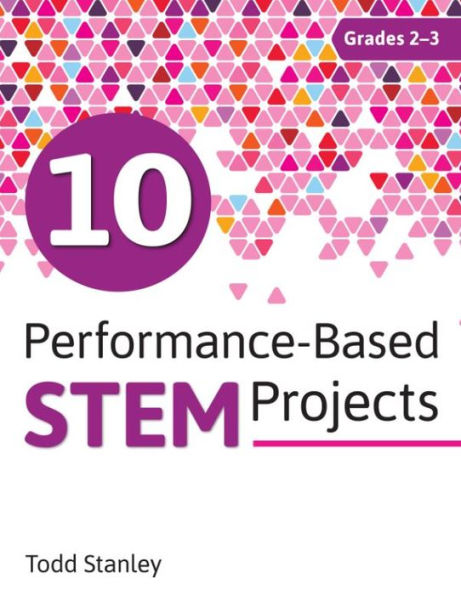
Frameworks for Integrated Project-Based Instruction in Stem Disciplines
Barnes and Noble
Loading Inventory...
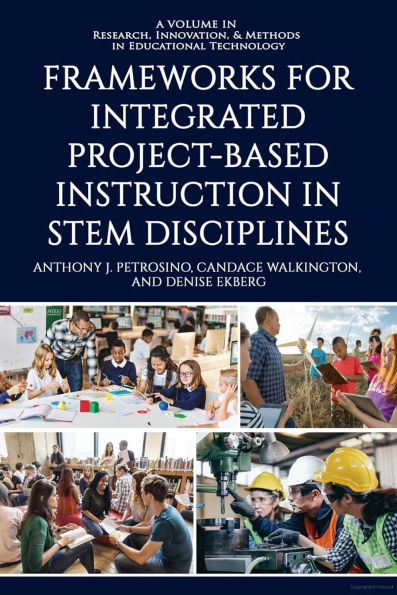
Frameworks for Integrated Project-Based Instruction in Stem Disciplines in Chattanooga, TN
Current price: $54.00
Barnes and Noble
Frameworks for Integrated Project-Based Instruction in Stem Disciplines in Chattanooga, TN
Current price: $54.00
Loading Inventory...
Size: OS
Frameworks for Integrated ProjectBased Instruction in STEM Disciplines presents an original approach to Science, Technology, Engineering, and Mathematics (STEM) centric project based instruction. We approach project based instruction from an engineering design philosophy and the accountability highlighted in a standardsbased environment. We emphasize a backward design that is initiated by welldefined outcomes tied to local, state, or national standards that provide teachers with a framework guiding students' design, solving, or completion of illdefined tasks. In projectbased STEM classrooms students investigate, utilize technological tools, construct artifacts, participate in debates, collaborate, and make products to demonstrate what they have learned.
Features include deep coverage of four topics in PBI: scaffolding, studentdriven inquiry, driving questions, and development of lessons based on national and state standards. This focus will ensure a deep understanding by the reader of projectbased instruction, which will allow the reader to create strong and meaningful lesson experiences for their students. An emphasis on studentdriven inquiry will be discussed, including the importance of giving students the cognitive tools, such as statistical analysis tools, they need to research and inquire about the lesson topic. A breakdown of what a successful driving question includes will be explained, and examples given. The book will include strategies for starting the lesson process with ending goals in mind by creating driving questions and breaking down state and national standards.
This book is strongly rooted in research in the learning sciences about projectbased instruction, but will also be designed to be practically useful to teachers and teacher educators and researchers by bridging research and practice.
Features include deep coverage of four topics in PBI: scaffolding, studentdriven inquiry, driving questions, and development of lessons based on national and state standards. This focus will ensure a deep understanding by the reader of projectbased instruction, which will allow the reader to create strong and meaningful lesson experiences for their students. An emphasis on studentdriven inquiry will be discussed, including the importance of giving students the cognitive tools, such as statistical analysis tools, they need to research and inquire about the lesson topic. A breakdown of what a successful driving question includes will be explained, and examples given. The book will include strategies for starting the lesson process with ending goals in mind by creating driving questions and breaking down state and national standards.
This book is strongly rooted in research in the learning sciences about projectbased instruction, but will also be designed to be practically useful to teachers and teacher educators and researchers by bridging research and practice.
Frameworks for Integrated ProjectBased Instruction in STEM Disciplines presents an original approach to Science, Technology, Engineering, and Mathematics (STEM) centric project based instruction. We approach project based instruction from an engineering design philosophy and the accountability highlighted in a standardsbased environment. We emphasize a backward design that is initiated by welldefined outcomes tied to local, state, or national standards that provide teachers with a framework guiding students' design, solving, or completion of illdefined tasks. In projectbased STEM classrooms students investigate, utilize technological tools, construct artifacts, participate in debates, collaborate, and make products to demonstrate what they have learned.
Features include deep coverage of four topics in PBI: scaffolding, studentdriven inquiry, driving questions, and development of lessons based on national and state standards. This focus will ensure a deep understanding by the reader of projectbased instruction, which will allow the reader to create strong and meaningful lesson experiences for their students. An emphasis on studentdriven inquiry will be discussed, including the importance of giving students the cognitive tools, such as statistical analysis tools, they need to research and inquire about the lesson topic. A breakdown of what a successful driving question includes will be explained, and examples given. The book will include strategies for starting the lesson process with ending goals in mind by creating driving questions and breaking down state and national standards.
This book is strongly rooted in research in the learning sciences about projectbased instruction, but will also be designed to be practically useful to teachers and teacher educators and researchers by bridging research and practice.
Features include deep coverage of four topics in PBI: scaffolding, studentdriven inquiry, driving questions, and development of lessons based on national and state standards. This focus will ensure a deep understanding by the reader of projectbased instruction, which will allow the reader to create strong and meaningful lesson experiences for their students. An emphasis on studentdriven inquiry will be discussed, including the importance of giving students the cognitive tools, such as statistical analysis tools, they need to research and inquire about the lesson topic. A breakdown of what a successful driving question includes will be explained, and examples given. The book will include strategies for starting the lesson process with ending goals in mind by creating driving questions and breaking down state and national standards.
This book is strongly rooted in research in the learning sciences about projectbased instruction, but will also be designed to be practically useful to teachers and teacher educators and researchers by bridging research and practice.
You May Also Like










More About Barnes and Noble at Hamilton Place
Barnes & Noble is the world’s largest retail bookseller and a leading retailer of content, digital media and educational products. Our Nook Digital business offers a lineup of NOOK® tablets and e-Readers and an expansive collection of digital reading content through the NOOK Store®. Barnes & Noble’s mission is to operate the best omni-channel specialty retail business in America, helping both our customers and booksellers reach their aspirations, while being a credit to the communities we serve.
2100 Hamilton Pl Blvd, Chattanooga, TN 37421, United States
Find Barnes and Noble at Hamilton Place in Chattanooga, TN
Visit Barnes and Noble at Hamilton Place in Chattanooga, TN
