
Home
Forms of Dictatorship: Power, Narrative, and Authoritarianism the Latina/o Novel
Barnes and Noble
Loading Inventory...
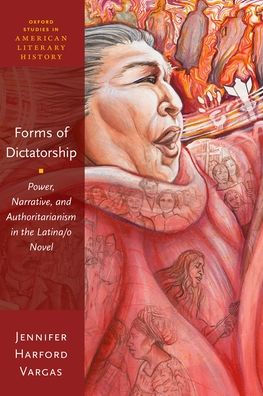
Forms of Dictatorship: Power, Narrative, and Authoritarianism the Latina/o Novel in Chattanooga, TN
Current price: $36.99
Barnes and Noble
Forms of Dictatorship: Power, Narrative, and Authoritarianism the Latina/o Novel in Chattanooga, TN
Current price: $36.99
Loading Inventory...
Size: Paperback
An intra-ethnic study of Latina/o fiction written in the United States from the early 1990s to the present,
Forms of Dictatorship
examines novels that depict the historical reality of dictatorship and exploit dictatorship as a literary trope. This literature constitutes a new sub-genre of Latina/o fiction, which the author calls the Latina/o dictatorship novel. The book illuminates Latina/os' central contributions to the literary history of the dictatorship novel by analyzing how Latina/o writers with national origin roots in the Caribbean, Mexico, and Central and South America imaginatively represent authoritarianism. The novels collectively generate what Harford Vargas terms a "Latina/o counter-dictatorial imaginary" that positions authoritarianism on a continuum of domination alongside imperialism, white supremacy, heteropatriarchy, neoliberalism, and border militarization. Focusing on novels by writers such as Junot Díaz, Héctor Tobar, Cristina García, Salvador Plascencia, and Francisco Goldman, the book reveals how Latina/o dictatorship novels foreground more ubiquitous modes of oppression to indict Latin American dictatorships, U.S. imperialism, and structural discrimination in the U.S., as well as repressive hierarchies of power in general. Harford Vargas simultaneously utilizes formalist analysis to investigate how Latina/o writers mobilize the genre of the novel and formal techniques such as footnotes, focalization, emplotment, and metafiction to depict dictatorial structures and relations. In building on narrative theories of character, plot, temporality, and perspective, Harford Vargas explores how the Latina/o dictatorship novel stages power dynamics.
thus queries the relationship between different forms of power and the power of narrative form - that is, between various instantiations of repressive power structures and the ways in which different narrative structures can reproduce and resist repressive power.
Forms of Dictatorship
examines novels that depict the historical reality of dictatorship and exploit dictatorship as a literary trope. This literature constitutes a new sub-genre of Latina/o fiction, which the author calls the Latina/o dictatorship novel. The book illuminates Latina/os' central contributions to the literary history of the dictatorship novel by analyzing how Latina/o writers with national origin roots in the Caribbean, Mexico, and Central and South America imaginatively represent authoritarianism. The novels collectively generate what Harford Vargas terms a "Latina/o counter-dictatorial imaginary" that positions authoritarianism on a continuum of domination alongside imperialism, white supremacy, heteropatriarchy, neoliberalism, and border militarization. Focusing on novels by writers such as Junot Díaz, Héctor Tobar, Cristina García, Salvador Plascencia, and Francisco Goldman, the book reveals how Latina/o dictatorship novels foreground more ubiquitous modes of oppression to indict Latin American dictatorships, U.S. imperialism, and structural discrimination in the U.S., as well as repressive hierarchies of power in general. Harford Vargas simultaneously utilizes formalist analysis to investigate how Latina/o writers mobilize the genre of the novel and formal techniques such as footnotes, focalization, emplotment, and metafiction to depict dictatorial structures and relations. In building on narrative theories of character, plot, temporality, and perspective, Harford Vargas explores how the Latina/o dictatorship novel stages power dynamics.
thus queries the relationship between different forms of power and the power of narrative form - that is, between various instantiations of repressive power structures and the ways in which different narrative structures can reproduce and resist repressive power.
An intra-ethnic study of Latina/o fiction written in the United States from the early 1990s to the present,
Forms of Dictatorship
examines novels that depict the historical reality of dictatorship and exploit dictatorship as a literary trope. This literature constitutes a new sub-genre of Latina/o fiction, which the author calls the Latina/o dictatorship novel. The book illuminates Latina/os' central contributions to the literary history of the dictatorship novel by analyzing how Latina/o writers with national origin roots in the Caribbean, Mexico, and Central and South America imaginatively represent authoritarianism. The novels collectively generate what Harford Vargas terms a "Latina/o counter-dictatorial imaginary" that positions authoritarianism on a continuum of domination alongside imperialism, white supremacy, heteropatriarchy, neoliberalism, and border militarization. Focusing on novels by writers such as Junot Díaz, Héctor Tobar, Cristina García, Salvador Plascencia, and Francisco Goldman, the book reveals how Latina/o dictatorship novels foreground more ubiquitous modes of oppression to indict Latin American dictatorships, U.S. imperialism, and structural discrimination in the U.S., as well as repressive hierarchies of power in general. Harford Vargas simultaneously utilizes formalist analysis to investigate how Latina/o writers mobilize the genre of the novel and formal techniques such as footnotes, focalization, emplotment, and metafiction to depict dictatorial structures and relations. In building on narrative theories of character, plot, temporality, and perspective, Harford Vargas explores how the Latina/o dictatorship novel stages power dynamics.
thus queries the relationship between different forms of power and the power of narrative form - that is, between various instantiations of repressive power structures and the ways in which different narrative structures can reproduce and resist repressive power.
Forms of Dictatorship
examines novels that depict the historical reality of dictatorship and exploit dictatorship as a literary trope. This literature constitutes a new sub-genre of Latina/o fiction, which the author calls the Latina/o dictatorship novel. The book illuminates Latina/os' central contributions to the literary history of the dictatorship novel by analyzing how Latina/o writers with national origin roots in the Caribbean, Mexico, and Central and South America imaginatively represent authoritarianism. The novels collectively generate what Harford Vargas terms a "Latina/o counter-dictatorial imaginary" that positions authoritarianism on a continuum of domination alongside imperialism, white supremacy, heteropatriarchy, neoliberalism, and border militarization. Focusing on novels by writers such as Junot Díaz, Héctor Tobar, Cristina García, Salvador Plascencia, and Francisco Goldman, the book reveals how Latina/o dictatorship novels foreground more ubiquitous modes of oppression to indict Latin American dictatorships, U.S. imperialism, and structural discrimination in the U.S., as well as repressive hierarchies of power in general. Harford Vargas simultaneously utilizes formalist analysis to investigate how Latina/o writers mobilize the genre of the novel and formal techniques such as footnotes, focalization, emplotment, and metafiction to depict dictatorial structures and relations. In building on narrative theories of character, plot, temporality, and perspective, Harford Vargas explores how the Latina/o dictatorship novel stages power dynamics.
thus queries the relationship between different forms of power and the power of narrative form - that is, between various instantiations of repressive power structures and the ways in which different narrative structures can reproduce and resist repressive power.
You May Also Like









More About Barnes and Noble at Hamilton Place
Barnes & Noble is the world’s largest retail bookseller and a leading retailer of content, digital media and educational products. Our Nook Digital business offers a lineup of NOOK® tablets and e-Readers and an expansive collection of digital reading content through the NOOK Store®. Barnes & Noble’s mission is to operate the best omni-channel specialty retail business in America, helping both our customers and booksellers reach their aspirations, while being a credit to the communities we serve.
2100 Hamilton Pl Blvd, Chattanooga, TN 37421, United States
Find Barnes and Noble at Hamilton Place in Chattanooga, TN
Visit Barnes and Noble at Hamilton Place in Chattanooga, TN
