
Home
Fibrous Dysplasia and Beyond: Understanding Fibro-Osseous Jaw Lesions
Barnes and Noble
Loading Inventory...
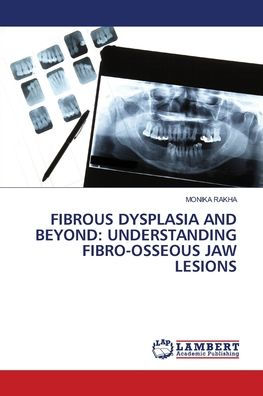
Fibrous Dysplasia and Beyond: Understanding Fibro-Osseous Jaw Lesions in Chattanooga, TN
Current price: $48.00
Barnes and Noble
Fibrous Dysplasia and Beyond: Understanding Fibro-Osseous Jaw Lesions in Chattanooga, TN
Current price: $48.00
Loading Inventory...
Size: OS
Fibro-osseous lesions (FOLs) of the jaws represent a spectrum of disorders characterized by the pathological substitution of normal bone with fibrous connective tissue and mineralized deposits. These entities encompass fibrous dysplasia (FD), cemento-osseous dysplasias (COD), and ossifying fibromas (OF), each demonstrating overlapping yet distinct clinical and radiographic profiles.Fibrous dysplasia, attributed to GNAS-1 gene mutations, manifests as an insidious, painless expansion of affected bones, resulting in facial asymmetry and dental malocclusion. Radiographically, it exhibits a characteristic "ground-glass" opacity. Therapeutic approaches range from conservative observation to bisphosphonate administration and surgical intervention in cases of significant functional or aesthetic compromise.Cemento-osseous dysplasias, comprising periapical, focal, and florid variants, arise from periodontal ligament progenitor cells. These lesions, predominantly affecting middle-aged women, exhibit a well-defined progression from radiolucency to sclerosis. Typically asymptomatic, they necessitate intervention only in instances of secondary infection.
Fibro-osseous lesions (FOLs) of the jaws represent a spectrum of disorders characterized by the pathological substitution of normal bone with fibrous connective tissue and mineralized deposits. These entities encompass fibrous dysplasia (FD), cemento-osseous dysplasias (COD), and ossifying fibromas (OF), each demonstrating overlapping yet distinct clinical and radiographic profiles.Fibrous dysplasia, attributed to GNAS-1 gene mutations, manifests as an insidious, painless expansion of affected bones, resulting in facial asymmetry and dental malocclusion. Radiographically, it exhibits a characteristic "ground-glass" opacity. Therapeutic approaches range from conservative observation to bisphosphonate administration and surgical intervention in cases of significant functional or aesthetic compromise.Cemento-osseous dysplasias, comprising periapical, focal, and florid variants, arise from periodontal ligament progenitor cells. These lesions, predominantly affecting middle-aged women, exhibit a well-defined progression from radiolucency to sclerosis. Typically asymptomatic, they necessitate intervention only in instances of secondary infection.
You May Also Like

















More About Barnes and Noble at Hamilton Place
Barnes & Noble is the world’s largest retail bookseller and a leading retailer of content, digital media and educational products. Our Nook Digital business offers a lineup of NOOK® tablets and e-Readers and an expansive collection of digital reading content through the NOOK Store®. Barnes & Noble’s mission is to operate the best omni-channel specialty retail business in America, helping both our customers and booksellers reach their aspirations, while being a credit to the communities we serve.
2100 Hamilton Pl Blvd, Chattanooga, TN 37421, United States
Find Barnes and Noble at Hamilton Place in Chattanooga, TN
Visit Barnes and Noble at Hamilton Place in Chattanooga, TN