
Home
Fallow Lands of Plenty: Public Schools as Leaders in Rural Food System Relocalization
Barnes and Noble
Loading Inventory...
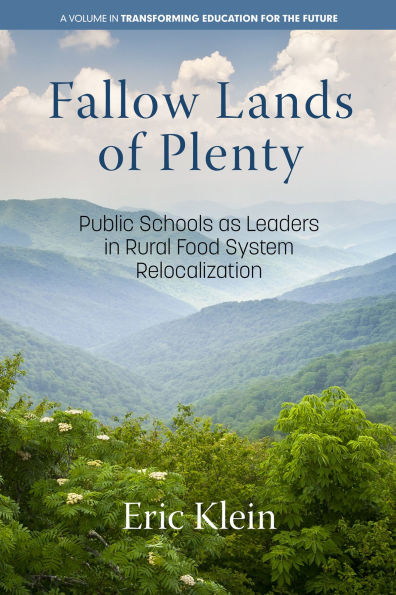
Fallow Lands of Plenty: Public Schools as Leaders in Rural Food System Relocalization in Chattanooga, TN
Current price: $55.64
Barnes and Noble
Fallow Lands of Plenty: Public Schools as Leaders in Rural Food System Relocalization in Chattanooga, TN
Current price: $55.64
Loading Inventory...
Size: OS
Can public schools feed themselves? That deceptively simple question is like a fingernail picking at a fray in the fabric of 21st century public education. Fallow Lands of Plenty chronicles one high school’s attempt to feed itself and, in doing so, unravels the fabric of neoliberal education, exposes its logics of dependence and control, and begins to weave a new tapestry of education for community cooperation and resilience.
Set during the ongoing transition between postindustrial globalization and the community structures that are to come, this rich narrative moves from furrows of Appalachian red clay soil, to the mountaintop homesteads of elder seed savers, to the conveyor belts of sterilized food sorting machines, and, finally, to a school’s cafeteria on the day that 250 portions of studentgrown sweet potatoes were served.
Along the way, Fallow Lands centers knowledges of place as well as the literal and metaphorical seeds of relocalized food and education systems. Critical and theoretically informed, the text disobeys the values, purpose and canon of public education and proposes a fledgling pedagogy to address the challenges of the coming age.
Set during the ongoing transition between postindustrial globalization and the community structures that are to come, this rich narrative moves from furrows of Appalachian red clay soil, to the mountaintop homesteads of elder seed savers, to the conveyor belts of sterilized food sorting machines, and, finally, to a school’s cafeteria on the day that 250 portions of studentgrown sweet potatoes were served.
Along the way, Fallow Lands centers knowledges of place as well as the literal and metaphorical seeds of relocalized food and education systems. Critical and theoretically informed, the text disobeys the values, purpose and canon of public education and proposes a fledgling pedagogy to address the challenges of the coming age.
Can public schools feed themselves? That deceptively simple question is like a fingernail picking at a fray in the fabric of 21st century public education. Fallow Lands of Plenty chronicles one high school’s attempt to feed itself and, in doing so, unravels the fabric of neoliberal education, exposes its logics of dependence and control, and begins to weave a new tapestry of education for community cooperation and resilience.
Set during the ongoing transition between postindustrial globalization and the community structures that are to come, this rich narrative moves from furrows of Appalachian red clay soil, to the mountaintop homesteads of elder seed savers, to the conveyor belts of sterilized food sorting machines, and, finally, to a school’s cafeteria on the day that 250 portions of studentgrown sweet potatoes were served.
Along the way, Fallow Lands centers knowledges of place as well as the literal and metaphorical seeds of relocalized food and education systems. Critical and theoretically informed, the text disobeys the values, purpose and canon of public education and proposes a fledgling pedagogy to address the challenges of the coming age.
Set during the ongoing transition between postindustrial globalization and the community structures that are to come, this rich narrative moves from furrows of Appalachian red clay soil, to the mountaintop homesteads of elder seed savers, to the conveyor belts of sterilized food sorting machines, and, finally, to a school’s cafeteria on the day that 250 portions of studentgrown sweet potatoes were served.
Along the way, Fallow Lands centers knowledges of place as well as the literal and metaphorical seeds of relocalized food and education systems. Critical and theoretically informed, the text disobeys the values, purpose and canon of public education and proposes a fledgling pedagogy to address the challenges of the coming age.
You May Also Like









More About Barnes and Noble at Hamilton Place
Barnes & Noble is the world’s largest retail bookseller and a leading retailer of content, digital media and educational products. Our Nook Digital business offers a lineup of NOOK® tablets and e-Readers and an expansive collection of digital reading content through the NOOK Store®. Barnes & Noble’s mission is to operate the best omni-channel specialty retail business in America, helping both our customers and booksellers reach their aspirations, while being a credit to the communities we serve.
2100 Hamilton Pl Blvd, Chattanooga, TN 37421, United States
Find Barnes and Noble at Hamilton Place in Chattanooga, TN
Visit Barnes and Noble at Hamilton Place in Chattanooga, TN
