
Home
Evolution and Speciation Animals
Barnes and Noble
Loading Inventory...
Evolution and Speciation Animals in Chattanooga, TN
Current price: $210.00
Barnes and Noble
Evolution and Speciation Animals in Chattanooga, TN
Current price: $210.00
Loading Inventory...
Size: Hardcover
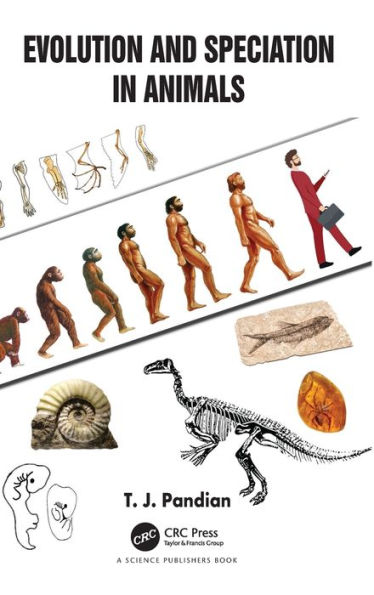
This book represents the first attempt to quantify environmental factors and life history traits that accelerate or decelerate species diversity in animals. About 15%, 8% and 77% of species are distributed in marine (70% of earth’s surface), freshwater (terra firma fosters more diversity. The harsh hadal, desert and elevated montane habitats restrict diversity to 0.5-4.2%. Costing more time and energy, osmotrophic and suspension modes of food acquisition limit diversity to < 20%. In minor phyletics, evolution has proceeded from a ‘wrong combination’ of low motility and gonochorism to sessility and hermaphroditism. The motile major phyletics are more speciose (166,279 species/phylum) than the latter (1,975 species/phylum). As evolution and speciation are driven by motility, sessility is limited to 2.9% animals.
Selfing hermaphrodites (0.9%), parthenogens
Incidence of heterogamety is four-times more in males than in females. Hence, evolution is more a male-driven process. Egg size is determined by environmental factors, but lecithality is genetically fixed. In poikilotherms, sex is also determined by gene(s), but differentiation by environmental factors. The extra-ovarian vitellogenesis (> 96%), spermatozoan (81%) rather than spermatophore mechanism of sperm transfer, promiscuity and polygamy over monogamy, iteroparity (99.6%) over semelparity and internal fertilization (84%) are preferred, as they accelerate diversity. Body size and egg size determine fecundity. Indirect life cycle (82%) and incorporation of feeding larval stages accelerate diversity. Brooding and viviparity (6.4%) decelerate it. Parasitism extends life span and liberates fecundity from eutelism.
Evolution is an ongoing process, and speciation and extinction are its unavoidable by-products. The in-built conservation mechanism of reviving life after a sleeping duration has been reduced from a few million years in microbial spores to a few thousand years in plant seeds and a few hundred years in dormant eggs in animals. Hence, animal conservation requires priority. The existence of temperature-resistant/insensitive individuals, strains and species shall flourish during the ongoing global warming and earth shall continue with such burgeoning species, hopefully inclusive of man.
Selfing hermaphrodites (0.9%), parthenogens
Incidence of heterogamety is four-times more in males than in females. Hence, evolution is more a male-driven process. Egg size is determined by environmental factors, but lecithality is genetically fixed. In poikilotherms, sex is also determined by gene(s), but differentiation by environmental factors. The extra-ovarian vitellogenesis (> 96%), spermatozoan (81%) rather than spermatophore mechanism of sperm transfer, promiscuity and polygamy over monogamy, iteroparity (99.6%) over semelparity and internal fertilization (84%) are preferred, as they accelerate diversity. Body size and egg size determine fecundity. Indirect life cycle (82%) and incorporation of feeding larval stages accelerate diversity. Brooding and viviparity (6.4%) decelerate it. Parasitism extends life span and liberates fecundity from eutelism.
Evolution is an ongoing process, and speciation and extinction are its unavoidable by-products. The in-built conservation mechanism of reviving life after a sleeping duration has been reduced from a few million years in microbial spores to a few thousand years in plant seeds and a few hundred years in dormant eggs in animals. Hence, animal conservation requires priority. The existence of temperature-resistant/insensitive individuals, strains and species shall flourish during the ongoing global warming and earth shall continue with such burgeoning species, hopefully inclusive of man.
This book represents the first attempt to quantify environmental factors and life history traits that accelerate or decelerate species diversity in animals. About 15%, 8% and 77% of species are distributed in marine (70% of earth’s surface), freshwater (terra firma fosters more diversity. The harsh hadal, desert and elevated montane habitats restrict diversity to 0.5-4.2%. Costing more time and energy, osmotrophic and suspension modes of food acquisition limit diversity to < 20%. In minor phyletics, evolution has proceeded from a ‘wrong combination’ of low motility and gonochorism to sessility and hermaphroditism. The motile major phyletics are more speciose (166,279 species/phylum) than the latter (1,975 species/phylum). As evolution and speciation are driven by motility, sessility is limited to 2.9% animals.
Selfing hermaphrodites (0.9%), parthenogens
Incidence of heterogamety is four-times more in males than in females. Hence, evolution is more a male-driven process. Egg size is determined by environmental factors, but lecithality is genetically fixed. In poikilotherms, sex is also determined by gene(s), but differentiation by environmental factors. The extra-ovarian vitellogenesis (> 96%), spermatozoan (81%) rather than spermatophore mechanism of sperm transfer, promiscuity and polygamy over monogamy, iteroparity (99.6%) over semelparity and internal fertilization (84%) are preferred, as they accelerate diversity. Body size and egg size determine fecundity. Indirect life cycle (82%) and incorporation of feeding larval stages accelerate diversity. Brooding and viviparity (6.4%) decelerate it. Parasitism extends life span and liberates fecundity from eutelism.
Evolution is an ongoing process, and speciation and extinction are its unavoidable by-products. The in-built conservation mechanism of reviving life after a sleeping duration has been reduced from a few million years in microbial spores to a few thousand years in plant seeds and a few hundred years in dormant eggs in animals. Hence, animal conservation requires priority. The existence of temperature-resistant/insensitive individuals, strains and species shall flourish during the ongoing global warming and earth shall continue with such burgeoning species, hopefully inclusive of man.
Selfing hermaphrodites (0.9%), parthenogens
Incidence of heterogamety is four-times more in males than in females. Hence, evolution is more a male-driven process. Egg size is determined by environmental factors, but lecithality is genetically fixed. In poikilotherms, sex is also determined by gene(s), but differentiation by environmental factors. The extra-ovarian vitellogenesis (> 96%), spermatozoan (81%) rather than spermatophore mechanism of sperm transfer, promiscuity and polygamy over monogamy, iteroparity (99.6%) over semelparity and internal fertilization (84%) are preferred, as they accelerate diversity. Body size and egg size determine fecundity. Indirect life cycle (82%) and incorporation of feeding larval stages accelerate diversity. Brooding and viviparity (6.4%) decelerate it. Parasitism extends life span and liberates fecundity from eutelism.
Evolution is an ongoing process, and speciation and extinction are its unavoidable by-products. The in-built conservation mechanism of reviving life after a sleeping duration has been reduced from a few million years in microbial spores to a few thousand years in plant seeds and a few hundred years in dormant eggs in animals. Hence, animal conservation requires priority. The existence of temperature-resistant/insensitive individuals, strains and species shall flourish during the ongoing global warming and earth shall continue with such burgeoning species, hopefully inclusive of man.
You May Also Like








More About Barnes and Noble at Hamilton Place
Barnes & Noble is the world’s largest retail bookseller and a leading retailer of content, digital media and educational products. Our Nook Digital business offers a lineup of NOOK® tablets and e-Readers and an expansive collection of digital reading content through the NOOK Store®. Barnes & Noble’s mission is to operate the best omni-channel specialty retail business in America, helping both our customers and booksellers reach their aspirations, while being a credit to the communities we serve.
2100 Hamilton Pl Blvd, Chattanooga, TN 37421, United States
Find Barnes and Noble at Hamilton Place in Chattanooga, TN
Visit Barnes and Noble at Hamilton Place in Chattanooga, TN