
Home
Evidence of Things Not Seen: Fantastical Blackness Genre Fictions
Barnes and Noble
Loading Inventory...
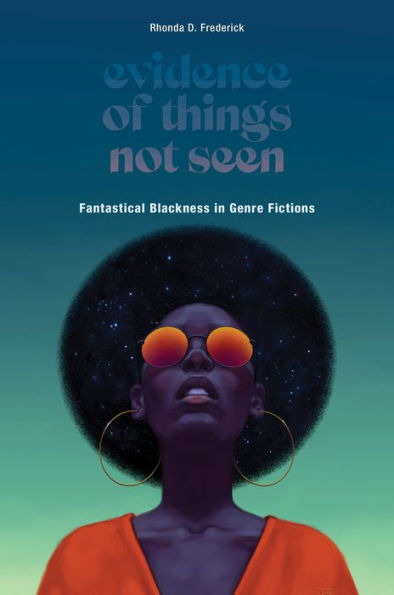
Evidence of Things Not Seen: Fantastical Blackness Genre Fictions in Chattanooga, TN
Current price: $150.00
Barnes and Noble
Evidence of Things Not Seen: Fantastical Blackness Genre Fictions in Chattanooga, TN
Current price: $150.00
Loading Inventory...
Size: Hardcover
Evidence of Things Not Seen
:
Fantastical Blackness in Genre Fictions
is an interdisciplinary study of blackness in genre literature of the Americas. The “fantastical” in fantastical blackness is conceived by an unrestrained imagination because it lives, despite every attempt at annihilation. This blackness amazes because it refuses the limits of anti-blackness. As put to work in this project, fantastical blackness is an ethical praxis that centers black self-knowledge as a point of departure rather than as a reaction to threatening or diminishing dominant narratives. Mystery, romance, fantasy, mixed-genre, and science fictions’ unrestrained imaginings profoundly communicate this quality of blackness, specifically here through the work of Barbara Neely, Colson Whitehead, Nalo Hopkinson, and Colin Channer. When black writers center this expressive quality, they make fantastical blackness available to a broad audience that then uses its imaginable vocabularies to reshape extra-literary realities. Ultimately, popular genres’ imaginable possibilities offer strategies through which the made up can be made real.
:
Fantastical Blackness in Genre Fictions
is an interdisciplinary study of blackness in genre literature of the Americas. The “fantastical” in fantastical blackness is conceived by an unrestrained imagination because it lives, despite every attempt at annihilation. This blackness amazes because it refuses the limits of anti-blackness. As put to work in this project, fantastical blackness is an ethical praxis that centers black self-knowledge as a point of departure rather than as a reaction to threatening or diminishing dominant narratives. Mystery, romance, fantasy, mixed-genre, and science fictions’ unrestrained imaginings profoundly communicate this quality of blackness, specifically here through the work of Barbara Neely, Colson Whitehead, Nalo Hopkinson, and Colin Channer. When black writers center this expressive quality, they make fantastical blackness available to a broad audience that then uses its imaginable vocabularies to reshape extra-literary realities. Ultimately, popular genres’ imaginable possibilities offer strategies through which the made up can be made real.
Evidence of Things Not Seen
:
Fantastical Blackness in Genre Fictions
is an interdisciplinary study of blackness in genre literature of the Americas. The “fantastical” in fantastical blackness is conceived by an unrestrained imagination because it lives, despite every attempt at annihilation. This blackness amazes because it refuses the limits of anti-blackness. As put to work in this project, fantastical blackness is an ethical praxis that centers black self-knowledge as a point of departure rather than as a reaction to threatening or diminishing dominant narratives. Mystery, romance, fantasy, mixed-genre, and science fictions’ unrestrained imaginings profoundly communicate this quality of blackness, specifically here through the work of Barbara Neely, Colson Whitehead, Nalo Hopkinson, and Colin Channer. When black writers center this expressive quality, they make fantastical blackness available to a broad audience that then uses its imaginable vocabularies to reshape extra-literary realities. Ultimately, popular genres’ imaginable possibilities offer strategies through which the made up can be made real.
:
Fantastical Blackness in Genre Fictions
is an interdisciplinary study of blackness in genre literature of the Americas. The “fantastical” in fantastical blackness is conceived by an unrestrained imagination because it lives, despite every attempt at annihilation. This blackness amazes because it refuses the limits of anti-blackness. As put to work in this project, fantastical blackness is an ethical praxis that centers black self-knowledge as a point of departure rather than as a reaction to threatening or diminishing dominant narratives. Mystery, romance, fantasy, mixed-genre, and science fictions’ unrestrained imaginings profoundly communicate this quality of blackness, specifically here through the work of Barbara Neely, Colson Whitehead, Nalo Hopkinson, and Colin Channer. When black writers center this expressive quality, they make fantastical blackness available to a broad audience that then uses its imaginable vocabularies to reshape extra-literary realities. Ultimately, popular genres’ imaginable possibilities offer strategies through which the made up can be made real.
You May Also Like













More About Barnes and Noble at Hamilton Place
Barnes & Noble is the world’s largest retail bookseller and a leading retailer of content, digital media and educational products. Our Nook Digital business offers a lineup of NOOK® tablets and e-Readers and an expansive collection of digital reading content through the NOOK Store®. Barnes & Noble’s mission is to operate the best omni-channel specialty retail business in America, helping both our customers and booksellers reach their aspirations, while being a credit to the communities we serve.
2100 Hamilton Pl Blvd, Chattanooga, TN 37421, United States
Find Barnes and Noble at Hamilton Place in Chattanooga, TN
Visit Barnes and Noble at Hamilton Place in Chattanooga, TN
