
Home
Evaluation of Automated Systems
Barnes and Noble
Loading Inventory...
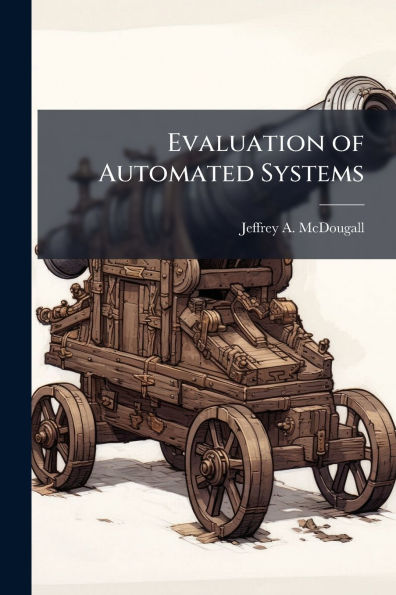
Evaluation of Automated Systems in Chattanooga, TN
Current price: $15.95
Barnes and Noble
Evaluation of Automated Systems in Chattanooga, TN
Current price: $15.95
Loading Inventory...
Size: OS
The end of the 20th Century presented the United States Army a new technological and geopolitical environment. The Army has recognized this change and is adapting to operate in this new environment. The army has developed a number of new automated tools to assist leaders to command and control their organizations. One tool currently being developed, tested, and integrated into the Army is the Combined Arms Planning and Execution Monitoring System or CAPES. CAPES is designed to assist decision makers develop, coordinate, and produce operational plans. As this and other automation systems are developed, they must be evaluated. The Army uses evaluation to determine the merits of a system. The evaluation also reveals deficiencies a system must correct to become more useful. This monograph focuses on the evaluation process. Investigating the process identified a number of problems an evaluation might encounter during the assessment. These problems identified in the research for this paper are now documented. Assessors can now use this list to design aspects of future evaluations. Initially the research for this monograph attempted to evaluate the usefulness of CAPES. To determine whether CAPES was useful a test was organized to compare two planning efforts. Two military staffs planned operations based on a similar problem. The experiment defined one planning staff, using traditional planning tools, as the bases of comparison. The second group would have the benefit of CAPES. The early collection and analysis of observations from the two planning groups indicated the design of the experiment was inadequate to show either CAPES 19 benefits or faults. Initial scrutiny revealed significant problems with the experiment 's design. These problems prevented any comparison of the two planning efforts. Investigation of the difficulties discovered problems in the scenario selected, organization of the planning staff, and the exercise architecture. Analysis of the problems indicate
This work has been selected by scholars as being culturally important, and is part of the knowledge base of civilization as we know it. This work was reproduced from the original artifact, and remains as true to the original work as possible. Therefore, you will see the original copyright references, library stamps (as most of these works have been housed in our most important libraries around the world), and other notations in the work.
This work is in the public domain in the United States of America, and possibly other nations. Within the United States, you may freely copy and distribute this work, as no entity (individual or corporate) has a copyright on the body of the work.
As a reproduction of a historical artifact, this work may contain missing or blurred pages, poor pictures, errant marks, etc. Scholars believe, and we concur, that this work is important enough to be preserved, reproduced, and made generally available to the public. We appreciate your support of the preservation process, and thank you for being an important part of keeping this knowledge alive and relevant.
This work has been selected by scholars as being culturally important, and is part of the knowledge base of civilization as we know it. This work was reproduced from the original artifact, and remains as true to the original work as possible. Therefore, you will see the original copyright references, library stamps (as most of these works have been housed in our most important libraries around the world), and other notations in the work.
This work is in the public domain in the United States of America, and possibly other nations. Within the United States, you may freely copy and distribute this work, as no entity (individual or corporate) has a copyright on the body of the work.
As a reproduction of a historical artifact, this work may contain missing or blurred pages, poor pictures, errant marks, etc. Scholars believe, and we concur, that this work is important enough to be preserved, reproduced, and made generally available to the public. We appreciate your support of the preservation process, and thank you for being an important part of keeping this knowledge alive and relevant.
The end of the 20th Century presented the United States Army a new technological and geopolitical environment. The Army has recognized this change and is adapting to operate in this new environment. The army has developed a number of new automated tools to assist leaders to command and control their organizations. One tool currently being developed, tested, and integrated into the Army is the Combined Arms Planning and Execution Monitoring System or CAPES. CAPES is designed to assist decision makers develop, coordinate, and produce operational plans. As this and other automation systems are developed, they must be evaluated. The Army uses evaluation to determine the merits of a system. The evaluation also reveals deficiencies a system must correct to become more useful. This monograph focuses on the evaluation process. Investigating the process identified a number of problems an evaluation might encounter during the assessment. These problems identified in the research for this paper are now documented. Assessors can now use this list to design aspects of future evaluations. Initially the research for this monograph attempted to evaluate the usefulness of CAPES. To determine whether CAPES was useful a test was organized to compare two planning efforts. Two military staffs planned operations based on a similar problem. The experiment defined one planning staff, using traditional planning tools, as the bases of comparison. The second group would have the benefit of CAPES. The early collection and analysis of observations from the two planning groups indicated the design of the experiment was inadequate to show either CAPES 19 benefits or faults. Initial scrutiny revealed significant problems with the experiment 's design. These problems prevented any comparison of the two planning efforts. Investigation of the difficulties discovered problems in the scenario selected, organization of the planning staff, and the exercise architecture. Analysis of the problems indicate
This work has been selected by scholars as being culturally important, and is part of the knowledge base of civilization as we know it. This work was reproduced from the original artifact, and remains as true to the original work as possible. Therefore, you will see the original copyright references, library stamps (as most of these works have been housed in our most important libraries around the world), and other notations in the work.
This work is in the public domain in the United States of America, and possibly other nations. Within the United States, you may freely copy and distribute this work, as no entity (individual or corporate) has a copyright on the body of the work.
As a reproduction of a historical artifact, this work may contain missing or blurred pages, poor pictures, errant marks, etc. Scholars believe, and we concur, that this work is important enough to be preserved, reproduced, and made generally available to the public. We appreciate your support of the preservation process, and thank you for being an important part of keeping this knowledge alive and relevant.
This work has been selected by scholars as being culturally important, and is part of the knowledge base of civilization as we know it. This work was reproduced from the original artifact, and remains as true to the original work as possible. Therefore, you will see the original copyright references, library stamps (as most of these works have been housed in our most important libraries around the world), and other notations in the work.
This work is in the public domain in the United States of America, and possibly other nations. Within the United States, you may freely copy and distribute this work, as no entity (individual or corporate) has a copyright on the body of the work.
As a reproduction of a historical artifact, this work may contain missing or blurred pages, poor pictures, errant marks, etc. Scholars believe, and we concur, that this work is important enough to be preserved, reproduced, and made generally available to the public. We appreciate your support of the preservation process, and thank you for being an important part of keeping this knowledge alive and relevant.
You May Also Like













More About Barnes and Noble at Hamilton Place
Barnes & Noble is the world’s largest retail bookseller and a leading retailer of content, digital media and educational products. Our Nook Digital business offers a lineup of NOOK® tablets and e-Readers and an expansive collection of digital reading content through the NOOK Store®. Barnes & Noble’s mission is to operate the best omni-channel specialty retail business in America, helping both our customers and booksellers reach their aspirations, while being a credit to the communities we serve.
2100 Hamilton Pl Blvd, Chattanooga, TN 37421, United States
Find Barnes and Noble at Hamilton Place in Chattanooga, TN
Visit Barnes and Noble at Hamilton Place in Chattanooga, TN