
Home
Ethnobotany and Uses of Native Plants the Bosque by American Indian Tribes Southwest: An Integrated/Transdisciplinary Approach to Ecosystem Services
Barnes and Noble
Loading Inventory...
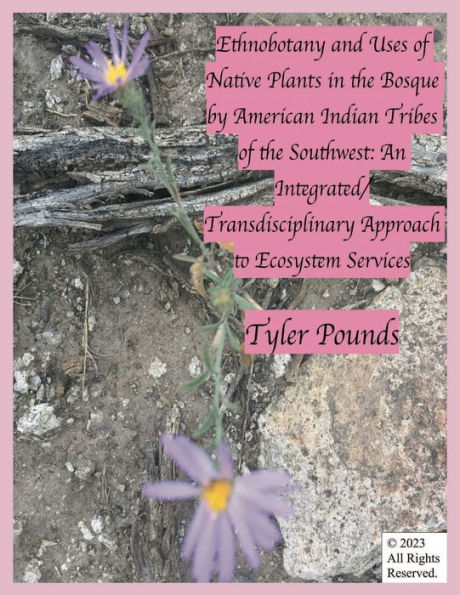
Ethnobotany and Uses of Native Plants the Bosque by American Indian Tribes Southwest: An Integrated/Transdisciplinary Approach to Ecosystem Services in Chattanooga, TN
Current price: $59.99
Barnes and Noble
Ethnobotany and Uses of Native Plants the Bosque by American Indian Tribes Southwest: An Integrated/Transdisciplinary Approach to Ecosystem Services in Chattanooga, TN
Current price: $59.99
Loading Inventory...
Size: Hardcover
All Rights Reserved
Copyright Registration Number / Date: TX0009300836 / 2023-07-27
Library of Congress Control Number: 2023911516
The First Book for Mr. Tyler Pounds "Integrated Human-Nature Relations". The "School of Integrated Human-Nature Relations" combines the fields of Anthropology, Wildlife Biology (Botany, Ecology, Zoology) into a cohesive integrated format. The school (and thus this book) delves into the direct links and relationships that humans have with nature. Exploring the direct links and relationships that humans have with nature is a critical first step on solving the worlds "biodiversity crisis". This book uses the fields of Ecological Anthropology, Ethnobotany, Integrated Biology to showcase biodiversity on Native American reservations as well as showcasing how
Ethnographic Field Methods can be integrated and used for wildlife management through an "Ecosystem Service" lens.
The showcasing of ecological data sets on Native American reservations is critical in proving to the world just how important and invaluable Traditional Ecological Knowledge (TEK) Systems are in conserving the worlds biodiversity. Integrating and "bridging of the sciences" will be crucial in solving the worlds biodiversity and global climate change crisis. We now stand in the "Anthropocene Epoch" of human caused ecological destruction. To value nature is to value one's own self and well-being.
Copyright Registration Number / Date: TX0009300836 / 2023-07-27
Library of Congress Control Number: 2023911516
The First Book for Mr. Tyler Pounds "Integrated Human-Nature Relations". The "School of Integrated Human-Nature Relations" combines the fields of Anthropology, Wildlife Biology (Botany, Ecology, Zoology) into a cohesive integrated format. The school (and thus this book) delves into the direct links and relationships that humans have with nature. Exploring the direct links and relationships that humans have with nature is a critical first step on solving the worlds "biodiversity crisis". This book uses the fields of Ecological Anthropology, Ethnobotany, Integrated Biology to showcase biodiversity on Native American reservations as well as showcasing how
Ethnographic Field Methods can be integrated and used for wildlife management through an "Ecosystem Service" lens.
The showcasing of ecological data sets on Native American reservations is critical in proving to the world just how important and invaluable Traditional Ecological Knowledge (TEK) Systems are in conserving the worlds biodiversity. Integrating and "bridging of the sciences" will be crucial in solving the worlds biodiversity and global climate change crisis. We now stand in the "Anthropocene Epoch" of human caused ecological destruction. To value nature is to value one's own self and well-being.
All Rights Reserved
Copyright Registration Number / Date: TX0009300836 / 2023-07-27
Library of Congress Control Number: 2023911516
The First Book for Mr. Tyler Pounds "Integrated Human-Nature Relations". The "School of Integrated Human-Nature Relations" combines the fields of Anthropology, Wildlife Biology (Botany, Ecology, Zoology) into a cohesive integrated format. The school (and thus this book) delves into the direct links and relationships that humans have with nature. Exploring the direct links and relationships that humans have with nature is a critical first step on solving the worlds "biodiversity crisis". This book uses the fields of Ecological Anthropology, Ethnobotany, Integrated Biology to showcase biodiversity on Native American reservations as well as showcasing how
Ethnographic Field Methods can be integrated and used for wildlife management through an "Ecosystem Service" lens.
The showcasing of ecological data sets on Native American reservations is critical in proving to the world just how important and invaluable Traditional Ecological Knowledge (TEK) Systems are in conserving the worlds biodiversity. Integrating and "bridging of the sciences" will be crucial in solving the worlds biodiversity and global climate change crisis. We now stand in the "Anthropocene Epoch" of human caused ecological destruction. To value nature is to value one's own self and well-being.
Copyright Registration Number / Date: TX0009300836 / 2023-07-27
Library of Congress Control Number: 2023911516
The First Book for Mr. Tyler Pounds "Integrated Human-Nature Relations". The "School of Integrated Human-Nature Relations" combines the fields of Anthropology, Wildlife Biology (Botany, Ecology, Zoology) into a cohesive integrated format. The school (and thus this book) delves into the direct links and relationships that humans have with nature. Exploring the direct links and relationships that humans have with nature is a critical first step on solving the worlds "biodiversity crisis". This book uses the fields of Ecological Anthropology, Ethnobotany, Integrated Biology to showcase biodiversity on Native American reservations as well as showcasing how
Ethnographic Field Methods can be integrated and used for wildlife management through an "Ecosystem Service" lens.
The showcasing of ecological data sets on Native American reservations is critical in proving to the world just how important and invaluable Traditional Ecological Knowledge (TEK) Systems are in conserving the worlds biodiversity. Integrating and "bridging of the sciences" will be crucial in solving the worlds biodiversity and global climate change crisis. We now stand in the "Anthropocene Epoch" of human caused ecological destruction. To value nature is to value one's own self and well-being.
You May Also Like







More About Barnes and Noble at Hamilton Place
Barnes & Noble is the world’s largest retail bookseller and a leading retailer of content, digital media and educational products. Our Nook Digital business offers a lineup of NOOK® tablets and e-Readers and an expansive collection of digital reading content through the NOOK Store®. Barnes & Noble’s mission is to operate the best omni-channel specialty retail business in America, helping both our customers and booksellers reach their aspirations, while being a credit to the communities we serve.
2100 Hamilton Pl Blvd, Chattanooga, TN 37421, United States
Find Barnes and Noble at Hamilton Place in Chattanooga, TN
Visit Barnes and Noble at Hamilton Place in Chattanooga, TN
