
Home
Equivocation Early Modern England: Literature, Rhetoric, Theology
Barnes and Noble
Loading Inventory...
Equivocation Early Modern England: Literature, Rhetoric, Theology in Chattanooga, TN
Current price: $115.00
Barnes and Noble
Equivocation Early Modern England: Literature, Rhetoric, Theology in Chattanooga, TN
Current price: $115.00
Loading Inventory...
Size: Hardcover
Equivocation in Early Modern England: Literature, Rhetoric, Theology
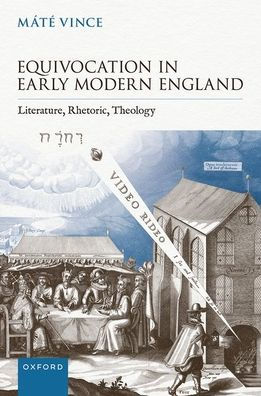
explores ideas about concealing the truth while seemingly revealing it. It is about the conflict, whether historical or fictional, between the interrogator's desire to gain information, the suspect's desire to hide the information, and the divine prohibition against lying. The Gunpowder Plot supposedly led to the revelation of the doctrine of equivocation, a secret teaching of the Roman Catholic Church that enabled concealing one's intentions and knowledge without lying. This book examines conflicting meanings of 'equivocation' to show how contemporary writers made sense of the theological-political debates, and how this in turn shaped their writings and understanding of how language works. It is an intellectual history of equivocation, tracing its evolution from antiquity to the present through an analysis of works by Euripides, Virgil, Shakespeare, Donne, rhetoricians from Cicero to Melanchthon, and theological polemicists, including Henry Garnet, Robert Persons, George Abbot, Thomas Morton, and Isaac Casaubon.
It combines a curiosity about equivocation as a linguistic, philosophical, and rhetorical notion that was keenly exploited by secular writers with a scrutiny of the cultural, political, and religious processes that contributed to its development. It explores the impact of sixteenth- and seventeenth-century literature, education, networks of correspondence, and controversies on the concept of ambiguity. It reveals how encounters with various forms of deception, including lying, strategic silence, dissimulation, and equivocation, resulted in an ever-growing anxiety about, and fascination with, ambiguity. It provides a radically new evaluation of equivocation that, as Macbeth puts it in his final despair, 'lies like truth'.
explores ideas about concealing the truth while seemingly revealing it. It is about the conflict, whether historical or fictional, between the interrogator's desire to gain information, the suspect's desire to hide the information, and the divine prohibition against lying. The Gunpowder Plot supposedly led to the revelation of the doctrine of equivocation, a secret teaching of the Roman Catholic Church that enabled concealing one's intentions and knowledge without lying. This book examines conflicting meanings of 'equivocation' to show how contemporary writers made sense of the theological-political debates, and how this in turn shaped their writings and understanding of how language works. It is an intellectual history of equivocation, tracing its evolution from antiquity to the present through an analysis of works by Euripides, Virgil, Shakespeare, Donne, rhetoricians from Cicero to Melanchthon, and theological polemicists, including Henry Garnet, Robert Persons, George Abbot, Thomas Morton, and Isaac Casaubon.
It combines a curiosity about equivocation as a linguistic, philosophical, and rhetorical notion that was keenly exploited by secular writers with a scrutiny of the cultural, political, and religious processes that contributed to its development. It explores the impact of sixteenth- and seventeenth-century literature, education, networks of correspondence, and controversies on the concept of ambiguity. It reveals how encounters with various forms of deception, including lying, strategic silence, dissimulation, and equivocation, resulted in an ever-growing anxiety about, and fascination with, ambiguity. It provides a radically new evaluation of equivocation that, as Macbeth puts it in his final despair, 'lies like truth'.
Equivocation in Early Modern England: Literature, Rhetoric, Theology
explores ideas about concealing the truth while seemingly revealing it. It is about the conflict, whether historical or fictional, between the interrogator's desire to gain information, the suspect's desire to hide the information, and the divine prohibition against lying. The Gunpowder Plot supposedly led to the revelation of the doctrine of equivocation, a secret teaching of the Roman Catholic Church that enabled concealing one's intentions and knowledge without lying. This book examines conflicting meanings of 'equivocation' to show how contemporary writers made sense of the theological-political debates, and how this in turn shaped their writings and understanding of how language works. It is an intellectual history of equivocation, tracing its evolution from antiquity to the present through an analysis of works by Euripides, Virgil, Shakespeare, Donne, rhetoricians from Cicero to Melanchthon, and theological polemicists, including Henry Garnet, Robert Persons, George Abbot, Thomas Morton, and Isaac Casaubon.
It combines a curiosity about equivocation as a linguistic, philosophical, and rhetorical notion that was keenly exploited by secular writers with a scrutiny of the cultural, political, and religious processes that contributed to its development. It explores the impact of sixteenth- and seventeenth-century literature, education, networks of correspondence, and controversies on the concept of ambiguity. It reveals how encounters with various forms of deception, including lying, strategic silence, dissimulation, and equivocation, resulted in an ever-growing anxiety about, and fascination with, ambiguity. It provides a radically new evaluation of equivocation that, as Macbeth puts it in his final despair, 'lies like truth'.
explores ideas about concealing the truth while seemingly revealing it. It is about the conflict, whether historical or fictional, between the interrogator's desire to gain information, the suspect's desire to hide the information, and the divine prohibition against lying. The Gunpowder Plot supposedly led to the revelation of the doctrine of equivocation, a secret teaching of the Roman Catholic Church that enabled concealing one's intentions and knowledge without lying. This book examines conflicting meanings of 'equivocation' to show how contemporary writers made sense of the theological-political debates, and how this in turn shaped their writings and understanding of how language works. It is an intellectual history of equivocation, tracing its evolution from antiquity to the present through an analysis of works by Euripides, Virgil, Shakespeare, Donne, rhetoricians from Cicero to Melanchthon, and theological polemicists, including Henry Garnet, Robert Persons, George Abbot, Thomas Morton, and Isaac Casaubon.
It combines a curiosity about equivocation as a linguistic, philosophical, and rhetorical notion that was keenly exploited by secular writers with a scrutiny of the cultural, political, and religious processes that contributed to its development. It explores the impact of sixteenth- and seventeenth-century literature, education, networks of correspondence, and controversies on the concept of ambiguity. It reveals how encounters with various forms of deception, including lying, strategic silence, dissimulation, and equivocation, resulted in an ever-growing anxiety about, and fascination with, ambiguity. It provides a radically new evaluation of equivocation that, as Macbeth puts it in his final despair, 'lies like truth'.
You May Also Like











More About Barnes and Noble at Hamilton Place
Barnes & Noble is the world’s largest retail bookseller and a leading retailer of content, digital media and educational products. Our Nook Digital business offers a lineup of NOOK® tablets and e-Readers and an expansive collection of digital reading content through the NOOK Store®. Barnes & Noble’s mission is to operate the best omni-channel specialty retail business in America, helping both our customers and booksellers reach their aspirations, while being a credit to the communities we serve.
2100 Hamilton Pl Blvd, Chattanooga, TN 37421, United States
Find Barnes and Noble at Hamilton Place in Chattanooga, TN
Visit Barnes and Noble at Hamilton Place in Chattanooga, TN
