
Home
Environmental Flow Assessment: Methods and Applications
Barnes and Noble
Loading Inventory...
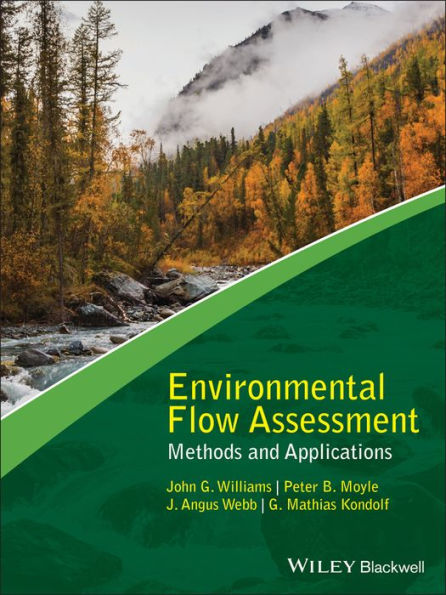
Environmental Flow Assessment: Methods and Applications in Chattanooga, TN
Current price: $134.95
Barnes and Noble
Environmental Flow Assessment: Methods and Applications in Chattanooga, TN
Current price: $134.95
Loading Inventory...
Size: Hardcover
Provides critiques of current practices for environmental flow assessment and shows how they can be improved, using case studies.
In Environmental Flow Assessment: Methods and Applications
, four leading experts critique methods used to manage flows in regulated streams and rivers to balance environmental (instream) and out-of-stream uses of water. Intended for managers as well as practitioners, the book dissects the shortcomings of commonly used approaches, and offers practical advice for selecting and implementing better ones.
The authors argue that methods for environmental flow assessment (EFA) can be defensible as well as practicable only if they squarely address uncertainty, and provide guidance for doing so. Introductory chapters describe the scientific and social reasons that EFA is hard, and provide a brief history. Because management of regulated streams starts with understanding freshwater ecosystems,
Environmental Flow Assessment: Methods and Application
s includes chapters on flow and organisms in streams. The following chapters assess standard and emerging methods, how they should be tested, and how they should (or should not) be applied. The book concludes with practical recommendations for implementing environmental flow assessment.
Describes historical and recent trends in environmental flow assessment
Directly addresses practical difficulties with applying a scientifically informed approach in contentious circumstances
Serves as an effective introduction to the relevant literature, with many references to articles in related scientific fields
Pays close attention to statistical issues such as sampling, estimation of statistical uncertainty, and model selection
Includes recommendations for methods and approaches
Examines how methods have been tested in the past and shows how they
should
be tested today and in the future
Environmental Flow Assessment: Methods and Applications
is an excellent book for biologists and specialists in allied fields such as engineering, ecology, fluvial geomorphology, environmental planning, landscape architecture, along with river managers and decision makers.
In Environmental Flow Assessment: Methods and Applications
, four leading experts critique methods used to manage flows in regulated streams and rivers to balance environmental (instream) and out-of-stream uses of water. Intended for managers as well as practitioners, the book dissects the shortcomings of commonly used approaches, and offers practical advice for selecting and implementing better ones.
The authors argue that methods for environmental flow assessment (EFA) can be defensible as well as practicable only if they squarely address uncertainty, and provide guidance for doing so. Introductory chapters describe the scientific and social reasons that EFA is hard, and provide a brief history. Because management of regulated streams starts with understanding freshwater ecosystems,
Environmental Flow Assessment: Methods and Application
s includes chapters on flow and organisms in streams. The following chapters assess standard and emerging methods, how they should be tested, and how they should (or should not) be applied. The book concludes with practical recommendations for implementing environmental flow assessment.
Describes historical and recent trends in environmental flow assessment
Directly addresses practical difficulties with applying a scientifically informed approach in contentious circumstances
Serves as an effective introduction to the relevant literature, with many references to articles in related scientific fields
Pays close attention to statistical issues such as sampling, estimation of statistical uncertainty, and model selection
Includes recommendations for methods and approaches
Examines how methods have been tested in the past and shows how they
should
be tested today and in the future
Environmental Flow Assessment: Methods and Applications
is an excellent book for biologists and specialists in allied fields such as engineering, ecology, fluvial geomorphology, environmental planning, landscape architecture, along with river managers and decision makers.
Provides critiques of current practices for environmental flow assessment and shows how they can be improved, using case studies.
In Environmental Flow Assessment: Methods and Applications
, four leading experts critique methods used to manage flows in regulated streams and rivers to balance environmental (instream) and out-of-stream uses of water. Intended for managers as well as practitioners, the book dissects the shortcomings of commonly used approaches, and offers practical advice for selecting and implementing better ones.
The authors argue that methods for environmental flow assessment (EFA) can be defensible as well as practicable only if they squarely address uncertainty, and provide guidance for doing so. Introductory chapters describe the scientific and social reasons that EFA is hard, and provide a brief history. Because management of regulated streams starts with understanding freshwater ecosystems,
Environmental Flow Assessment: Methods and Application
s includes chapters on flow and organisms in streams. The following chapters assess standard and emerging methods, how they should be tested, and how they should (or should not) be applied. The book concludes with practical recommendations for implementing environmental flow assessment.
Describes historical and recent trends in environmental flow assessment
Directly addresses practical difficulties with applying a scientifically informed approach in contentious circumstances
Serves as an effective introduction to the relevant literature, with many references to articles in related scientific fields
Pays close attention to statistical issues such as sampling, estimation of statistical uncertainty, and model selection
Includes recommendations for methods and approaches
Examines how methods have been tested in the past and shows how they
should
be tested today and in the future
Environmental Flow Assessment: Methods and Applications
is an excellent book for biologists and specialists in allied fields such as engineering, ecology, fluvial geomorphology, environmental planning, landscape architecture, along with river managers and decision makers.
In Environmental Flow Assessment: Methods and Applications
, four leading experts critique methods used to manage flows in regulated streams and rivers to balance environmental (instream) and out-of-stream uses of water. Intended for managers as well as practitioners, the book dissects the shortcomings of commonly used approaches, and offers practical advice for selecting and implementing better ones.
The authors argue that methods for environmental flow assessment (EFA) can be defensible as well as practicable only if they squarely address uncertainty, and provide guidance for doing so. Introductory chapters describe the scientific and social reasons that EFA is hard, and provide a brief history. Because management of regulated streams starts with understanding freshwater ecosystems,
Environmental Flow Assessment: Methods and Application
s includes chapters on flow and organisms in streams. The following chapters assess standard and emerging methods, how they should be tested, and how they should (or should not) be applied. The book concludes with practical recommendations for implementing environmental flow assessment.
Describes historical and recent trends in environmental flow assessment
Directly addresses practical difficulties with applying a scientifically informed approach in contentious circumstances
Serves as an effective introduction to the relevant literature, with many references to articles in related scientific fields
Pays close attention to statistical issues such as sampling, estimation of statistical uncertainty, and model selection
Includes recommendations for methods and approaches
Examines how methods have been tested in the past and shows how they
should
be tested today and in the future
Environmental Flow Assessment: Methods and Applications
is an excellent book for biologists and specialists in allied fields such as engineering, ecology, fluvial geomorphology, environmental planning, landscape architecture, along with river managers and decision makers.
You May Also Like









More About Barnes and Noble at Hamilton Place
Barnes & Noble is the world’s largest retail bookseller and a leading retailer of content, digital media and educational products. Our Nook Digital business offers a lineup of NOOK® tablets and e-Readers and an expansive collection of digital reading content through the NOOK Store®. Barnes & Noble’s mission is to operate the best omni-channel specialty retail business in America, helping both our customers and booksellers reach their aspirations, while being a credit to the communities we serve.
2100 Hamilton Pl Blvd, Chattanooga, TN 37421, United States
Find Barnes and Noble at Hamilton Place in Chattanooga, TN
Visit Barnes and Noble at Hamilton Place in Chattanooga, TN
