
Home
Energy Efficient Educational Institutions: The concept of net-zero carbon emission Schools Colleges and Universities
Barnes and Noble
Loading Inventory...
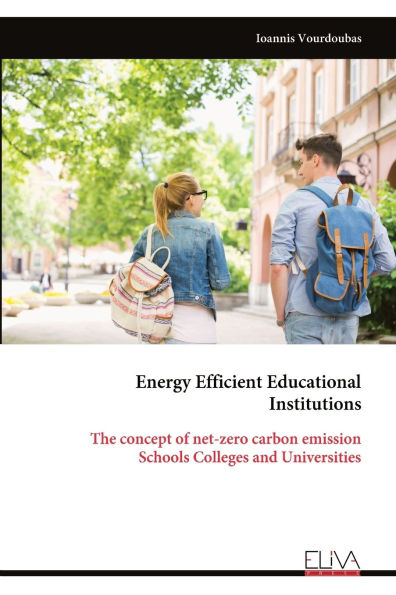
Energy Efficient Educational Institutions: The concept of net-zero carbon emission Schools Colleges and Universities in Chattanooga, TN
Current price: $79.50
Barnes and Noble
Energy Efficient Educational Institutions: The concept of net-zero carbon emission Schools Colleges and Universities in Chattanooga, TN
Current price: $79.50
Loading Inventory...
Size: OS
The escalating impacts of climate change and the intensifying calls for sustainability have placed a spotlight on the need for transformative action across all sectors of society. Among these, academic institutions hold a unique and powerful position. As hubs of innovation, education, and community engagement, universities and colleges have the potential to lead the charge in addressing climate challenges by adopting and advocating for zero-carbon emissions. By committing to sustainability, these institutions not only reduce their environmental impact but also educate and inspire the next generation to build a more sustainable world. The concept of zero carbon emissions, also referred to as net-zero emissions, entails balancing the amount of greenhouse gases emitted into the atmosphere with an equivalent amount removed or offset. In practical terms, achieving zero carbon emissions requires drastically reducing energy consumption, shifting to renewable energy sources, enhancing energy efficiency, and implementing carbon sequestration or offset strategies. School, colleges and university buildings consume less energy per square meter of covered surface compared with other types of buildings Academic institutions play a dual role in the transition to a zero-carbon future: as operational entities and as educators. This translates into transforming campus operations, infrastructure, and educational paradigms. The book follows a holistic approach investigating the legal, technological, social and economic aspects for achieving net-zero carbon emissions educational institutions. It could be useful to public and private stakeholders related with schools, colleges and universities. It could help them to design and implement their energy transition and to minimize or delete their carbon emissions associated with energy use according to EU target for net-zero carbon economy by 2050. The methodology followed, the information contained and the detailed presentation of several benign energy technologies which can be used in academic institutions increases the attractiveness of the book to various readers.
The escalating impacts of climate change and the intensifying calls for sustainability have placed a spotlight on the need for transformative action across all sectors of society. Among these, academic institutions hold a unique and powerful position. As hubs of innovation, education, and community engagement, universities and colleges have the potential to lead the charge in addressing climate challenges by adopting and advocating for zero-carbon emissions. By committing to sustainability, these institutions not only reduce their environmental impact but also educate and inspire the next generation to build a more sustainable world. The concept of zero carbon emissions, also referred to as net-zero emissions, entails balancing the amount of greenhouse gases emitted into the atmosphere with an equivalent amount removed or offset. In practical terms, achieving zero carbon emissions requires drastically reducing energy consumption, shifting to renewable energy sources, enhancing energy efficiency, and implementing carbon sequestration or offset strategies. School, colleges and university buildings consume less energy per square meter of covered surface compared with other types of buildings Academic institutions play a dual role in the transition to a zero-carbon future: as operational entities and as educators. This translates into transforming campus operations, infrastructure, and educational paradigms. The book follows a holistic approach investigating the legal, technological, social and economic aspects for achieving net-zero carbon emissions educational institutions. It could be useful to public and private stakeholders related with schools, colleges and universities. It could help them to design and implement their energy transition and to minimize or delete their carbon emissions associated with energy use according to EU target for net-zero carbon economy by 2050. The methodology followed, the information contained and the detailed presentation of several benign energy technologies which can be used in academic institutions increases the attractiveness of the book to various readers.
You May Also Like















More About Barnes and Noble at Hamilton Place
Barnes & Noble is the world’s largest retail bookseller and a leading retailer of content, digital media and educational products. Our Nook Digital business offers a lineup of NOOK® tablets and e-Readers and an expansive collection of digital reading content through the NOOK Store®. Barnes & Noble’s mission is to operate the best omni-channel specialty retail business in America, helping both our customers and booksellers reach their aspirations, while being a credit to the communities we serve.
2100 Hamilton Pl Blvd, Chattanooga, TN 37421, United States
Find Barnes and Noble at Hamilton Place in Chattanooga, TN
Visit Barnes and Noble at Hamilton Place in Chattanooga, TN
