
Home
Emirati Women Journalists: Bargaining with Patriarchy Search of Equality
Barnes and Noble
Loading Inventory...
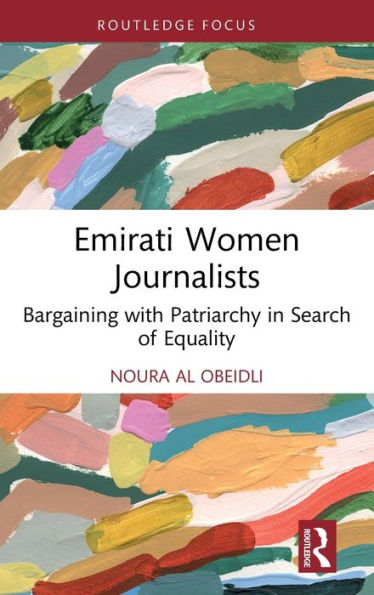
Emirati Women Journalists: Bargaining with Patriarchy Search of Equality in Chattanooga, TN
Current price: $64.99
Barnes and Noble
Emirati Women Journalists: Bargaining with Patriarchy Search of Equality in Chattanooga, TN
Current price: $64.99
Loading Inventory...
Size: Hardcover
This book presents a rare investigation of the media landscape and gender dynamics in Emirati newsrooms, with a socio-cultural focus on the influence of tribal patriarchalism in determining Emirati women’s role as newsmakers.
Shedding light on the stories of 40 Emirati and Arab expat journalists, including pioneer Emirati women journalists, the book offers insight into how these journalists construct gender differences and identity and how this influences their everyday attitudes, conversations, routines, and journalistic practices. The empirical study is supplanted with ethnographic explanations of the newsroom norms and journalistic practices from the author, who used participant observation inside two major news centres in Abu Dhabi and Dubai to understand the socio-cultural factors that shape the lives of Emirati and Arab expat journalists, their thoughts and beliefs about the media environment in the Emirates, and their opinions on authoritarian political control, censorship, and outdated media law.
This book will interest students and scholars of journalism and journalistic practice, media policy, international journalism, gender studies, and Middle East studies.
Shedding light on the stories of 40 Emirati and Arab expat journalists, including pioneer Emirati women journalists, the book offers insight into how these journalists construct gender differences and identity and how this influences their everyday attitudes, conversations, routines, and journalistic practices. The empirical study is supplanted with ethnographic explanations of the newsroom norms and journalistic practices from the author, who used participant observation inside two major news centres in Abu Dhabi and Dubai to understand the socio-cultural factors that shape the lives of Emirati and Arab expat journalists, their thoughts and beliefs about the media environment in the Emirates, and their opinions on authoritarian political control, censorship, and outdated media law.
This book will interest students and scholars of journalism and journalistic practice, media policy, international journalism, gender studies, and Middle East studies.
This book presents a rare investigation of the media landscape and gender dynamics in Emirati newsrooms, with a socio-cultural focus on the influence of tribal patriarchalism in determining Emirati women’s role as newsmakers.
Shedding light on the stories of 40 Emirati and Arab expat journalists, including pioneer Emirati women journalists, the book offers insight into how these journalists construct gender differences and identity and how this influences their everyday attitudes, conversations, routines, and journalistic practices. The empirical study is supplanted with ethnographic explanations of the newsroom norms and journalistic practices from the author, who used participant observation inside two major news centres in Abu Dhabi and Dubai to understand the socio-cultural factors that shape the lives of Emirati and Arab expat journalists, their thoughts and beliefs about the media environment in the Emirates, and their opinions on authoritarian political control, censorship, and outdated media law.
This book will interest students and scholars of journalism and journalistic practice, media policy, international journalism, gender studies, and Middle East studies.
Shedding light on the stories of 40 Emirati and Arab expat journalists, including pioneer Emirati women journalists, the book offers insight into how these journalists construct gender differences and identity and how this influences their everyday attitudes, conversations, routines, and journalistic practices. The empirical study is supplanted with ethnographic explanations of the newsroom norms and journalistic practices from the author, who used participant observation inside two major news centres in Abu Dhabi and Dubai to understand the socio-cultural factors that shape the lives of Emirati and Arab expat journalists, their thoughts and beliefs about the media environment in the Emirates, and their opinions on authoritarian political control, censorship, and outdated media law.
This book will interest students and scholars of journalism and journalistic practice, media policy, international journalism, gender studies, and Middle East studies.
You May Also Like
















More About Barnes and Noble at Hamilton Place
Barnes & Noble is the world’s largest retail bookseller and a leading retailer of content, digital media and educational products. Our Nook Digital business offers a lineup of NOOK® tablets and e-Readers and an expansive collection of digital reading content through the NOOK Store®. Barnes & Noble’s mission is to operate the best omni-channel specialty retail business in America, helping both our customers and booksellers reach their aspirations, while being a credit to the communities we serve.
2100 Hamilton Pl Blvd, Chattanooga, TN 37421, United States
Find Barnes and Noble at Hamilton Place in Chattanooga, TN
Visit Barnes and Noble at Hamilton Place in Chattanooga, TN
