
Home
Embodying Difference: The Making of Burakumin in Modern Japan
Barnes and Noble
Loading Inventory...
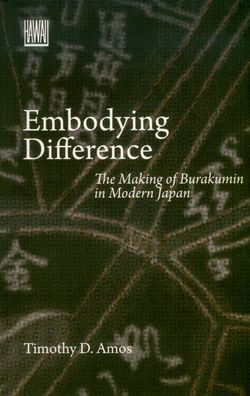
Embodying Difference: The Making of Burakumin in Modern Japan in Chattanooga, TN
Current price: $33.00
Barnes and Noble
Embodying Difference: The Making of Burakumin in Modern Japan in Chattanooga, TN
Current price: $33.00
Loading Inventory...
Size: OS
The burakumin, Japan’s largest minority group, have been the focus of an extensive yet strikingly homogenous body of Japanese language research. The master narrative in much of this work typically links burakumin to premodern occupational groups which engaged in a number of socially polluting tasks like tanning and leatherwork. This master narrative, however, when subjected to close scrutiny, tends to raise more questions than it answers, particularly for the historian. Is there really firm historical continuity between premodern outcaste and modern burakumin communities? Is the discrimination experienced by historic and contemporary outcaste communities actually the same? Does the way burakumin frame their own experience significantly affect mainstream understandings of their plight?
This book is the result of a decadeandahalflong search for answers to these questions. Based on an extensive array of original archival material, ethnographical research, and critical historiographical work, it argues that there needs to be a fundamental reconceptualisation of the buraku problem for two main reasons. First, the master narrative is built on empirically and conceptually questionable foundations; and second, mainstream accounts tend to overlook the very important role burakumin and other interested parties play in the construction and maintenance of the narrative. By continually drawing a straight line between premodern outcaste groups and today’s burakumin, and equating the types of discrimination suffered by members of this community today with that faced by their premodern counterparts, the Japanese government, the general population, scholars, and burakumin activists tend to overlook some of the real changes that have often taken place both in who is identified as members of socially marginalized groups in Japan and how they experience that identification. Clinging to this master narrative, moreover, serves to restrict the ways in which burakumin can productively and more inclusively identify in the present to imagine a liberated future for themselves.
Timothy Amos’ attempt to rethink the boundaries of buraku history and the category of the outcaste in Japan results in a compelling study of buraku issues for any audience.
Not for sale in South Asia
This book is the result of a decadeandahalflong search for answers to these questions. Based on an extensive array of original archival material, ethnographical research, and critical historiographical work, it argues that there needs to be a fundamental reconceptualisation of the buraku problem for two main reasons. First, the master narrative is built on empirically and conceptually questionable foundations; and second, mainstream accounts tend to overlook the very important role burakumin and other interested parties play in the construction and maintenance of the narrative. By continually drawing a straight line between premodern outcaste groups and today’s burakumin, and equating the types of discrimination suffered by members of this community today with that faced by their premodern counterparts, the Japanese government, the general population, scholars, and burakumin activists tend to overlook some of the real changes that have often taken place both in who is identified as members of socially marginalized groups in Japan and how they experience that identification. Clinging to this master narrative, moreover, serves to restrict the ways in which burakumin can productively and more inclusively identify in the present to imagine a liberated future for themselves.
Timothy Amos’ attempt to rethink the boundaries of buraku history and the category of the outcaste in Japan results in a compelling study of buraku issues for any audience.
Not for sale in South Asia
The burakumin, Japan’s largest minority group, have been the focus of an extensive yet strikingly homogenous body of Japanese language research. The master narrative in much of this work typically links burakumin to premodern occupational groups which engaged in a number of socially polluting tasks like tanning and leatherwork. This master narrative, however, when subjected to close scrutiny, tends to raise more questions than it answers, particularly for the historian. Is there really firm historical continuity between premodern outcaste and modern burakumin communities? Is the discrimination experienced by historic and contemporary outcaste communities actually the same? Does the way burakumin frame their own experience significantly affect mainstream understandings of their plight?
This book is the result of a decadeandahalflong search for answers to these questions. Based on an extensive array of original archival material, ethnographical research, and critical historiographical work, it argues that there needs to be a fundamental reconceptualisation of the buraku problem for two main reasons. First, the master narrative is built on empirically and conceptually questionable foundations; and second, mainstream accounts tend to overlook the very important role burakumin and other interested parties play in the construction and maintenance of the narrative. By continually drawing a straight line between premodern outcaste groups and today’s burakumin, and equating the types of discrimination suffered by members of this community today with that faced by their premodern counterparts, the Japanese government, the general population, scholars, and burakumin activists tend to overlook some of the real changes that have often taken place both in who is identified as members of socially marginalized groups in Japan and how they experience that identification. Clinging to this master narrative, moreover, serves to restrict the ways in which burakumin can productively and more inclusively identify in the present to imagine a liberated future for themselves.
Timothy Amos’ attempt to rethink the boundaries of buraku history and the category of the outcaste in Japan results in a compelling study of buraku issues for any audience.
Not for sale in South Asia
This book is the result of a decadeandahalflong search for answers to these questions. Based on an extensive array of original archival material, ethnographical research, and critical historiographical work, it argues that there needs to be a fundamental reconceptualisation of the buraku problem for two main reasons. First, the master narrative is built on empirically and conceptually questionable foundations; and second, mainstream accounts tend to overlook the very important role burakumin and other interested parties play in the construction and maintenance of the narrative. By continually drawing a straight line between premodern outcaste groups and today’s burakumin, and equating the types of discrimination suffered by members of this community today with that faced by their premodern counterparts, the Japanese government, the general population, scholars, and burakumin activists tend to overlook some of the real changes that have often taken place both in who is identified as members of socially marginalized groups in Japan and how they experience that identification. Clinging to this master narrative, moreover, serves to restrict the ways in which burakumin can productively and more inclusively identify in the present to imagine a liberated future for themselves.
Timothy Amos’ attempt to rethink the boundaries of buraku history and the category of the outcaste in Japan results in a compelling study of buraku issues for any audience.
Not for sale in South Asia
You May Also Like











More About Barnes and Noble at Hamilton Place
Barnes & Noble is the world’s largest retail bookseller and a leading retailer of content, digital media and educational products. Our Nook Digital business offers a lineup of NOOK® tablets and e-Readers and an expansive collection of digital reading content through the NOOK Store®. Barnes & Noble’s mission is to operate the best omni-channel specialty retail business in America, helping both our customers and booksellers reach their aspirations, while being a credit to the communities we serve.
2100 Hamilton Pl Blvd, Chattanooga, TN 37421, United States
Find Barnes and Noble at Hamilton Place in Chattanooga, TN
Visit Barnes and Noble at Hamilton Place in Chattanooga, TN
