
Home
Ecology of Macrofungi: An Overview
Barnes and Noble
Loading Inventory...
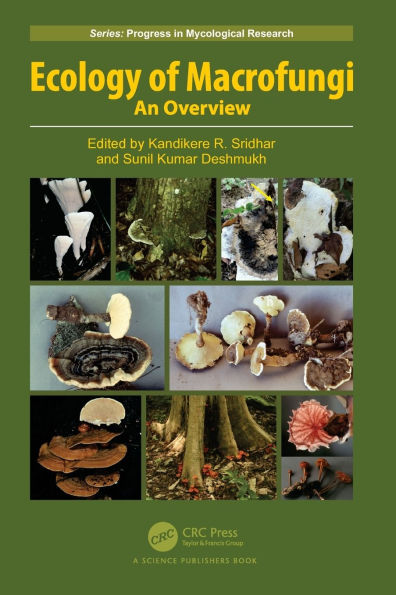
Ecology of Macrofungi: An Overview in Chattanooga, TN
Current price: $190.00
Barnes and Noble
Ecology of Macrofungi: An Overview in Chattanooga, TN
Current price: $190.00
Loading Inventory...
Size: Hardcover
Macrofungi have significant importance in human health, particularly in nutrition, medicine, pharmaceuticals, agriculture and industries. They occupy a variety of ecosystems such as terrestrial (agricultural lands, forests and deserts), freshwater (bogs and marshes) and maritime (mangroves and coastal sand dunes) habitats. Their ecosystem services like nutrition (humans and animals), medicinal pursuits (antibiotics and pharmaceuticals) and bioremediation (degradation of xenobiotics and insect control) potential are dependent on their diversity and ecological conditions. Macrofungal ecology serves as the basis for nutraceutical values, agricultural benefits, plant productivity, environmental protection and industrially valued biocomposites.
This book focuses on various aspects of macrofungal distribution in diverse habitats, participation in organic matter decomposition, ectomycorrhizal associations and participation in biogeochemical cycles. This book reviews the current developments in macrofungal ecology in different habitats and their benefits. Due to the topics dealt with on macrofungal diversity, distribution, dynamics, lifestyles, ecosystem or substrate preferences and ecosystem services, this book is valuable to mycologists, botanists, zoologists, ecologists, foresters, geneticists, agronomists and field biologists.
This book focuses on various aspects of macrofungal distribution in diverse habitats, participation in organic matter decomposition, ectomycorrhizal associations and participation in biogeochemical cycles. This book reviews the current developments in macrofungal ecology in different habitats and their benefits. Due to the topics dealt with on macrofungal diversity, distribution, dynamics, lifestyles, ecosystem or substrate preferences and ecosystem services, this book is valuable to mycologists, botanists, zoologists, ecologists, foresters, geneticists, agronomists and field biologists.
Macrofungi have significant importance in human health, particularly in nutrition, medicine, pharmaceuticals, agriculture and industries. They occupy a variety of ecosystems such as terrestrial (agricultural lands, forests and deserts), freshwater (bogs and marshes) and maritime (mangroves and coastal sand dunes) habitats. Their ecosystem services like nutrition (humans and animals), medicinal pursuits (antibiotics and pharmaceuticals) and bioremediation (degradation of xenobiotics and insect control) potential are dependent on their diversity and ecological conditions. Macrofungal ecology serves as the basis for nutraceutical values, agricultural benefits, plant productivity, environmental protection and industrially valued biocomposites.
This book focuses on various aspects of macrofungal distribution in diverse habitats, participation in organic matter decomposition, ectomycorrhizal associations and participation in biogeochemical cycles. This book reviews the current developments in macrofungal ecology in different habitats and their benefits. Due to the topics dealt with on macrofungal diversity, distribution, dynamics, lifestyles, ecosystem or substrate preferences and ecosystem services, this book is valuable to mycologists, botanists, zoologists, ecologists, foresters, geneticists, agronomists and field biologists.
This book focuses on various aspects of macrofungal distribution in diverse habitats, participation in organic matter decomposition, ectomycorrhizal associations and participation in biogeochemical cycles. This book reviews the current developments in macrofungal ecology in different habitats and their benefits. Due to the topics dealt with on macrofungal diversity, distribution, dynamics, lifestyles, ecosystem or substrate preferences and ecosystem services, this book is valuable to mycologists, botanists, zoologists, ecologists, foresters, geneticists, agronomists and field biologists.
You May Also Like













More About Barnes and Noble at Hamilton Place
Barnes & Noble is the world’s largest retail bookseller and a leading retailer of content, digital media and educational products. Our Nook Digital business offers a lineup of NOOK® tablets and e-Readers and an expansive collection of digital reading content through the NOOK Store®. Barnes & Noble’s mission is to operate the best omni-channel specialty retail business in America, helping both our customers and booksellers reach their aspirations, while being a credit to the communities we serve.
2100 Hamilton Pl Blvd, Chattanooga, TN 37421, United States
Find Barnes and Noble at Hamilton Place in Chattanooga, TN
Visit Barnes and Noble at Hamilton Place in Chattanooga, TN
