
Home
Early Life Conditions and Rapid Demographic Changes the Developing World: Consequences for Older Adult Health
Barnes and Noble
Loading Inventory...
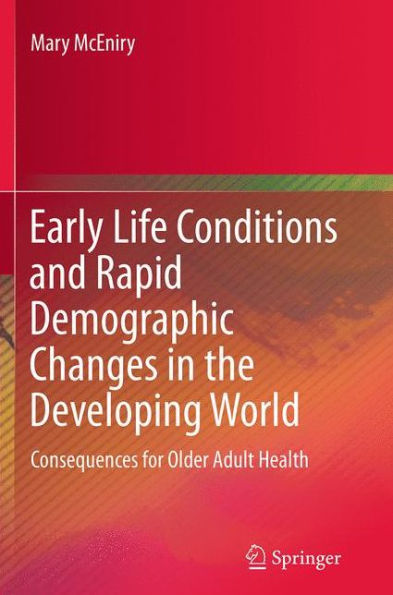
Early Life Conditions and Rapid Demographic Changes the Developing World: Consequences for Older Adult Health in Chattanooga, TN
Current price: $109.99
Barnes and Noble
Early Life Conditions and Rapid Demographic Changes the Developing World: Consequences for Older Adult Health in Chattanooga, TN
Current price: $109.99
Loading Inventory...
Size: Hardcover
This book examines the long term consequences of improvements in life expectancy in the mid 20
th
century which are partly responsible for the growth of the elderly population in the developing world. Rapid demographic changes in child and infant mortality due to the reduction in and better treatment of disease were not often accompanied by parallel increases in standard of living. Lower mortality led to greater survival by those who had suffered poor early life conditions. As a consequence, the early life of these survivors may explain older adult health and in particular the projected increase in adult health disease and diabetes. Recent dietary changes may only compound such early life effects. This study presents findings from historical and survey data on nearly 147,000 older adults in 20 low-, middle- and high-income countries which suggest that the survivors of poor early life conditions born during the 1930s-1960s are susceptible to disease later in life, specifically diabetes and heart disease. As the evidence that the aging process is shaped throughout the entire life course increases, this book adds to the knowledge regarding early life events and older adult health.
th
century which are partly responsible for the growth of the elderly population in the developing world. Rapid demographic changes in child and infant mortality due to the reduction in and better treatment of disease were not often accompanied by parallel increases in standard of living. Lower mortality led to greater survival by those who had suffered poor early life conditions. As a consequence, the early life of these survivors may explain older adult health and in particular the projected increase in adult health disease and diabetes. Recent dietary changes may only compound such early life effects. This study presents findings from historical and survey data on nearly 147,000 older adults in 20 low-, middle- and high-income countries which suggest that the survivors of poor early life conditions born during the 1930s-1960s are susceptible to disease later in life, specifically diabetes and heart disease. As the evidence that the aging process is shaped throughout the entire life course increases, this book adds to the knowledge regarding early life events and older adult health.
This book examines the long term consequences of improvements in life expectancy in the mid 20
th
century which are partly responsible for the growth of the elderly population in the developing world. Rapid demographic changes in child and infant mortality due to the reduction in and better treatment of disease were not often accompanied by parallel increases in standard of living. Lower mortality led to greater survival by those who had suffered poor early life conditions. As a consequence, the early life of these survivors may explain older adult health and in particular the projected increase in adult health disease and diabetes. Recent dietary changes may only compound such early life effects. This study presents findings from historical and survey data on nearly 147,000 older adults in 20 low-, middle- and high-income countries which suggest that the survivors of poor early life conditions born during the 1930s-1960s are susceptible to disease later in life, specifically diabetes and heart disease. As the evidence that the aging process is shaped throughout the entire life course increases, this book adds to the knowledge regarding early life events and older adult health.
th
century which are partly responsible for the growth of the elderly population in the developing world. Rapid demographic changes in child and infant mortality due to the reduction in and better treatment of disease were not often accompanied by parallel increases in standard of living. Lower mortality led to greater survival by those who had suffered poor early life conditions. As a consequence, the early life of these survivors may explain older adult health and in particular the projected increase in adult health disease and diabetes. Recent dietary changes may only compound such early life effects. This study presents findings from historical and survey data on nearly 147,000 older adults in 20 low-, middle- and high-income countries which suggest that the survivors of poor early life conditions born during the 1930s-1960s are susceptible to disease later in life, specifically diabetes and heart disease. As the evidence that the aging process is shaped throughout the entire life course increases, this book adds to the knowledge regarding early life events and older adult health.
You May Also Like













More About Barnes and Noble at Hamilton Place
Barnes & Noble is the world’s largest retail bookseller and a leading retailer of content, digital media and educational products. Our Nook Digital business offers a lineup of NOOK® tablets and e-Readers and an expansive collection of digital reading content through the NOOK Store®. Barnes & Noble’s mission is to operate the best omni-channel specialty retail business in America, helping both our customers and booksellers reach their aspirations, while being a credit to the communities we serve.
2100 Hamilton Pl Blvd, Chattanooga, TN 37421, United States
Find Barnes and Noble at Hamilton Place in Chattanooga, TN
Visit Barnes and Noble at Hamilton Place in Chattanooga, TN
