
Home
Dramatic Justice: Trial by Theater the Age of French Revolution
Barnes and Noble
Loading Inventory...
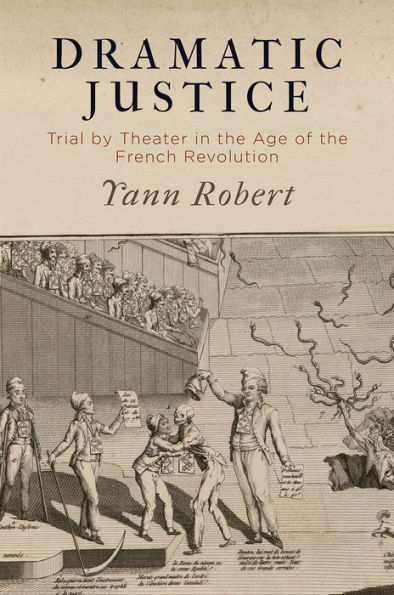
Dramatic Justice: Trial by Theater the Age of French Revolution in Chattanooga, TN
Current price: $84.95
Barnes and Noble
Dramatic Justice: Trial by Theater the Age of French Revolution in Chattanooga, TN
Current price: $84.95
Loading Inventory...
Size: Hardcover
For most of the seventeenth and eighteenth centuries, classical dogma and royal censorship worked together to prevent French plays from commenting on, or even worse, reenacting current political and judicial affairs. Criminal trials, meanwhile, were designed to be as untheatrical as possible, excluding from the courtroom live debates, trained orators, and spectators. According to Yann Robert, circumstances changed between 1750 and 1800 as parallel evolutions in theater and justice brought them closer together, causing lasting transformations in both.
Robert contends that the gradual merging of theatrical and legal modes in eighteenth-century France has been largely overlooked because it challenges two widely accepted narratives: first, that French theater drifted toward entertainment and illusionism during this period and, second, that the French justice system abandoned any performative foundation it previously had in favor of a textual one. In
Dramatic Justice
, he demonstrates that the inverse of each was true. Robert traces the rise of a "judicial theater" in which plays denounced criminals by name, even forcing them, in some cases, to perform their transgressions anew before a jeering public. Likewise, he shows how legal reformers intentionally modeled trial proceedings on dramatic representations and went so far as to recommend that judges mimic the sentimental judgment of spectators and that lawyers seek private lessons from actors. This conflation of theatrical and legal performances provoked debates and anxieties in the eighteenth century that, according to Robert, continue to resonate with present concerns over lawsuit culture and judicial entertainment.
offers an alternate history of French theater and judicial practice, one that advances new explanations for several pivotal moments in the French Revolution, including the trial of Louis XVI and the Terror, by showing the extent to which they were shaped by the period's conflicted relationship to theatrical justice.
Robert contends that the gradual merging of theatrical and legal modes in eighteenth-century France has been largely overlooked because it challenges two widely accepted narratives: first, that French theater drifted toward entertainment and illusionism during this period and, second, that the French justice system abandoned any performative foundation it previously had in favor of a textual one. In
Dramatic Justice
, he demonstrates that the inverse of each was true. Robert traces the rise of a "judicial theater" in which plays denounced criminals by name, even forcing them, in some cases, to perform their transgressions anew before a jeering public. Likewise, he shows how legal reformers intentionally modeled trial proceedings on dramatic representations and went so far as to recommend that judges mimic the sentimental judgment of spectators and that lawyers seek private lessons from actors. This conflation of theatrical and legal performances provoked debates and anxieties in the eighteenth century that, according to Robert, continue to resonate with present concerns over lawsuit culture and judicial entertainment.
offers an alternate history of French theater and judicial practice, one that advances new explanations for several pivotal moments in the French Revolution, including the trial of Louis XVI and the Terror, by showing the extent to which they were shaped by the period's conflicted relationship to theatrical justice.
For most of the seventeenth and eighteenth centuries, classical dogma and royal censorship worked together to prevent French plays from commenting on, or even worse, reenacting current political and judicial affairs. Criminal trials, meanwhile, were designed to be as untheatrical as possible, excluding from the courtroom live debates, trained orators, and spectators. According to Yann Robert, circumstances changed between 1750 and 1800 as parallel evolutions in theater and justice brought them closer together, causing lasting transformations in both.
Robert contends that the gradual merging of theatrical and legal modes in eighteenth-century France has been largely overlooked because it challenges two widely accepted narratives: first, that French theater drifted toward entertainment and illusionism during this period and, second, that the French justice system abandoned any performative foundation it previously had in favor of a textual one. In
Dramatic Justice
, he demonstrates that the inverse of each was true. Robert traces the rise of a "judicial theater" in which plays denounced criminals by name, even forcing them, in some cases, to perform their transgressions anew before a jeering public. Likewise, he shows how legal reformers intentionally modeled trial proceedings on dramatic representations and went so far as to recommend that judges mimic the sentimental judgment of spectators and that lawyers seek private lessons from actors. This conflation of theatrical and legal performances provoked debates and anxieties in the eighteenth century that, according to Robert, continue to resonate with present concerns over lawsuit culture and judicial entertainment.
offers an alternate history of French theater and judicial practice, one that advances new explanations for several pivotal moments in the French Revolution, including the trial of Louis XVI and the Terror, by showing the extent to which they were shaped by the period's conflicted relationship to theatrical justice.
Robert contends that the gradual merging of theatrical and legal modes in eighteenth-century France has been largely overlooked because it challenges two widely accepted narratives: first, that French theater drifted toward entertainment and illusionism during this period and, second, that the French justice system abandoned any performative foundation it previously had in favor of a textual one. In
Dramatic Justice
, he demonstrates that the inverse of each was true. Robert traces the rise of a "judicial theater" in which plays denounced criminals by name, even forcing them, in some cases, to perform their transgressions anew before a jeering public. Likewise, he shows how legal reformers intentionally modeled trial proceedings on dramatic representations and went so far as to recommend that judges mimic the sentimental judgment of spectators and that lawyers seek private lessons from actors. This conflation of theatrical and legal performances provoked debates and anxieties in the eighteenth century that, according to Robert, continue to resonate with present concerns over lawsuit culture and judicial entertainment.
offers an alternate history of French theater and judicial practice, one that advances new explanations for several pivotal moments in the French Revolution, including the trial of Louis XVI and the Terror, by showing the extent to which they were shaped by the period's conflicted relationship to theatrical justice.
You May Also Like













More About Barnes and Noble at Hamilton Place
Barnes & Noble is the world’s largest retail bookseller and a leading retailer of content, digital media and educational products. Our Nook Digital business offers a lineup of NOOK® tablets and e-Readers and an expansive collection of digital reading content through the NOOK Store®. Barnes & Noble’s mission is to operate the best omni-channel specialty retail business in America, helping both our customers and booksellers reach their aspirations, while being a credit to the communities we serve.
2100 Hamilton Pl Blvd, Chattanooga, TN 37421, United States
Find Barnes and Noble at Hamilton Place in Chattanooga, TN
Visit Barnes and Noble at Hamilton Place in Chattanooga, TN
