
Home
Doing Time: Temporality, Hermeneutics, and Contemporary Cinema
Barnes and Noble
Loading Inventory...
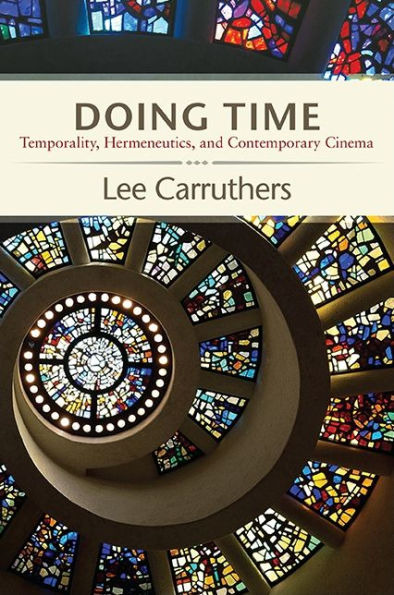
Doing Time: Temporality, Hermeneutics, and Contemporary Cinema in Chattanooga, TN
Current price: $99.00
Barnes and Noble
Doing Time: Temporality, Hermeneutics, and Contemporary Cinema in Chattanooga, TN
Current price: $99.00
Loading Inventory...
Size: Hardcover
Proposes that cinematic time is not a fixed idea, but a dynamic exchange between film and viewer.
Doing Time
addresses two areas of interest in recent film study-film temporality and film philosophy-to propose an innovative theorization of cinematic time that sees it as a dynamic process of engagement, or something we
do
as viewers. This active relation to cinematic time, which discloses a film's temporal character, is called its "timeliness." Here it is traced across a range of fascinating case studies from Hollywood and the global art cinema, uncovering each film's characteristic way of "doing time." Throughout, the ambiguities of filmic time are held as powerful attractions as they modulate film viewing: such pauses, gaps, repetitions, and stretches of time illuminate a living field that extends from viewing activity.
Drawing on the writings of French film critic and theorist André Bazin, as well as the phenomenology of Martin Heidegger and Maurice Merleau-Ponty, Lee Carruthers forwards a claim about the value of cinematic time for thinking. She also raises the tasks of film analysis and interpretation to renewed visibility. By prioritizing the viewer's experience of filmic temporality, and offering a rich vocabulary for describing this exchange, Carruthers articulates a new sphere of theoretical inquiry that invites film viewers (and readers) to participate.
Doing Time
addresses two areas of interest in recent film study-film temporality and film philosophy-to propose an innovative theorization of cinematic time that sees it as a dynamic process of engagement, or something we
do
as viewers. This active relation to cinematic time, which discloses a film's temporal character, is called its "timeliness." Here it is traced across a range of fascinating case studies from Hollywood and the global art cinema, uncovering each film's characteristic way of "doing time." Throughout, the ambiguities of filmic time are held as powerful attractions as they modulate film viewing: such pauses, gaps, repetitions, and stretches of time illuminate a living field that extends from viewing activity.
Drawing on the writings of French film critic and theorist André Bazin, as well as the phenomenology of Martin Heidegger and Maurice Merleau-Ponty, Lee Carruthers forwards a claim about the value of cinematic time for thinking. She also raises the tasks of film analysis and interpretation to renewed visibility. By prioritizing the viewer's experience of filmic temporality, and offering a rich vocabulary for describing this exchange, Carruthers articulates a new sphere of theoretical inquiry that invites film viewers (and readers) to participate.
Proposes that cinematic time is not a fixed idea, but a dynamic exchange between film and viewer.
Doing Time
addresses two areas of interest in recent film study-film temporality and film philosophy-to propose an innovative theorization of cinematic time that sees it as a dynamic process of engagement, or something we
do
as viewers. This active relation to cinematic time, which discloses a film's temporal character, is called its "timeliness." Here it is traced across a range of fascinating case studies from Hollywood and the global art cinema, uncovering each film's characteristic way of "doing time." Throughout, the ambiguities of filmic time are held as powerful attractions as they modulate film viewing: such pauses, gaps, repetitions, and stretches of time illuminate a living field that extends from viewing activity.
Drawing on the writings of French film critic and theorist André Bazin, as well as the phenomenology of Martin Heidegger and Maurice Merleau-Ponty, Lee Carruthers forwards a claim about the value of cinematic time for thinking. She also raises the tasks of film analysis and interpretation to renewed visibility. By prioritizing the viewer's experience of filmic temporality, and offering a rich vocabulary for describing this exchange, Carruthers articulates a new sphere of theoretical inquiry that invites film viewers (and readers) to participate.
Doing Time
addresses two areas of interest in recent film study-film temporality and film philosophy-to propose an innovative theorization of cinematic time that sees it as a dynamic process of engagement, or something we
do
as viewers. This active relation to cinematic time, which discloses a film's temporal character, is called its "timeliness." Here it is traced across a range of fascinating case studies from Hollywood and the global art cinema, uncovering each film's characteristic way of "doing time." Throughout, the ambiguities of filmic time are held as powerful attractions as they modulate film viewing: such pauses, gaps, repetitions, and stretches of time illuminate a living field that extends from viewing activity.
Drawing on the writings of French film critic and theorist André Bazin, as well as the phenomenology of Martin Heidegger and Maurice Merleau-Ponty, Lee Carruthers forwards a claim about the value of cinematic time for thinking. She also raises the tasks of film analysis and interpretation to renewed visibility. By prioritizing the viewer's experience of filmic temporality, and offering a rich vocabulary for describing this exchange, Carruthers articulates a new sphere of theoretical inquiry that invites film viewers (and readers) to participate.
You May Also Like










More About Barnes and Noble at Hamilton Place
Barnes & Noble is the world’s largest retail bookseller and a leading retailer of content, digital media and educational products. Our Nook Digital business offers a lineup of NOOK® tablets and e-Readers and an expansive collection of digital reading content through the NOOK Store®. Barnes & Noble’s mission is to operate the best omni-channel specialty retail business in America, helping both our customers and booksellers reach their aspirations, while being a credit to the communities we serve.
2100 Hamilton Pl Blvd, Chattanooga, TN 37421, United States
Find Barnes and Noble at Hamilton Place in Chattanooga, TN
Visit Barnes and Noble at Hamilton Place in Chattanooga, TN
