
Home
Do They Hear You When You Cry
Barnes and Noble
Loading Inventory...
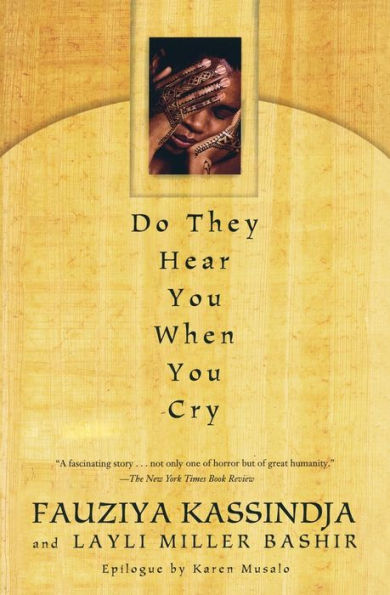
Do They Hear You When You Cry in Chattanooga, TN
Current price: $22.00
Barnes and Noble
Do They Hear You When You Cry in Chattanooga, TN
Current price: $22.00
Loading Inventory...
Size: OS
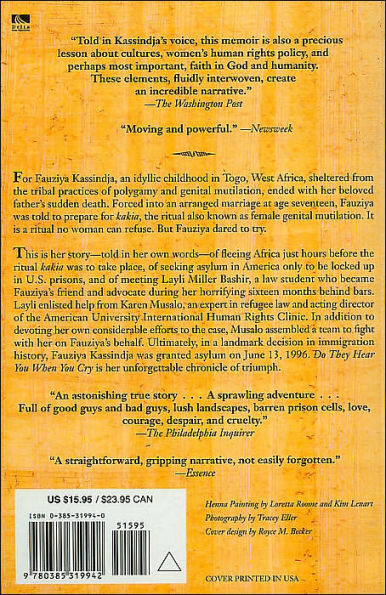
For Fauziya Kassindja, an idyllic childhood in Togo, West Africa, sheltered from the tribal practices of polygamy and genital mutilation, ended with her beloved father's sudden death. Forced into an arranged marriage at age seventeen, Fauziya was told to prepare for
kakia,
the ritual also known as female genital mutilation. It is a ritual no woman can refuse. But Fauziya dared to try.
This is her storytold in her own wordsof fleeing Africa just hours before the ritual
kakia
was to take place, of seeking asylum in America only to be locked up in U.S. prisons, and of meeting Layli Miller Bashir, a law student who became Fauziya's friend and advocate during her horrifying sixteen months behind bars. Layli enlisted help from Karen Musalo, an expert in refugee law and acting director of the American University International Human Rights Clinic. In addition to devoting her own considerable efforts to the case, Musalo assembled a team to fight with her on Fauziya's behalf. Ultimately, in a landmark decision in immigration history, Fauziya Kassindja was granted asylum on June 13, 1996.
Do They Hear You When You Cry
is her unforgettable chronicle of triumph.
kakia,
the ritual also known as female genital mutilation. It is a ritual no woman can refuse. But Fauziya dared to try.
This is her storytold in her own wordsof fleeing Africa just hours before the ritual
kakia
was to take place, of seeking asylum in America only to be locked up in U.S. prisons, and of meeting Layli Miller Bashir, a law student who became Fauziya's friend and advocate during her horrifying sixteen months behind bars. Layli enlisted help from Karen Musalo, an expert in refugee law and acting director of the American University International Human Rights Clinic. In addition to devoting her own considerable efforts to the case, Musalo assembled a team to fight with her on Fauziya's behalf. Ultimately, in a landmark decision in immigration history, Fauziya Kassindja was granted asylum on June 13, 1996.
Do They Hear You When You Cry
is her unforgettable chronicle of triumph.
For Fauziya Kassindja, an idyllic childhood in Togo, West Africa, sheltered from the tribal practices of polygamy and genital mutilation, ended with her beloved father's sudden death. Forced into an arranged marriage at age seventeen, Fauziya was told to prepare for
kakia,
the ritual also known as female genital mutilation. It is a ritual no woman can refuse. But Fauziya dared to try.
This is her storytold in her own wordsof fleeing Africa just hours before the ritual
kakia
was to take place, of seeking asylum in America only to be locked up in U.S. prisons, and of meeting Layli Miller Bashir, a law student who became Fauziya's friend and advocate during her horrifying sixteen months behind bars. Layli enlisted help from Karen Musalo, an expert in refugee law and acting director of the American University International Human Rights Clinic. In addition to devoting her own considerable efforts to the case, Musalo assembled a team to fight with her on Fauziya's behalf. Ultimately, in a landmark decision in immigration history, Fauziya Kassindja was granted asylum on June 13, 1996.
Do They Hear You When You Cry
is her unforgettable chronicle of triumph.
kakia,
the ritual also known as female genital mutilation. It is a ritual no woman can refuse. But Fauziya dared to try.
This is her storytold in her own wordsof fleeing Africa just hours before the ritual
kakia
was to take place, of seeking asylum in America only to be locked up in U.S. prisons, and of meeting Layli Miller Bashir, a law student who became Fauziya's friend and advocate during her horrifying sixteen months behind bars. Layli enlisted help from Karen Musalo, an expert in refugee law and acting director of the American University International Human Rights Clinic. In addition to devoting her own considerable efforts to the case, Musalo assembled a team to fight with her on Fauziya's behalf. Ultimately, in a landmark decision in immigration history, Fauziya Kassindja was granted asylum on June 13, 1996.
Do They Hear You When You Cry
is her unforgettable chronicle of triumph.
You May Also Like









More About Barnes and Noble at Hamilton Place
Barnes & Noble is the world’s largest retail bookseller and a leading retailer of content, digital media and educational products. Our Nook Digital business offers a lineup of NOOK® tablets and e-Readers and an expansive collection of digital reading content through the NOOK Store®. Barnes & Noble’s mission is to operate the best omni-channel specialty retail business in America, helping both our customers and booksellers reach their aspirations, while being a credit to the communities we serve.
2100 Hamilton Pl Blvd, Chattanooga, TN 37421, United States
Find Barnes and Noble at Hamilton Place in Chattanooga, TN
Visit Barnes and Noble at Hamilton Place in Chattanooga, TN
