
Home
Dissidence and Literature Under Nero: The Price of Rhetoricization
Barnes and Noble
Loading Inventory...
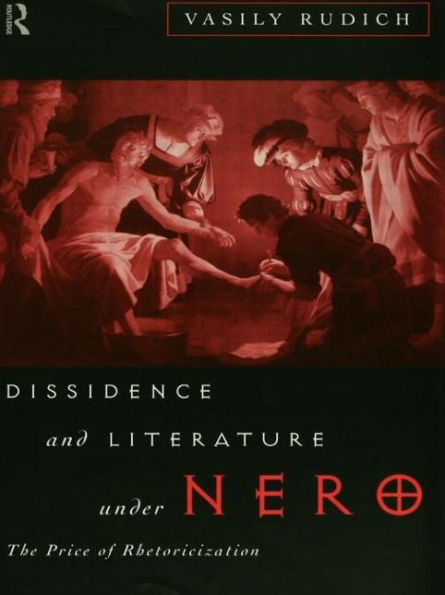
Dissidence and Literature Under Nero: The Price of Rhetoricization in Chattanooga, TN
Current price: $120.00
Barnes and Noble
Dissidence and Literature Under Nero: The Price of Rhetoricization in Chattanooga, TN
Current price: $120.00
Loading Inventory...
Size: Hardcover
This work inquires into the impact of dissident sensibilities on the writings of the major Neronian authors. It offers a detailed and innovative analysis of essays, poetry and fiction written by Seneca, Lucan and Petronius, and illuminates their psychological and moral anguish.
The study is intended as a companion volume to Vasily Rudich's earlier work
Political Dissidence under Nero: The Price of Dissimulation
, where he discussed the ways in which 'dissident sensibilities' of the Neronians affected their actual behaviour.
Dissidence and Literature under Nero
extends this analysis to show how the same sensibilities became manifest in the texts written by the Neronian authors. It explores the pressures on authors under a repressive regime, who strive to maintain their artistic integrity.
Thus the argument of this book can be seen as a comparison between the predicament of a Neronian dissident and the situation of the postmodern intellectual. It will interest professional classicists and the wider audience concerned with the ongoing debate on the benefits and perils of rhetorical discourse.
The study is intended as a companion volume to Vasily Rudich's earlier work
Political Dissidence under Nero: The Price of Dissimulation
, where he discussed the ways in which 'dissident sensibilities' of the Neronians affected their actual behaviour.
Dissidence and Literature under Nero
extends this analysis to show how the same sensibilities became manifest in the texts written by the Neronian authors. It explores the pressures on authors under a repressive regime, who strive to maintain their artistic integrity.
Thus the argument of this book can be seen as a comparison between the predicament of a Neronian dissident and the situation of the postmodern intellectual. It will interest professional classicists and the wider audience concerned with the ongoing debate on the benefits and perils of rhetorical discourse.
This work inquires into the impact of dissident sensibilities on the writings of the major Neronian authors. It offers a detailed and innovative analysis of essays, poetry and fiction written by Seneca, Lucan and Petronius, and illuminates their psychological and moral anguish.
The study is intended as a companion volume to Vasily Rudich's earlier work
Political Dissidence under Nero: The Price of Dissimulation
, where he discussed the ways in which 'dissident sensibilities' of the Neronians affected their actual behaviour.
Dissidence and Literature under Nero
extends this analysis to show how the same sensibilities became manifest in the texts written by the Neronian authors. It explores the pressures on authors under a repressive regime, who strive to maintain their artistic integrity.
Thus the argument of this book can be seen as a comparison between the predicament of a Neronian dissident and the situation of the postmodern intellectual. It will interest professional classicists and the wider audience concerned with the ongoing debate on the benefits and perils of rhetorical discourse.
The study is intended as a companion volume to Vasily Rudich's earlier work
Political Dissidence under Nero: The Price of Dissimulation
, where he discussed the ways in which 'dissident sensibilities' of the Neronians affected their actual behaviour.
Dissidence and Literature under Nero
extends this analysis to show how the same sensibilities became manifest in the texts written by the Neronian authors. It explores the pressures on authors under a repressive regime, who strive to maintain their artistic integrity.
Thus the argument of this book can be seen as a comparison between the predicament of a Neronian dissident and the situation of the postmodern intellectual. It will interest professional classicists and the wider audience concerned with the ongoing debate on the benefits and perils of rhetorical discourse.
You May Also Like










More About Barnes and Noble at Hamilton Place
Barnes & Noble is the world’s largest retail bookseller and a leading retailer of content, digital media and educational products. Our Nook Digital business offers a lineup of NOOK® tablets and e-Readers and an expansive collection of digital reading content through the NOOK Store®. Barnes & Noble’s mission is to operate the best omni-channel specialty retail business in America, helping both our customers and booksellers reach their aspirations, while being a credit to the communities we serve.
2100 Hamilton Pl Blvd, Chattanooga, TN 37421, United States
Find Barnes and Noble at Hamilton Place in Chattanooga, TN
Visit Barnes and Noble at Hamilton Place in Chattanooga, TN
