
Home
Development of a Formal Army Officer Mentorship Program for the Twenty-First Century
Barnes and Noble
Loading Inventory...
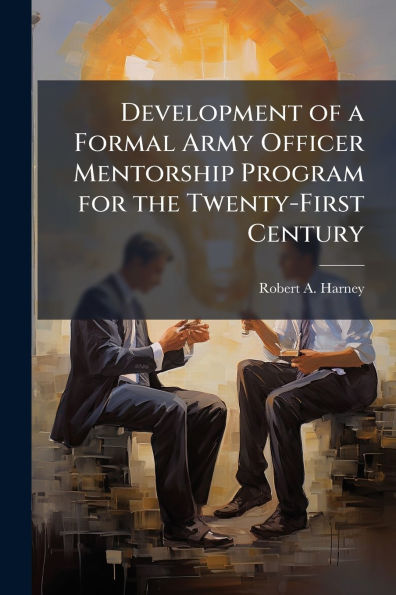
Development of a Formal Army Officer Mentorship Program for the Twenty-First Century in Chattanooga, TN
Current price: $30.95
Barnes and Noble
Development of a Formal Army Officer Mentorship Program for the Twenty-First Century in Chattanooga, TN
Current price: $30.95
Loading Inventory...
Size: Hardcover
This study addresses the role of formal mentoring processes in the U.S. Army. Specifically, this study examines which formal mentoring model should the Army adopt and implement as part of its overall officer development process. It also investigates the roles of senior leaders, mentors, protégés in the Army mentorship and leader development process as reflected by doctrine, polices, and formal applications. This study concluded that Army ranks above the civilian sector but below some government agencies such as the Air Force, Coast Guard, and Department of Energy in developing and implementing effective programs. This study also concluded that Army has already adopted as part of its overall officer professional development programs formal mentoring models comprising either one-on-one or mentoring circles (one mentor with many protégés) processes or relationships. These programs, however, have shortcomings in the areas of structure; the pairing of mentors with protégés; cadet, candidate, and junior officer mentoring; and awareness training and feedback mechanisms. Army doctrine (to include the Army definition of mentorship), previously conducted studies, retired and active duty senior leader comments, current Army formal mentoring processes, and this study's extensive research indicate these formal models and associated mentoring can reap invaluable benefits in the areas affecting captain retention, readiness, cadet and officer candidate assimilation, minority representation in combat arms specialties, diversity awareness, and perceptions of fair and equal treatment--if properly executed.
This work has been selected by scholars as being culturally important, and is part of the knowledge base of civilization as we know it. This work was reproduced from the original artifact, and remains as true to the original work as possible. Therefore, you will see the original copyright references, library stamps (as most of these works have been housed in our most important libraries around the world), and other notations in the work.
This work is in the public domain in the United States of America, and possibly other nations. Within the United States, you may freely copy and distribute this work, as no entity (individual or corporate) has a copyright on the body of the work.
As a reproduction of a historical artifact, this work may contain missing or blurred pages, poor pictures, errant marks, etc. Scholars believe, and we concur, that this work is important enough to be preserved, reproduced, and made generally available to the public. We appreciate your support of the preservation process, and thank you for being an important part of keeping this knowledge alive and relevant.
This work has been selected by scholars as being culturally important, and is part of the knowledge base of civilization as we know it. This work was reproduced from the original artifact, and remains as true to the original work as possible. Therefore, you will see the original copyright references, library stamps (as most of these works have been housed in our most important libraries around the world), and other notations in the work.
This work is in the public domain in the United States of America, and possibly other nations. Within the United States, you may freely copy and distribute this work, as no entity (individual or corporate) has a copyright on the body of the work.
As a reproduction of a historical artifact, this work may contain missing or blurred pages, poor pictures, errant marks, etc. Scholars believe, and we concur, that this work is important enough to be preserved, reproduced, and made generally available to the public. We appreciate your support of the preservation process, and thank you for being an important part of keeping this knowledge alive and relevant.
This study addresses the role of formal mentoring processes in the U.S. Army. Specifically, this study examines which formal mentoring model should the Army adopt and implement as part of its overall officer development process. It also investigates the roles of senior leaders, mentors, protégés in the Army mentorship and leader development process as reflected by doctrine, polices, and formal applications. This study concluded that Army ranks above the civilian sector but below some government agencies such as the Air Force, Coast Guard, and Department of Energy in developing and implementing effective programs. This study also concluded that Army has already adopted as part of its overall officer professional development programs formal mentoring models comprising either one-on-one or mentoring circles (one mentor with many protégés) processes or relationships. These programs, however, have shortcomings in the areas of structure; the pairing of mentors with protégés; cadet, candidate, and junior officer mentoring; and awareness training and feedback mechanisms. Army doctrine (to include the Army definition of mentorship), previously conducted studies, retired and active duty senior leader comments, current Army formal mentoring processes, and this study's extensive research indicate these formal models and associated mentoring can reap invaluable benefits in the areas affecting captain retention, readiness, cadet and officer candidate assimilation, minority representation in combat arms specialties, diversity awareness, and perceptions of fair and equal treatment--if properly executed.
This work has been selected by scholars as being culturally important, and is part of the knowledge base of civilization as we know it. This work was reproduced from the original artifact, and remains as true to the original work as possible. Therefore, you will see the original copyright references, library stamps (as most of these works have been housed in our most important libraries around the world), and other notations in the work.
This work is in the public domain in the United States of America, and possibly other nations. Within the United States, you may freely copy and distribute this work, as no entity (individual or corporate) has a copyright on the body of the work.
As a reproduction of a historical artifact, this work may contain missing or blurred pages, poor pictures, errant marks, etc. Scholars believe, and we concur, that this work is important enough to be preserved, reproduced, and made generally available to the public. We appreciate your support of the preservation process, and thank you for being an important part of keeping this knowledge alive and relevant.
This work has been selected by scholars as being culturally important, and is part of the knowledge base of civilization as we know it. This work was reproduced from the original artifact, and remains as true to the original work as possible. Therefore, you will see the original copyright references, library stamps (as most of these works have been housed in our most important libraries around the world), and other notations in the work.
This work is in the public domain in the United States of America, and possibly other nations. Within the United States, you may freely copy and distribute this work, as no entity (individual or corporate) has a copyright on the body of the work.
As a reproduction of a historical artifact, this work may contain missing or blurred pages, poor pictures, errant marks, etc. Scholars believe, and we concur, that this work is important enough to be preserved, reproduced, and made generally available to the public. We appreciate your support of the preservation process, and thank you for being an important part of keeping this knowledge alive and relevant.
You May Also Like
















More About Barnes and Noble at Hamilton Place
Barnes & Noble is the world’s largest retail bookseller and a leading retailer of content, digital media and educational products. Our Nook Digital business offers a lineup of NOOK® tablets and e-Readers and an expansive collection of digital reading content through the NOOK Store®. Barnes & Noble’s mission is to operate the best omni-channel specialty retail business in America, helping both our customers and booksellers reach their aspirations, while being a credit to the communities we serve.
2100 Hamilton Pl Blvd, Chattanooga, TN 37421, United States
Find Barnes and Noble at Hamilton Place in Chattanooga, TN
Visit Barnes and Noble at Hamilton Place in Chattanooga, TN
