
Home
Development and Gender Capital in India: Change, Continuity and Conflict in Kerala
Barnes and Noble
Loading Inventory...
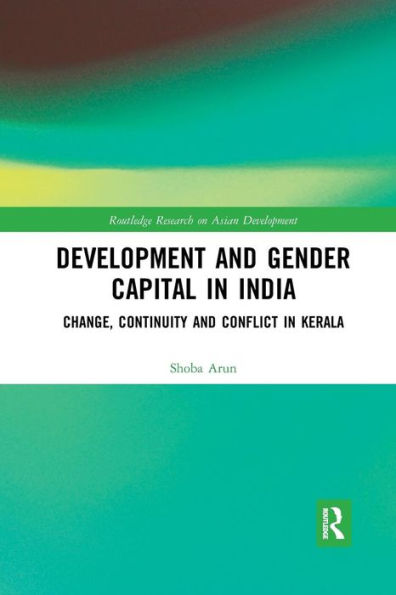
Development and Gender Capital in India: Change, Continuity and Conflict in Kerala in Chattanooga, TN
Current price: $61.99
Barnes and Noble
Development and Gender Capital in India: Change, Continuity and Conflict in Kerala in Chattanooga, TN
Current price: $61.99
Loading Inventory...
Size: OS
The Indian state of Kerala has invoked much attention within development and gender debates, specifically in relation to its female capital- an outcome of interrelated historical, cultural and social practices. On the one hand, Kerala has been romanticised, with its citizenry, particularly women, being free of social divisions and uplifted through educational well-being. On the other hand, its realism is stark, particularly in the light of recent social changes.
Using a Bourdieusian frame of analysis,
Development and Gender Capital in India
explores the forces of globalisation and how they are embedded within power structures. Through narratives of women’s lived experiences in the private and public domains, it highlights the ‘anomie of gender’ through complexities and contradictions vis-à-vis processes of modernity, development and globalisation. By demonstrating the limits placed upon gender capital by structures of patriarchy and domination, it argues that discussions about the empowered Malayalee women should move from a mere ‘politics of rhetoric and representation’ to a more embedded ‘politics of transformation’, meaningfully taking into account women’s changing roles and identities.
This book will be of interest to scholars and students of Development Studies, Gender Studies, Anthropology and Sociology.
Using a Bourdieusian frame of analysis,
Development and Gender Capital in India
explores the forces of globalisation and how they are embedded within power structures. Through narratives of women’s lived experiences in the private and public domains, it highlights the ‘anomie of gender’ through complexities and contradictions vis-à-vis processes of modernity, development and globalisation. By demonstrating the limits placed upon gender capital by structures of patriarchy and domination, it argues that discussions about the empowered Malayalee women should move from a mere ‘politics of rhetoric and representation’ to a more embedded ‘politics of transformation’, meaningfully taking into account women’s changing roles and identities.
This book will be of interest to scholars and students of Development Studies, Gender Studies, Anthropology and Sociology.
The Indian state of Kerala has invoked much attention within development and gender debates, specifically in relation to its female capital- an outcome of interrelated historical, cultural and social practices. On the one hand, Kerala has been romanticised, with its citizenry, particularly women, being free of social divisions and uplifted through educational well-being. On the other hand, its realism is stark, particularly in the light of recent social changes.
Using a Bourdieusian frame of analysis,
Development and Gender Capital in India
explores the forces of globalisation and how they are embedded within power structures. Through narratives of women’s lived experiences in the private and public domains, it highlights the ‘anomie of gender’ through complexities and contradictions vis-à-vis processes of modernity, development and globalisation. By demonstrating the limits placed upon gender capital by structures of patriarchy and domination, it argues that discussions about the empowered Malayalee women should move from a mere ‘politics of rhetoric and representation’ to a more embedded ‘politics of transformation’, meaningfully taking into account women’s changing roles and identities.
This book will be of interest to scholars and students of Development Studies, Gender Studies, Anthropology and Sociology.
Using a Bourdieusian frame of analysis,
Development and Gender Capital in India
explores the forces of globalisation and how they are embedded within power structures. Through narratives of women’s lived experiences in the private and public domains, it highlights the ‘anomie of gender’ through complexities and contradictions vis-à-vis processes of modernity, development and globalisation. By demonstrating the limits placed upon gender capital by structures of patriarchy and domination, it argues that discussions about the empowered Malayalee women should move from a mere ‘politics of rhetoric and representation’ to a more embedded ‘politics of transformation’, meaningfully taking into account women’s changing roles and identities.
This book will be of interest to scholars and students of Development Studies, Gender Studies, Anthropology and Sociology.
You May Also Like














More About Barnes and Noble at Hamilton Place
Barnes & Noble is the world’s largest retail bookseller and a leading retailer of content, digital media and educational products. Our Nook Digital business offers a lineup of NOOK® tablets and e-Readers and an expansive collection of digital reading content through the NOOK Store®. Barnes & Noble’s mission is to operate the best omni-channel specialty retail business in America, helping both our customers and booksellers reach their aspirations, while being a credit to the communities we serve.
2100 Hamilton Pl Blvd, Chattanooga, TN 37421, United States
Find Barnes and Noble at Hamilton Place in Chattanooga, TN
Visit Barnes and Noble at Hamilton Place in Chattanooga, TN