
Home
Desires of Credit Early Modern Theory and Drama: Commerce, Poesy, the Profitable Imagination
Barnes and Noble
Loading Inventory...
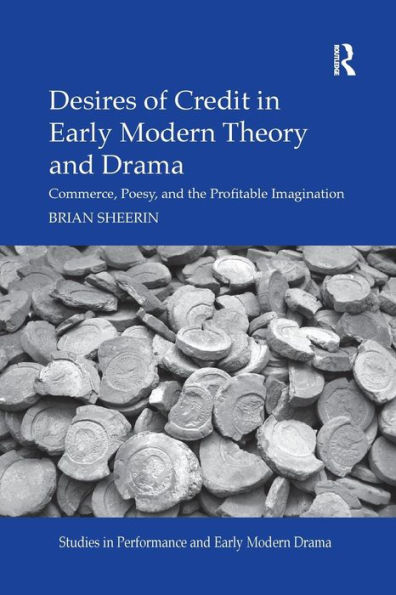
Desires of Credit Early Modern Theory and Drama: Commerce, Poesy, the Profitable Imagination in Chattanooga, TN
Current price: $62.99
Barnes and Noble
Desires of Credit Early Modern Theory and Drama: Commerce, Poesy, the Profitable Imagination in Chattanooga, TN
Current price: $62.99
Loading Inventory...
Size: Paperback
Desires of Credit in Early Modern Theory and Drama traces the near-simultaneous rise of economic theory, literary criticism, and public theater in London at the turn of the seventeenth century, and posits that connecting all three is a fascination with creating something out of nothing simply by acting as if it were there. Author Brian Sheerin contends that the motivating force behind both literary and economic inquiry at this time was the same basic quandary about the human imagination--specifically, how investments of belief can produce tangible consequences. Just as speculators were realizing the potency of collective imagination on economic circulation, readers and dramatists were becoming newly introspective about whether or not the 'lies' of literature could actually be morally 'profitable.' Could one actually benefit by taking certain fictions 'seriously'? Each of the five chapters examines a different dimension of this question by highlighting a particular dramatization of economic trust on the Renaissance stage, in plays by Marlowe, Shakespeare, Heywood, Dekker, and Jonson. The book fills a gap in current scholarship by keeping economic and dramatic interests rigorously grounded in early modern literary criticism, but also by emphasizing the productive nature of debt in a way that resonates with recent economic sociology.
Desires of Credit in Early Modern Theory and Drama traces the near-simultaneous rise of economic theory, literary criticism, and public theater in London at the turn of the seventeenth century, and posits that connecting all three is a fascination with creating something out of nothing simply by acting as if it were there. Author Brian Sheerin contends that the motivating force behind both literary and economic inquiry at this time was the same basic quandary about the human imagination--specifically, how investments of belief can produce tangible consequences. Just as speculators were realizing the potency of collective imagination on economic circulation, readers and dramatists were becoming newly introspective about whether or not the 'lies' of literature could actually be morally 'profitable.' Could one actually benefit by taking certain fictions 'seriously'? Each of the five chapters examines a different dimension of this question by highlighting a particular dramatization of economic trust on the Renaissance stage, in plays by Marlowe, Shakespeare, Heywood, Dekker, and Jonson. The book fills a gap in current scholarship by keeping economic and dramatic interests rigorously grounded in early modern literary criticism, but also by emphasizing the productive nature of debt in a way that resonates with recent economic sociology.
You May Also Like









More About Barnes and Noble at Hamilton Place
Barnes & Noble is the world’s largest retail bookseller and a leading retailer of content, digital media and educational products. Our Nook Digital business offers a lineup of NOOK® tablets and e-Readers and an expansive collection of digital reading content through the NOOK Store®. Barnes & Noble’s mission is to operate the best omni-channel specialty retail business in America, helping both our customers and booksellers reach their aspirations, while being a credit to the communities we serve.
2100 Hamilton Pl Blvd, Chattanooga, TN 37421, United States
Find Barnes and Noble at Hamilton Place in Chattanooga, TN
Visit Barnes and Noble at Hamilton Place in Chattanooga, TN
