
Home
Dementia Care and Provision the Majority World: Epidemiology, Diagnosis Low- Middle-income Nations
Barnes and Noble
Loading Inventory...
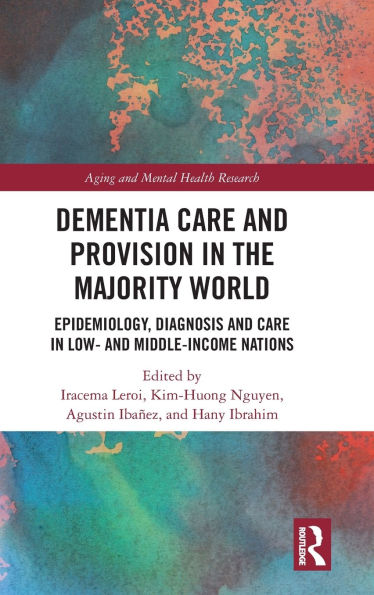
Dementia Care and Provision the Majority World: Epidemiology, Diagnosis Low- Middle-income Nations in Chattanooga, TN
Current price: $190.00
Barnes and Noble
Dementia Care and Provision the Majority World: Epidemiology, Diagnosis Low- Middle-income Nations in Chattanooga, TN
Current price: $190.00
Loading Inventory...
Size: Hardcover
This novel volume offers a comprehensive examination of dementia epidemiology, diagnosis, and care across lower- and middle-income countries (LMICs), particularly exploring diverse and culturally inclusive perspectives on understanding, diagnosing, and managing dementia.
Arguing that living well with dementia, tailoring research and interventions to local contexts, and prioritising primary and secondary prevention efforts are of critical importance to the health outcomes of those affected by dementia, this book goes beyond common approaches in high-health-resourced regions to explore health disparities, societal and cultural influences, and economic inequities often present in regions of LMICs. Truly international, these chapters champion a pluralistic and multi-dimensional approach, taking diverse and culturally relevant aspects into consideration to review the challenges and advancements in dementia care. Ultimately, the necessity for diverse and equitable approaches across regions is emphasised.
This book will be of interest to scholars, researchers, and postgraduate students in the fields of dementia research, gerontology and ageing within LMICs, as well as the sociology of health and illness more broadly, including the global health ecosystem. The book may also appeal to clinicians who are developing dementia services.
Arguing that living well with dementia, tailoring research and interventions to local contexts, and prioritising primary and secondary prevention efforts are of critical importance to the health outcomes of those affected by dementia, this book goes beyond common approaches in high-health-resourced regions to explore health disparities, societal and cultural influences, and economic inequities often present in regions of LMICs. Truly international, these chapters champion a pluralistic and multi-dimensional approach, taking diverse and culturally relevant aspects into consideration to review the challenges and advancements in dementia care. Ultimately, the necessity for diverse and equitable approaches across regions is emphasised.
This book will be of interest to scholars, researchers, and postgraduate students in the fields of dementia research, gerontology and ageing within LMICs, as well as the sociology of health and illness more broadly, including the global health ecosystem. The book may also appeal to clinicians who are developing dementia services.
This novel volume offers a comprehensive examination of dementia epidemiology, diagnosis, and care across lower- and middle-income countries (LMICs), particularly exploring diverse and culturally inclusive perspectives on understanding, diagnosing, and managing dementia.
Arguing that living well with dementia, tailoring research and interventions to local contexts, and prioritising primary and secondary prevention efforts are of critical importance to the health outcomes of those affected by dementia, this book goes beyond common approaches in high-health-resourced regions to explore health disparities, societal and cultural influences, and economic inequities often present in regions of LMICs. Truly international, these chapters champion a pluralistic and multi-dimensional approach, taking diverse and culturally relevant aspects into consideration to review the challenges and advancements in dementia care. Ultimately, the necessity for diverse and equitable approaches across regions is emphasised.
This book will be of interest to scholars, researchers, and postgraduate students in the fields of dementia research, gerontology and ageing within LMICs, as well as the sociology of health and illness more broadly, including the global health ecosystem. The book may also appeal to clinicians who are developing dementia services.
Arguing that living well with dementia, tailoring research and interventions to local contexts, and prioritising primary and secondary prevention efforts are of critical importance to the health outcomes of those affected by dementia, this book goes beyond common approaches in high-health-resourced regions to explore health disparities, societal and cultural influences, and economic inequities often present in regions of LMICs. Truly international, these chapters champion a pluralistic and multi-dimensional approach, taking diverse and culturally relevant aspects into consideration to review the challenges and advancements in dementia care. Ultimately, the necessity for diverse and equitable approaches across regions is emphasised.
This book will be of interest to scholars, researchers, and postgraduate students in the fields of dementia research, gerontology and ageing within LMICs, as well as the sociology of health and illness more broadly, including the global health ecosystem. The book may also appeal to clinicians who are developing dementia services.
You May Also Like


















More About Barnes and Noble at Hamilton Place
Barnes & Noble is the world’s largest retail bookseller and a leading retailer of content, digital media and educational products. Our Nook Digital business offers a lineup of NOOK® tablets and e-Readers and an expansive collection of digital reading content through the NOOK Store®. Barnes & Noble’s mission is to operate the best omni-channel specialty retail business in America, helping both our customers and booksellers reach their aspirations, while being a credit to the communities we serve.
2100 Hamilton Pl Blvd, Chattanooga, TN 37421, United States
Find Barnes and Noble at Hamilton Place in Chattanooga, TN
Visit Barnes and Noble at Hamilton Place in Chattanooga, TN
