
Home
Deep Learning Application
Barnes and Noble
Loading Inventory...
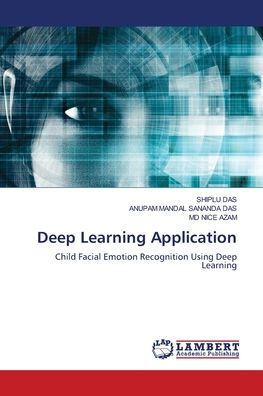
Deep Learning Application in Chattanooga, TN
Current price: $50.00
Barnes and Noble
Deep Learning Application in Chattanooga, TN
Current price: $50.00
Loading Inventory...
Size: OS
Child Facial Emotion Recognition using Deep Learning is an emerging field in artificial intelligence that focuses on accurately identifying emotional expressions from children's facial features. Unlike adult emotion recognition, this task presents unique challenges due to the subtler and more dynamic nature of children's emotional expressions, age-related facial changes, and limited availability of annotated datasets. Applications of child emotion recognition span across several domains including education (adaptive learning systems), healthcare (autism detection, mental health monitoring), and human-computer interaction (child-friendly AI companions). To enhance accuracy and generalization, many approaches also integrate techniques like data augmentation, facial landmark detection, and multimodal inputs (e.g., combining facial images with speech or physiological data).Despite advancements, the field still faces challenges such as dataset scarcity, ethical concerns, and the need for culturally and age-diverse training data. Future research aims to develop more robust, explainable, and privacy-preserving models tailored for real-world deployment in child-centered environments.
Child Facial Emotion Recognition using Deep Learning is an emerging field in artificial intelligence that focuses on accurately identifying emotional expressions from children's facial features. Unlike adult emotion recognition, this task presents unique challenges due to the subtler and more dynamic nature of children's emotional expressions, age-related facial changes, and limited availability of annotated datasets. Applications of child emotion recognition span across several domains including education (adaptive learning systems), healthcare (autism detection, mental health monitoring), and human-computer interaction (child-friendly AI companions). To enhance accuracy and generalization, many approaches also integrate techniques like data augmentation, facial landmark detection, and multimodal inputs (e.g., combining facial images with speech or physiological data).Despite advancements, the field still faces challenges such as dataset scarcity, ethical concerns, and the need for culturally and age-diverse training data. Future research aims to develop more robust, explainable, and privacy-preserving models tailored for real-world deployment in child-centered environments.
You May Also Like








More About Barnes and Noble at Hamilton Place
Barnes & Noble is the world’s largest retail bookseller and a leading retailer of content, digital media and educational products. Our Nook Digital business offers a lineup of NOOK® tablets and e-Readers and an expansive collection of digital reading content through the NOOK Store®. Barnes & Noble’s mission is to operate the best omni-channel specialty retail business in America, helping both our customers and booksellers reach their aspirations, while being a credit to the communities we serve.
2100 Hamilton Pl Blvd, Chattanooga, TN 37421, United States
Find Barnes and Noble at Hamilton Place in Chattanooga, TN
Visit Barnes and Noble at Hamilton Place in Chattanooga, TN
