
Home
Decentralization and Health Policy South Asia: A Comparative Approach
Barnes and Noble
Loading Inventory...
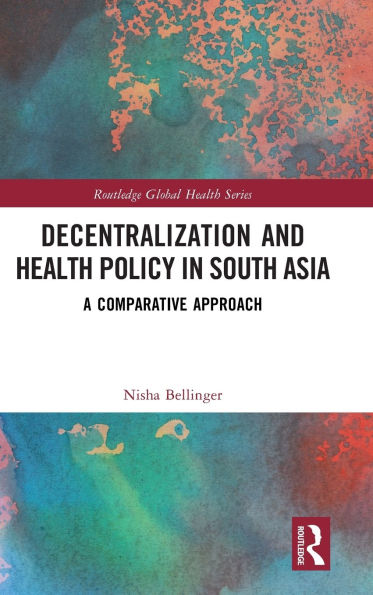
Decentralization and Health Policy South Asia: A Comparative Approach in Chattanooga, TN
Current price: $170.00
Barnes and Noble
Decentralization and Health Policy South Asia: A Comparative Approach in Chattanooga, TN
Current price: $170.00
Loading Inventory...
Size: Hardcover
This ambitious and insightful book provides a unique regional perspective on health policy across South Asia, focusing on how the decentralization of policy and governance leads to differing health outcomes across different countries in the region.
Comparing the contexts and outcomes in Sri Lanka, Pakistan, India, Nepal, and Bangladesh, the book asks how power sharing arrangements between central and subnational layers of government nevertheless result in varying levels of success across issues such as infant and under-five mortality rates. The book argues that it is the role of central government in formulating policy, and how this feeds into regional implementation, that partly explains the disparities in health outcomes across the region.
The book will interest students and scholars of South Asia politics, global health and health policy more generally.
Comparing the contexts and outcomes in Sri Lanka, Pakistan, India, Nepal, and Bangladesh, the book asks how power sharing arrangements between central and subnational layers of government nevertheless result in varying levels of success across issues such as infant and under-five mortality rates. The book argues that it is the role of central government in formulating policy, and how this feeds into regional implementation, that partly explains the disparities in health outcomes across the region.
The book will interest students and scholars of South Asia politics, global health and health policy more generally.
This ambitious and insightful book provides a unique regional perspective on health policy across South Asia, focusing on how the decentralization of policy and governance leads to differing health outcomes across different countries in the region.
Comparing the contexts and outcomes in Sri Lanka, Pakistan, India, Nepal, and Bangladesh, the book asks how power sharing arrangements between central and subnational layers of government nevertheless result in varying levels of success across issues such as infant and under-five mortality rates. The book argues that it is the role of central government in formulating policy, and how this feeds into regional implementation, that partly explains the disparities in health outcomes across the region.
The book will interest students and scholars of South Asia politics, global health and health policy more generally.
Comparing the contexts and outcomes in Sri Lanka, Pakistan, India, Nepal, and Bangladesh, the book asks how power sharing arrangements between central and subnational layers of government nevertheless result in varying levels of success across issues such as infant and under-five mortality rates. The book argues that it is the role of central government in formulating policy, and how this feeds into regional implementation, that partly explains the disparities in health outcomes across the region.
The book will interest students and scholars of South Asia politics, global health and health policy more generally.
You May Also Like

















More About Barnes and Noble at Hamilton Place
Barnes & Noble is the world’s largest retail bookseller and a leading retailer of content, digital media and educational products. Our Nook Digital business offers a lineup of NOOK® tablets and e-Readers and an expansive collection of digital reading content through the NOOK Store®. Barnes & Noble’s mission is to operate the best omni-channel specialty retail business in America, helping both our customers and booksellers reach their aspirations, while being a credit to the communities we serve.
2100 Hamilton Pl Blvd, Chattanooga, TN 37421, United States
Find Barnes and Noble at Hamilton Place in Chattanooga, TN
Visit Barnes and Noble at Hamilton Place in Chattanooga, TN
