
Home
Dead Certainty: The Death Penalty and the Problem of Judgment
Barnes and Noble
Loading Inventory...
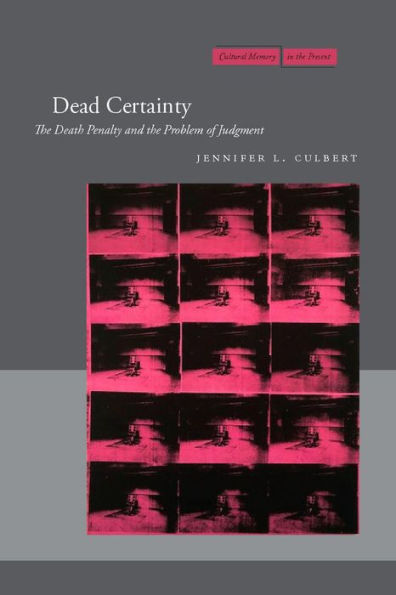
Dead Certainty: The Death Penalty and the Problem of Judgment in Chattanooga, TN
Current price: $26.00
Barnes and Noble
Dead Certainty: The Death Penalty and the Problem of Judgment in Chattanooga, TN
Current price: $26.00
Loading Inventory...
Size: OS
Dead Certainty
is about the challenge of judging matters of public concern without a common sense of the good or other shared criteria that validate final decisions. Examining both the philosophical and the practical aspects of this challenge, this book focuses on United States Supreme Court opinions that authorize and regulate the practice of sentencing people to death. Unlike other books that discuss capital punishment, it does not argue for or against the death penalty. Instead,
contributes to a larger project in contemporary political and legal philosophy: re-imagining how people in today's world give coherence and meaning to their shared experience. Culbert's work will be of interest to scholars of political theory, jurisprudence, law and society, rhetoric, continental philosophy, and ethics.
is about the challenge of judging matters of public concern without a common sense of the good or other shared criteria that validate final decisions. Examining both the philosophical and the practical aspects of this challenge, this book focuses on United States Supreme Court opinions that authorize and regulate the practice of sentencing people to death. Unlike other books that discuss capital punishment, it does not argue for or against the death penalty. Instead,
contributes to a larger project in contemporary political and legal philosophy: re-imagining how people in today's world give coherence and meaning to their shared experience. Culbert's work will be of interest to scholars of political theory, jurisprudence, law and society, rhetoric, continental philosophy, and ethics.
Dead Certainty
is about the challenge of judging matters of public concern without a common sense of the good or other shared criteria that validate final decisions. Examining both the philosophical and the practical aspects of this challenge, this book focuses on United States Supreme Court opinions that authorize and regulate the practice of sentencing people to death. Unlike other books that discuss capital punishment, it does not argue for or against the death penalty. Instead,
contributes to a larger project in contemporary political and legal philosophy: re-imagining how people in today's world give coherence and meaning to their shared experience. Culbert's work will be of interest to scholars of political theory, jurisprudence, law and society, rhetoric, continental philosophy, and ethics.
is about the challenge of judging matters of public concern without a common sense of the good or other shared criteria that validate final decisions. Examining both the philosophical and the practical aspects of this challenge, this book focuses on United States Supreme Court opinions that authorize and regulate the practice of sentencing people to death. Unlike other books that discuss capital punishment, it does not argue for or against the death penalty. Instead,
contributes to a larger project in contemporary political and legal philosophy: re-imagining how people in today's world give coherence and meaning to their shared experience. Culbert's work will be of interest to scholars of political theory, jurisprudence, law and society, rhetoric, continental philosophy, and ethics.
You May Also Like













More About Barnes and Noble at Hamilton Place
Barnes & Noble is the world’s largest retail bookseller and a leading retailer of content, digital media and educational products. Our Nook Digital business offers a lineup of NOOK® tablets and e-Readers and an expansive collection of digital reading content through the NOOK Store®. Barnes & Noble’s mission is to operate the best omni-channel specialty retail business in America, helping both our customers and booksellers reach their aspirations, while being a credit to the communities we serve.
2100 Hamilton Pl Blvd, Chattanooga, TN 37421, United States
Find Barnes and Noble at Hamilton Place in Chattanooga, TN
Visit Barnes and Noble at Hamilton Place in Chattanooga, TN
