
Home
Cyber-espionage international law: Silence speaks
Barnes and Noble
Loading Inventory...
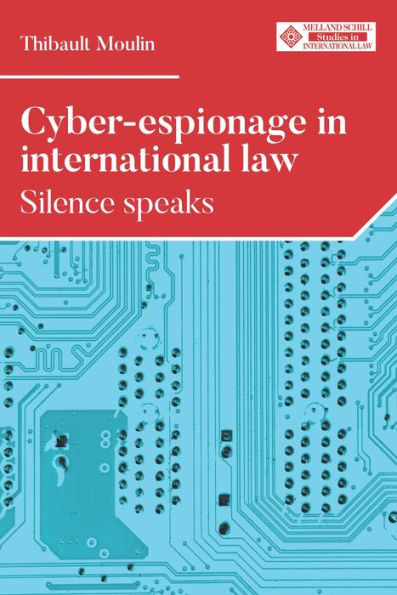
Cyber-espionage international law: Silence speaks in Chattanooga, TN
Current price: $130.00
Barnes and Noble
Cyber-espionage international law: Silence speaks in Chattanooga, TN
Current price: $130.00
Loading Inventory...
Size: Hardcover
Longlisted for The Inner Temple Book Prize 2025
While espionage between states is a practice dating back centuries, the emergence of the internet revolutionised the types and scale of intelligence activities, creating drastic new challenges for the traditional legal frameworks governing them.
This book argues that cyberespionage has come to have an uneasy status in law: it is not prohibited, because spying does not result in an internationally wrongful act, but neither is it authorised or permitted, because states are free to resist foreign cyberespionage activities. Rather than seeking further regulation, however, governments have remained purposefully silent, leaving them free to pursue cyberespionage themselves at the same time as they adopt measures to prevent falling victim to it.
Drawing on detailed analysis of state practice and examples from sovereignty, diplomacy, human rights and economic law, this book offers a comprehensive overview of the current legal status of cyberespionage, as well as future directions for research and policy. It is an essential resource for scholars and practitioners in international law, as well as anyone interested in the future of cybersecurity.
While espionage between states is a practice dating back centuries, the emergence of the internet revolutionised the types and scale of intelligence activities, creating drastic new challenges for the traditional legal frameworks governing them.
This book argues that cyberespionage has come to have an uneasy status in law: it is not prohibited, because spying does not result in an internationally wrongful act, but neither is it authorised or permitted, because states are free to resist foreign cyberespionage activities. Rather than seeking further regulation, however, governments have remained purposefully silent, leaving them free to pursue cyberespionage themselves at the same time as they adopt measures to prevent falling victim to it.
Drawing on detailed analysis of state practice and examples from sovereignty, diplomacy, human rights and economic law, this book offers a comprehensive overview of the current legal status of cyberespionage, as well as future directions for research and policy. It is an essential resource for scholars and practitioners in international law, as well as anyone interested in the future of cybersecurity.
Longlisted for The Inner Temple Book Prize 2025
While espionage between states is a practice dating back centuries, the emergence of the internet revolutionised the types and scale of intelligence activities, creating drastic new challenges for the traditional legal frameworks governing them.
This book argues that cyberespionage has come to have an uneasy status in law: it is not prohibited, because spying does not result in an internationally wrongful act, but neither is it authorised or permitted, because states are free to resist foreign cyberespionage activities. Rather than seeking further regulation, however, governments have remained purposefully silent, leaving them free to pursue cyberespionage themselves at the same time as they adopt measures to prevent falling victim to it.
Drawing on detailed analysis of state practice and examples from sovereignty, diplomacy, human rights and economic law, this book offers a comprehensive overview of the current legal status of cyberespionage, as well as future directions for research and policy. It is an essential resource for scholars and practitioners in international law, as well as anyone interested in the future of cybersecurity.
While espionage between states is a practice dating back centuries, the emergence of the internet revolutionised the types and scale of intelligence activities, creating drastic new challenges for the traditional legal frameworks governing them.
This book argues that cyberespionage has come to have an uneasy status in law: it is not prohibited, because spying does not result in an internationally wrongful act, but neither is it authorised or permitted, because states are free to resist foreign cyberespionage activities. Rather than seeking further regulation, however, governments have remained purposefully silent, leaving them free to pursue cyberespionage themselves at the same time as they adopt measures to prevent falling victim to it.
Drawing on detailed analysis of state practice and examples from sovereignty, diplomacy, human rights and economic law, this book offers a comprehensive overview of the current legal status of cyberespionage, as well as future directions for research and policy. It is an essential resource for scholars and practitioners in international law, as well as anyone interested in the future of cybersecurity.
You May Also Like












More About Barnes and Noble at Hamilton Place
Barnes & Noble is the world’s largest retail bookseller and a leading retailer of content, digital media and educational products. Our Nook Digital business offers a lineup of NOOK® tablets and e-Readers and an expansive collection of digital reading content through the NOOK Store®. Barnes & Noble’s mission is to operate the best omni-channel specialty retail business in America, helping both our customers and booksellers reach their aspirations, while being a credit to the communities we serve.
2100 Hamilton Pl Blvd, Chattanooga, TN 37421, United States
Find Barnes and Noble at Hamilton Place in Chattanooga, TN
Visit Barnes and Noble at Hamilton Place in Chattanooga, TN
