
Home
Curious Subjects: Women and the Trials of Realism
Barnes and Noble
Loading Inventory...
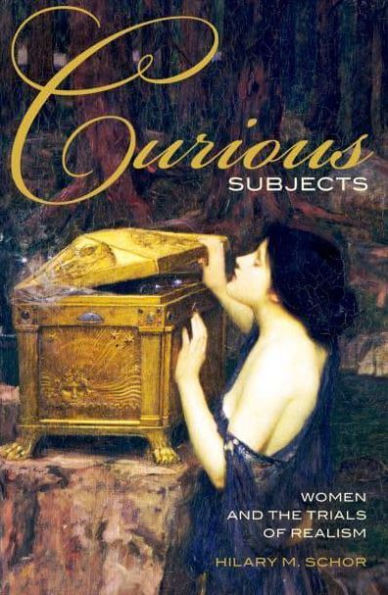
Curious Subjects: Women and the Trials of Realism in Chattanooga, TN
Current price: $29.95
Barnes and Noble
Curious Subjects: Women and the Trials of Realism in Chattanooga, TN
Current price: $29.95
Loading Inventory...
Size: OS
While nineteenth-century literary scholars have long been interested in women's agency in the context of their legal status as objects,
Curious Subjects
makes the striking and original argument that what we find at the intersection between women subjects (who choose and enter into contracts) and women objects (owned and defined by fathers, husbands, and the law) is curiosity. Women protagonists in the novel are always both curiosities: strange objects worthy of our interest and actors who are themselves actively curiousrelentless askers of questions, even (and perhaps especially) when they are commanded to be content and passive. What kinds of curiosity are possible and desirable, and what different kinds of knowledge do they yield? What sort of subject asks questions, seeks, chooses? Can a curious woman turn her curiosity on herself?
takes seriously the persuasive force of the novel as a form that intervenes in our sense of what women want to know and how they can and should choose to act on that knowledge. And it shows an astonishingly wide and subtly various range of answers to these questions in the British novel, which far from simply punishing women for their curiosity, theorized it, shaped it, and reworked it to give us characters as different as Alice in Wonderland and Dorothea Brooke, Clarissa Harlowe and Louisa Gradgrind. Schor's study provides thought-provoking new readings of the most canonical novels of the nineteenth century
Hard Times, Bleak House, Vanity Fair, Daniel Deronda
, among othersand pushes well beyond commonplace historicist accounts of British culture in the period as a monolithic ideological formation. It will interest scholars of law and literature, narratology, and feminist theory as well as literary history more generally.
Curious Subjects
makes the striking and original argument that what we find at the intersection between women subjects (who choose and enter into contracts) and women objects (owned and defined by fathers, husbands, and the law) is curiosity. Women protagonists in the novel are always both curiosities: strange objects worthy of our interest and actors who are themselves actively curiousrelentless askers of questions, even (and perhaps especially) when they are commanded to be content and passive. What kinds of curiosity are possible and desirable, and what different kinds of knowledge do they yield? What sort of subject asks questions, seeks, chooses? Can a curious woman turn her curiosity on herself?
takes seriously the persuasive force of the novel as a form that intervenes in our sense of what women want to know and how they can and should choose to act on that knowledge. And it shows an astonishingly wide and subtly various range of answers to these questions in the British novel, which far from simply punishing women for their curiosity, theorized it, shaped it, and reworked it to give us characters as different as Alice in Wonderland and Dorothea Brooke, Clarissa Harlowe and Louisa Gradgrind. Schor's study provides thought-provoking new readings of the most canonical novels of the nineteenth century
Hard Times, Bleak House, Vanity Fair, Daniel Deronda
, among othersand pushes well beyond commonplace historicist accounts of British culture in the period as a monolithic ideological formation. It will interest scholars of law and literature, narratology, and feminist theory as well as literary history more generally.
While nineteenth-century literary scholars have long been interested in women's agency in the context of their legal status as objects,
Curious Subjects
makes the striking and original argument that what we find at the intersection between women subjects (who choose and enter into contracts) and women objects (owned and defined by fathers, husbands, and the law) is curiosity. Women protagonists in the novel are always both curiosities: strange objects worthy of our interest and actors who are themselves actively curiousrelentless askers of questions, even (and perhaps especially) when they are commanded to be content and passive. What kinds of curiosity are possible and desirable, and what different kinds of knowledge do they yield? What sort of subject asks questions, seeks, chooses? Can a curious woman turn her curiosity on herself?
takes seriously the persuasive force of the novel as a form that intervenes in our sense of what women want to know and how they can and should choose to act on that knowledge. And it shows an astonishingly wide and subtly various range of answers to these questions in the British novel, which far from simply punishing women for their curiosity, theorized it, shaped it, and reworked it to give us characters as different as Alice in Wonderland and Dorothea Brooke, Clarissa Harlowe and Louisa Gradgrind. Schor's study provides thought-provoking new readings of the most canonical novels of the nineteenth century
Hard Times, Bleak House, Vanity Fair, Daniel Deronda
, among othersand pushes well beyond commonplace historicist accounts of British culture in the period as a monolithic ideological formation. It will interest scholars of law and literature, narratology, and feminist theory as well as literary history more generally.
Curious Subjects
makes the striking and original argument that what we find at the intersection between women subjects (who choose and enter into contracts) and women objects (owned and defined by fathers, husbands, and the law) is curiosity. Women protagonists in the novel are always both curiosities: strange objects worthy of our interest and actors who are themselves actively curiousrelentless askers of questions, even (and perhaps especially) when they are commanded to be content and passive. What kinds of curiosity are possible and desirable, and what different kinds of knowledge do they yield? What sort of subject asks questions, seeks, chooses? Can a curious woman turn her curiosity on herself?
takes seriously the persuasive force of the novel as a form that intervenes in our sense of what women want to know and how they can and should choose to act on that knowledge. And it shows an astonishingly wide and subtly various range of answers to these questions in the British novel, which far from simply punishing women for their curiosity, theorized it, shaped it, and reworked it to give us characters as different as Alice in Wonderland and Dorothea Brooke, Clarissa Harlowe and Louisa Gradgrind. Schor's study provides thought-provoking new readings of the most canonical novels of the nineteenth century
Hard Times, Bleak House, Vanity Fair, Daniel Deronda
, among othersand pushes well beyond commonplace historicist accounts of British culture in the period as a monolithic ideological formation. It will interest scholars of law and literature, narratology, and feminist theory as well as literary history more generally.
You May Also Like










More About Barnes and Noble at Hamilton Place
Barnes & Noble is the world’s largest retail bookseller and a leading retailer of content, digital media and educational products. Our Nook Digital business offers a lineup of NOOK® tablets and e-Readers and an expansive collection of digital reading content through the NOOK Store®. Barnes & Noble’s mission is to operate the best omni-channel specialty retail business in America, helping both our customers and booksellers reach their aspirations, while being a credit to the communities we serve.
2100 Hamilton Pl Blvd, Chattanooga, TN 37421, United States
Find Barnes and Noble at Hamilton Place in Chattanooga, TN
Visit Barnes and Noble at Hamilton Place in Chattanooga, TN
