
Home
Critical Terms for the Study of Africa
Barnes and Noble
Loading Inventory...
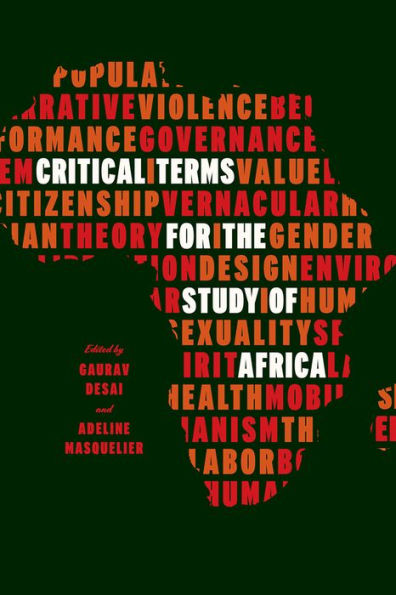
Critical Terms for the Study of Africa in Chattanooga, TN
Current price: $105.00
Barnes and Noble
Critical Terms for the Study of Africa in Chattanooga, TN
Current price: $105.00
Loading Inventory...
Size: Hardcover
For far too long, the Western world viewed Africa as unmappable terraina repository for outsiders’ wildest imaginings. This problematic notion has had lingering effects not only on popular impressions of the region but also on the development of the academic study of Africa.
Critical Terms for the Study of Africa
considers the legacies that have shaped our understanding of the continent and its place within the conceptual grammar of contemporary world affairs.
Written by a distinguished group of scholars, the essays compiled in this volume take stock of African studies today and look toward a future beyond its fraught intellectual and political past. Each essay discusses one of our most critical terms for talking about Africa, exploring the trajectory of its development while pushing its boundaries. Editors Gaurav Desai and Adeline Masquelier balance the choice of twenty-five terms between the expected and the unexpected, calling for nothing short of a new mapping of the scholarly field. The result is an essential reference that will challenge assumptions, stimulate lively debate, and make the past, present, and future of African Studies accessible to students and teachers alike.
Critical Terms for the Study of Africa
considers the legacies that have shaped our understanding of the continent and its place within the conceptual grammar of contemporary world affairs.
Written by a distinguished group of scholars, the essays compiled in this volume take stock of African studies today and look toward a future beyond its fraught intellectual and political past. Each essay discusses one of our most critical terms for talking about Africa, exploring the trajectory of its development while pushing its boundaries. Editors Gaurav Desai and Adeline Masquelier balance the choice of twenty-five terms between the expected and the unexpected, calling for nothing short of a new mapping of the scholarly field. The result is an essential reference that will challenge assumptions, stimulate lively debate, and make the past, present, and future of African Studies accessible to students and teachers alike.
For far too long, the Western world viewed Africa as unmappable terraina repository for outsiders’ wildest imaginings. This problematic notion has had lingering effects not only on popular impressions of the region but also on the development of the academic study of Africa.
Critical Terms for the Study of Africa
considers the legacies that have shaped our understanding of the continent and its place within the conceptual grammar of contemporary world affairs.
Written by a distinguished group of scholars, the essays compiled in this volume take stock of African studies today and look toward a future beyond its fraught intellectual and political past. Each essay discusses one of our most critical terms for talking about Africa, exploring the trajectory of its development while pushing its boundaries. Editors Gaurav Desai and Adeline Masquelier balance the choice of twenty-five terms between the expected and the unexpected, calling for nothing short of a new mapping of the scholarly field. The result is an essential reference that will challenge assumptions, stimulate lively debate, and make the past, present, and future of African Studies accessible to students and teachers alike.
Critical Terms for the Study of Africa
considers the legacies that have shaped our understanding of the continent and its place within the conceptual grammar of contemporary world affairs.
Written by a distinguished group of scholars, the essays compiled in this volume take stock of African studies today and look toward a future beyond its fraught intellectual and political past. Each essay discusses one of our most critical terms for talking about Africa, exploring the trajectory of its development while pushing its boundaries. Editors Gaurav Desai and Adeline Masquelier balance the choice of twenty-five terms between the expected and the unexpected, calling for nothing short of a new mapping of the scholarly field. The result is an essential reference that will challenge assumptions, stimulate lively debate, and make the past, present, and future of African Studies accessible to students and teachers alike.
You May Also Like















More About Barnes and Noble at Hamilton Place
Barnes & Noble is the world’s largest retail bookseller and a leading retailer of content, digital media and educational products. Our Nook Digital business offers a lineup of NOOK® tablets and e-Readers and an expansive collection of digital reading content through the NOOK Store®. Barnes & Noble’s mission is to operate the best omni-channel specialty retail business in America, helping both our customers and booksellers reach their aspirations, while being a credit to the communities we serve.
2100 Hamilton Pl Blvd, Chattanooga, TN 37421, United States
Find Barnes and Noble at Hamilton Place in Chattanooga, TN
Visit Barnes and Noble at Hamilton Place in Chattanooga, TN
