
Home
Critical Terms for Religious Studies, Second Edition
Barnes and Noble
Loading Inventory...
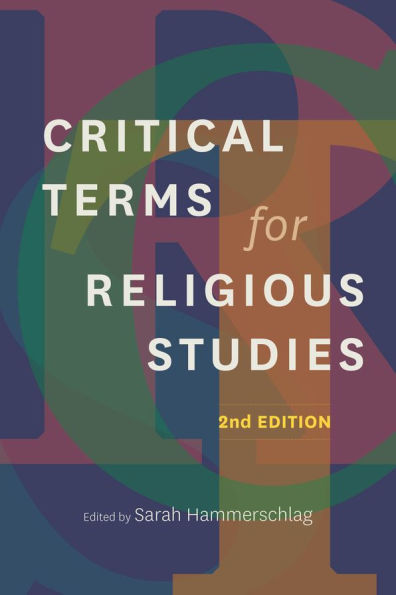
Critical Terms for Religious Studies, Second Edition in Chattanooga, TN
Current price: $35.00
Barnes and Noble
Critical Terms for Religious Studies, Second Edition in Chattanooga, TN
Current price: $35.00
Loading Inventory...
Size: Paperback
A new edition of a classic resourcecomposed of twenty-three essays written specifically for this volume.
First published nearly thirty years ago,
Critical Terms for Religious Studies
proved a vital resource for an emerging interdisciplinary conversation. We still use much of the same language in the study of religion, but fresh concerns have both changed the meaning of terms and given rise to new terms altogether. This edition consists of twenty-three entirely new essays that offer students and scholars alike the tools to historicize and evaluate the shifting role of familiar and emerging critical terms in religious studies.
These are “critical terms” both because they are important in our cultural moment and because thinking through them reveals how religions are embedded in and shaped by material, social, economic, and political forces. A shared conviction unites contributors from a range of traditions and methodologies: a recognition that our world is saturated by the persistence of religious traditions as shape-shifting (not static or transcendent) forces of authority, as powerful today as ever before.
First published nearly thirty years ago,
Critical Terms for Religious Studies
proved a vital resource for an emerging interdisciplinary conversation. We still use much of the same language in the study of religion, but fresh concerns have both changed the meaning of terms and given rise to new terms altogether. This edition consists of twenty-three entirely new essays that offer students and scholars alike the tools to historicize and evaluate the shifting role of familiar and emerging critical terms in religious studies.
These are “critical terms” both because they are important in our cultural moment and because thinking through them reveals how religions are embedded in and shaped by material, social, economic, and political forces. A shared conviction unites contributors from a range of traditions and methodologies: a recognition that our world is saturated by the persistence of religious traditions as shape-shifting (not static or transcendent) forces of authority, as powerful today as ever before.
A new edition of a classic resourcecomposed of twenty-three essays written specifically for this volume.
First published nearly thirty years ago,
Critical Terms for Religious Studies
proved a vital resource for an emerging interdisciplinary conversation. We still use much of the same language in the study of religion, but fresh concerns have both changed the meaning of terms and given rise to new terms altogether. This edition consists of twenty-three entirely new essays that offer students and scholars alike the tools to historicize and evaluate the shifting role of familiar and emerging critical terms in religious studies.
These are “critical terms” both because they are important in our cultural moment and because thinking through them reveals how religions are embedded in and shaped by material, social, economic, and political forces. A shared conviction unites contributors from a range of traditions and methodologies: a recognition that our world is saturated by the persistence of religious traditions as shape-shifting (not static or transcendent) forces of authority, as powerful today as ever before.
First published nearly thirty years ago,
Critical Terms for Religious Studies
proved a vital resource for an emerging interdisciplinary conversation. We still use much of the same language in the study of religion, but fresh concerns have both changed the meaning of terms and given rise to new terms altogether. This edition consists of twenty-three entirely new essays that offer students and scholars alike the tools to historicize and evaluate the shifting role of familiar and emerging critical terms in religious studies.
These are “critical terms” both because they are important in our cultural moment and because thinking through them reveals how religions are embedded in and shaped by material, social, economic, and political forces. A shared conviction unites contributors from a range of traditions and methodologies: a recognition that our world is saturated by the persistence of religious traditions as shape-shifting (not static or transcendent) forces of authority, as powerful today as ever before.
You May Also Like








More About Barnes and Noble at Hamilton Place
Barnes & Noble is the world’s largest retail bookseller and a leading retailer of content, digital media and educational products. Our Nook Digital business offers a lineup of NOOK® tablets and e-Readers and an expansive collection of digital reading content through the NOOK Store®. Barnes & Noble’s mission is to operate the best omni-channel specialty retail business in America, helping both our customers and booksellers reach their aspirations, while being a credit to the communities we serve.
2100 Hamilton Pl Blvd, Chattanooga, TN 37421, United States
Find Barnes and Noble at Hamilton Place in Chattanooga, TN
Visit Barnes and Noble at Hamilton Place in Chattanooga, TN
