
Home
Creativity and Entrepreneurial Performance: A General Scientific Theory
Barnes and Noble
Loading Inventory...
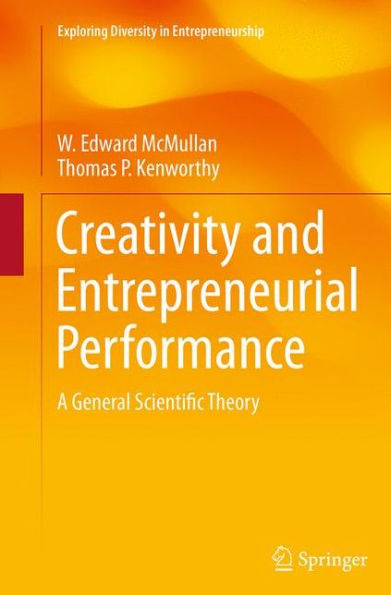
Creativity and Entrepreneurial Performance: A General Scientific Theory in Chattanooga, TN
Current price: $54.99
Barnes and Noble
Creativity and Entrepreneurial Performance: A General Scientific Theory in Chattanooga, TN
Current price: $54.99
Loading Inventory...
Size: Hardcover
The essential problem in entrepreneurship is improving the performance of entrepreneurs. The most important theories will be the ones that most enable us to predict and then ultimately influence entrepreneurial performance. This book develops a new and more accurate theory of entrepreneurial performance based in entrepreneurial creativity. The field of entrepreneurship has a long tradition of expecting entrepreneurial performance to be influenced by creativity, tracing back even before the pioneering work of Joseph Schumpeter (1883 to 1950), who defined entrepreneurship as creative-destruction—creating the new by supplanting or destroying the old. Subsequently, psychologist Robert Sternberg defined creativity as broadly encompassing creative aspects of personality, motivation, intellect, thinking style and relevant knowledge. Using Sternberg’s definition of creativity, the authors reviewed the evidence directly linking entrepreneurial creativity and entrepreneurial performance, concluding that the linkage is both statistically and practically significant. In order to scientifically tie entrepreneurship to creativity the book pursues a number of major objectives: In parts one and two, the authors remind us of our scientific challenge in the light of the depressing levels of performance typically to be found in the real world of entrepreneurship and explores the limitations of the dominant paradigms driving research in the field of entrepreneurship today. In part three, they bring together existing evidence to demonstrate the predictive and explanatory powers of creativity in relation to entrepreneurship. In part four, they further explore correlations between creativity and entrepreneurial performance at the individual and macro or society, levels. In summary, the book offers a bold predictive theory linking entrepreneurial creativity to entrepreneurial performance, however neither as boldly as a definitional linkage nor as timidly as one in a hundred or sofactors potentially explaining entrepreneurial performance. This result is a general scientific theory that offers a serious challenge to entrepreneurial scholars who are pursuing other means for understanding the causality of entrepreneurial performance.
The essential problem in entrepreneurship is improving the performance of entrepreneurs. The most important theories will be the ones that most enable us to predict and then ultimately influence entrepreneurial performance. This book develops a new and more accurate theory of entrepreneurial performance based in entrepreneurial creativity. The field of entrepreneurship has a long tradition of expecting entrepreneurial performance to be influenced by creativity, tracing back even before the pioneering work of Joseph Schumpeter (1883 to 1950), who defined entrepreneurship as creative-destruction—creating the new by supplanting or destroying the old. Subsequently, psychologist Robert Sternberg defined creativity as broadly encompassing creative aspects of personality, motivation, intellect, thinking style and relevant knowledge. Using Sternberg’s definition of creativity, the authors reviewed the evidence directly linking entrepreneurial creativity and entrepreneurial performance, concluding that the linkage is both statistically and practically significant. In order to scientifically tie entrepreneurship to creativity the book pursues a number of major objectives: In parts one and two, the authors remind us of our scientific challenge in the light of the depressing levels of performance typically to be found in the real world of entrepreneurship and explores the limitations of the dominant paradigms driving research in the field of entrepreneurship today. In part three, they bring together existing evidence to demonstrate the predictive and explanatory powers of creativity in relation to entrepreneurship. In part four, they further explore correlations between creativity and entrepreneurial performance at the individual and macro or society, levels. In summary, the book offers a bold predictive theory linking entrepreneurial creativity to entrepreneurial performance, however neither as boldly as a definitional linkage nor as timidly as one in a hundred or sofactors potentially explaining entrepreneurial performance. This result is a general scientific theory that offers a serious challenge to entrepreneurial scholars who are pursuing other means for understanding the causality of entrepreneurial performance.
You May Also Like
















More About Barnes and Noble at Hamilton Place
Barnes & Noble is the world’s largest retail bookseller and a leading retailer of content, digital media and educational products. Our Nook Digital business offers a lineup of NOOK® tablets and e-Readers and an expansive collection of digital reading content through the NOOK Store®. Barnes & Noble’s mission is to operate the best omni-channel specialty retail business in America, helping both our customers and booksellers reach their aspirations, while being a credit to the communities we serve.
2100 Hamilton Pl Blvd, Chattanooga, TN 37421, United States
Find Barnes and Noble at Hamilton Place in Chattanooga, TN
Visit Barnes and Noble at Hamilton Place in Chattanooga, TN
