
Home
Courts and Politics Southeast Asia
Barnes and Noble
Loading Inventory...
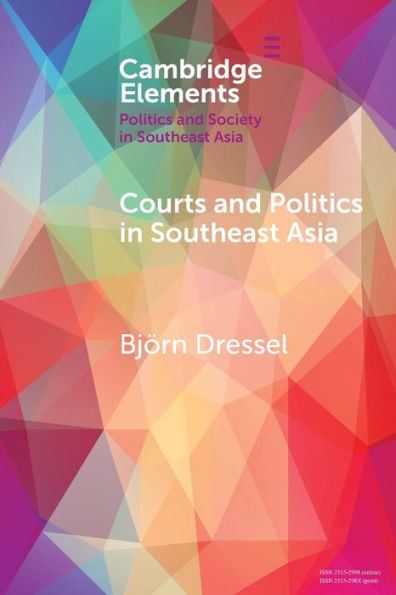
Courts and Politics Southeast Asia in Chattanooga, TN
Current price: $23.00
Barnes and Noble
Courts and Politics Southeast Asia in Chattanooga, TN
Current price: $23.00
Loading Inventory...
Size: Paperback
Courts around the globe have become central players in governance, those in Southeast Asia have been no exception. This Element analyses the historical foundations, patterns, and drivers of judicialization of politics by mapping critical junctures that have shaped the emergence of modern courts in the region and providing a basic typology of courts and politics that extends the analysis to the contemporary situation. It also offers a new relational theory that helps explain the dynamics of judicial recruitment, decision-making, court performance-and ultimately perceptions of judicial legitimacy. In a region where power is often concentrated among oligarchs and clientelist political dynamics persist, it posits that courts are best comprehended as institutional hybrids. These hybrids seamlessly blend formal and informal practices, with profound implications for how Southeast Asian courts are molding both the rule of law and political governance.
Courts around the globe have become central players in governance, those in Southeast Asia have been no exception. This Element analyses the historical foundations, patterns, and drivers of judicialization of politics by mapping critical junctures that have shaped the emergence of modern courts in the region and providing a basic typology of courts and politics that extends the analysis to the contemporary situation. It also offers a new relational theory that helps explain the dynamics of judicial recruitment, decision-making, court performance-and ultimately perceptions of judicial legitimacy. In a region where power is often concentrated among oligarchs and clientelist political dynamics persist, it posits that courts are best comprehended as institutional hybrids. These hybrids seamlessly blend formal and informal practices, with profound implications for how Southeast Asian courts are molding both the rule of law and political governance.
You May Also Like









More About Barnes and Noble at Hamilton Place
Barnes & Noble is the world’s largest retail bookseller and a leading retailer of content, digital media and educational products. Our Nook Digital business offers a lineup of NOOK® tablets and e-Readers and an expansive collection of digital reading content through the NOOK Store®. Barnes & Noble’s mission is to operate the best omni-channel specialty retail business in America, helping both our customers and booksellers reach their aspirations, while being a credit to the communities we serve.
2100 Hamilton Pl Blvd, Chattanooga, TN 37421, United States
Find Barnes and Noble at Hamilton Place in Chattanooga, TN
Visit Barnes and Noble at Hamilton Place in Chattanooga, TN
