
Home
Counterinsurgency Campaign Plan Concept
Barnes and Noble
Loading Inventory...
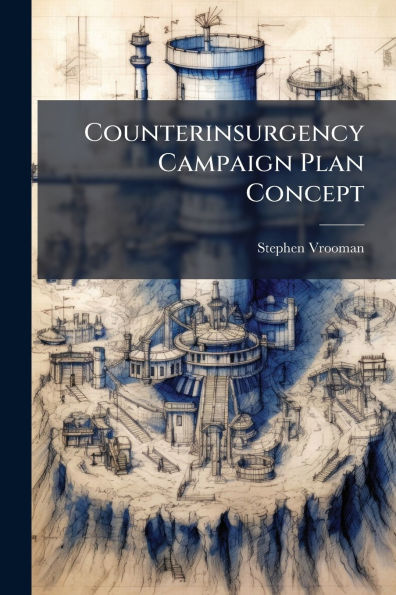
Counterinsurgency Campaign Plan Concept in Chattanooga, TN
Current price: $29.95
Barnes and Noble
Counterinsurgency Campaign Plan Concept in Chattanooga, TN
Current price: $29.95
Loading Inventory...
Size: Hardcover
This monograph describes the nature and dynamics of insurgency and counterinsurgency (COIN) operations citing David Galula's theory. In his book, Counterinsurgency Warfare: Theory and Practice, Galula sets a clear mark for planning future COIN operations against the increased likelihood of insurgencies following an Orthodox Pattern in semi-authoritarian countries. This monograph extrapolates Galula's theory and frames it in contemporary campaign planning doctrine to demonstrate its applicability to COIN warfare. Joint doctrine serves as the common lexicon for commanders and planners to conceptualize COIN plans. But application of doctrine alone does not address how to put the plan into context. David Galula's COIN theory and the Boer War serve as examples of theory and history to contextualize the plan. The Contemporary COIN Campaign Plan Concept, proposed by the author, illustrates how commanders may effectively synchronize the available resources and required capabilities. It attempts to be predictive, but not mistaken, as the definitive COIN campaign design concept. Instead, it aims to serve as a compass by pointing in one direction supported by history, theory, and doctrine
This work has been selected by scholars as being culturally important, and is part of the knowledge base of civilization as we know it. This work was reproduced from the original artifact, and remains as true to the original work as possible. Therefore, you will see the original copyright references, library stamps (as most of these works have been housed in our most important libraries around the world), and other notations in the work.
This work is in the public domain in the United States of America, and possibly other nations. Within the United States, you may freely copy and distribute this work, as no entity (individual or corporate) has a copyright on the body of the work.
As a reproduction of a historical artifact, this work may contain missing or blurred pages, poor pictures, errant marks, etc. Scholars believe, and we concur, that this work is important enough to be preserved, reproduced, and made generally available to the public. We appreciate your support of the preservation process, and thank you for being an important part of keeping this knowledge alive and relevant.
This work has been selected by scholars as being culturally important, and is part of the knowledge base of civilization as we know it. This work was reproduced from the original artifact, and remains as true to the original work as possible. Therefore, you will see the original copyright references, library stamps (as most of these works have been housed in our most important libraries around the world), and other notations in the work.
This work is in the public domain in the United States of America, and possibly other nations. Within the United States, you may freely copy and distribute this work, as no entity (individual or corporate) has a copyright on the body of the work.
As a reproduction of a historical artifact, this work may contain missing or blurred pages, poor pictures, errant marks, etc. Scholars believe, and we concur, that this work is important enough to be preserved, reproduced, and made generally available to the public. We appreciate your support of the preservation process, and thank you for being an important part of keeping this knowledge alive and relevant.
This monograph describes the nature and dynamics of insurgency and counterinsurgency (COIN) operations citing David Galula's theory. In his book, Counterinsurgency Warfare: Theory and Practice, Galula sets a clear mark for planning future COIN operations against the increased likelihood of insurgencies following an Orthodox Pattern in semi-authoritarian countries. This monograph extrapolates Galula's theory and frames it in contemporary campaign planning doctrine to demonstrate its applicability to COIN warfare. Joint doctrine serves as the common lexicon for commanders and planners to conceptualize COIN plans. But application of doctrine alone does not address how to put the plan into context. David Galula's COIN theory and the Boer War serve as examples of theory and history to contextualize the plan. The Contemporary COIN Campaign Plan Concept, proposed by the author, illustrates how commanders may effectively synchronize the available resources and required capabilities. It attempts to be predictive, but not mistaken, as the definitive COIN campaign design concept. Instead, it aims to serve as a compass by pointing in one direction supported by history, theory, and doctrine
This work has been selected by scholars as being culturally important, and is part of the knowledge base of civilization as we know it. This work was reproduced from the original artifact, and remains as true to the original work as possible. Therefore, you will see the original copyright references, library stamps (as most of these works have been housed in our most important libraries around the world), and other notations in the work.
This work is in the public domain in the United States of America, and possibly other nations. Within the United States, you may freely copy and distribute this work, as no entity (individual or corporate) has a copyright on the body of the work.
As a reproduction of a historical artifact, this work may contain missing or blurred pages, poor pictures, errant marks, etc. Scholars believe, and we concur, that this work is important enough to be preserved, reproduced, and made generally available to the public. We appreciate your support of the preservation process, and thank you for being an important part of keeping this knowledge alive and relevant.
This work has been selected by scholars as being culturally important, and is part of the knowledge base of civilization as we know it. This work was reproduced from the original artifact, and remains as true to the original work as possible. Therefore, you will see the original copyright references, library stamps (as most of these works have been housed in our most important libraries around the world), and other notations in the work.
This work is in the public domain in the United States of America, and possibly other nations. Within the United States, you may freely copy and distribute this work, as no entity (individual or corporate) has a copyright on the body of the work.
As a reproduction of a historical artifact, this work may contain missing or blurred pages, poor pictures, errant marks, etc. Scholars believe, and we concur, that this work is important enough to be preserved, reproduced, and made generally available to the public. We appreciate your support of the preservation process, and thank you for being an important part of keeping this knowledge alive and relevant.
You May Also Like












More About Barnes and Noble at Hamilton Place
Barnes & Noble is the world’s largest retail bookseller and a leading retailer of content, digital media and educational products. Our Nook Digital business offers a lineup of NOOK® tablets and e-Readers and an expansive collection of digital reading content through the NOOK Store®. Barnes & Noble’s mission is to operate the best omni-channel specialty retail business in America, helping both our customers and booksellers reach their aspirations, while being a credit to the communities we serve.
2100 Hamilton Pl Blvd, Chattanooga, TN 37421, United States
Find Barnes and Noble at Hamilton Place in Chattanooga, TN
Visit Barnes and Noble at Hamilton Place in Chattanooga, TN
