
Home
Counseling Individuals with Eating Disorders: An Intersectional Approach
Barnes and Noble
Loading Inventory...
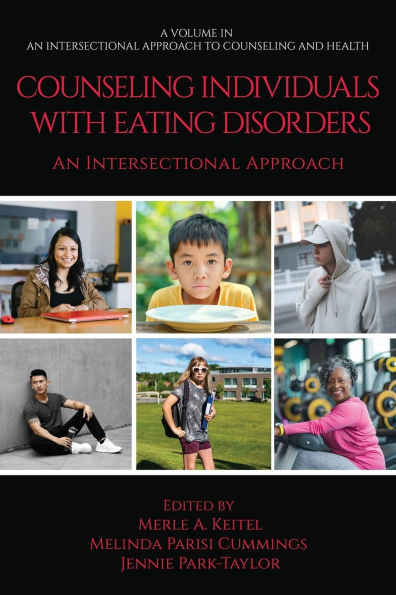
Counseling Individuals with Eating Disorders: An Intersectional Approach in Chattanooga, TN
Current price: $61.00
Barnes and Noble
Counseling Individuals with Eating Disorders: An Intersectional Approach in Chattanooga, TN
Current price: $61.00
Loading Inventory...
Size: OS
Counseling Individuals with Eating Disorders
:
An Intersectional Approach
was written to provide mental health professionals and students of counseling, medicine, psychology, social work, and other helping professions, with useful information and suggestions for their work with individuals with eating disorders. The chapter authors rely on an intersectional understanding of the human experience and specifically focus on how individuals with various intersecting identities experience, understand, and seek support for their disorders. We are so grateful to the diverse group of authors who collectively contributed their professional expertise to create this culturallycentered, engaging, and interdisciplinary resource. We strongly believe that our book fills a unique gap in the currently available texts that address these issues because case examples are included that are embedded in a specific sociocultural context. It is important to note that, although a range of illnesses are represented, the book is not comprehensive. Each chapter has great practical significance and utility for mental health practitioners as well as students in training. Chapters focus on general topics such as intersectionality and ethics, counseling individuals with specific eating disorders, counseling special populations, and counseling parents. Each of the disorderspecific chapters in the book begins with a description of the disorder, research regarding prevalence rates across diverse groups, and evidencebased treatments. Most chapters include an extended case vignette that highlights considerations relevant to a client's intersectional identity. Readers are provided with an analysis of the vignette from the perspective of a theoretical approach or approaches supported by empirical research. Chapters conclude with future directions for treatment, research, theory, and policy, as well as four to five questions for discussion.
:
An Intersectional Approach
was written to provide mental health professionals and students of counseling, medicine, psychology, social work, and other helping professions, with useful information and suggestions for their work with individuals with eating disorders. The chapter authors rely on an intersectional understanding of the human experience and specifically focus on how individuals with various intersecting identities experience, understand, and seek support for their disorders. We are so grateful to the diverse group of authors who collectively contributed their professional expertise to create this culturallycentered, engaging, and interdisciplinary resource. We strongly believe that our book fills a unique gap in the currently available texts that address these issues because case examples are included that are embedded in a specific sociocultural context. It is important to note that, although a range of illnesses are represented, the book is not comprehensive. Each chapter has great practical significance and utility for mental health practitioners as well as students in training. Chapters focus on general topics such as intersectionality and ethics, counseling individuals with specific eating disorders, counseling special populations, and counseling parents. Each of the disorderspecific chapters in the book begins with a description of the disorder, research regarding prevalence rates across diverse groups, and evidencebased treatments. Most chapters include an extended case vignette that highlights considerations relevant to a client's intersectional identity. Readers are provided with an analysis of the vignette from the perspective of a theoretical approach or approaches supported by empirical research. Chapters conclude with future directions for treatment, research, theory, and policy, as well as four to five questions for discussion.
Counseling Individuals with Eating Disorders
:
An Intersectional Approach
was written to provide mental health professionals and students of counseling, medicine, psychology, social work, and other helping professions, with useful information and suggestions for their work with individuals with eating disorders. The chapter authors rely on an intersectional understanding of the human experience and specifically focus on how individuals with various intersecting identities experience, understand, and seek support for their disorders. We are so grateful to the diverse group of authors who collectively contributed their professional expertise to create this culturallycentered, engaging, and interdisciplinary resource. We strongly believe that our book fills a unique gap in the currently available texts that address these issues because case examples are included that are embedded in a specific sociocultural context. It is important to note that, although a range of illnesses are represented, the book is not comprehensive. Each chapter has great practical significance and utility for mental health practitioners as well as students in training. Chapters focus on general topics such as intersectionality and ethics, counseling individuals with specific eating disorders, counseling special populations, and counseling parents. Each of the disorderspecific chapters in the book begins with a description of the disorder, research regarding prevalence rates across diverse groups, and evidencebased treatments. Most chapters include an extended case vignette that highlights considerations relevant to a client's intersectional identity. Readers are provided with an analysis of the vignette from the perspective of a theoretical approach or approaches supported by empirical research. Chapters conclude with future directions for treatment, research, theory, and policy, as well as four to five questions for discussion.
:
An Intersectional Approach
was written to provide mental health professionals and students of counseling, medicine, psychology, social work, and other helping professions, with useful information and suggestions for their work with individuals with eating disorders. The chapter authors rely on an intersectional understanding of the human experience and specifically focus on how individuals with various intersecting identities experience, understand, and seek support for their disorders. We are so grateful to the diverse group of authors who collectively contributed their professional expertise to create this culturallycentered, engaging, and interdisciplinary resource. We strongly believe that our book fills a unique gap in the currently available texts that address these issues because case examples are included that are embedded in a specific sociocultural context. It is important to note that, although a range of illnesses are represented, the book is not comprehensive. Each chapter has great practical significance and utility for mental health practitioners as well as students in training. Chapters focus on general topics such as intersectionality and ethics, counseling individuals with specific eating disorders, counseling special populations, and counseling parents. Each of the disorderspecific chapters in the book begins with a description of the disorder, research regarding prevalence rates across diverse groups, and evidencebased treatments. Most chapters include an extended case vignette that highlights considerations relevant to a client's intersectional identity. Readers are provided with an analysis of the vignette from the perspective of a theoretical approach or approaches supported by empirical research. Chapters conclude with future directions for treatment, research, theory, and policy, as well as four to five questions for discussion.
You May Also Like







More About Barnes and Noble at Hamilton Place
Barnes & Noble is the world’s largest retail bookseller and a leading retailer of content, digital media and educational products. Our Nook Digital business offers a lineup of NOOK® tablets and e-Readers and an expansive collection of digital reading content through the NOOK Store®. Barnes & Noble’s mission is to operate the best omni-channel specialty retail business in America, helping both our customers and booksellers reach their aspirations, while being a credit to the communities we serve.
2100 Hamilton Pl Blvd, Chattanooga, TN 37421, United States
Find Barnes and Noble at Hamilton Place in Chattanooga, TN
Visit Barnes and Noble at Hamilton Place in Chattanooga, TN
