
Home
Controlling Biofouling in Seawater Reverse Osmosis Membrane Systems
Barnes and Noble
Loading Inventory...
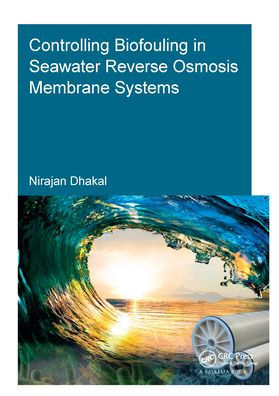
Controlling Biofouling in Seawater Reverse Osmosis Membrane Systems in Chattanooga, TN
Current price: $120.00
Barnes and Noble
Controlling Biofouling in Seawater Reverse Osmosis Membrane Systems in Chattanooga, TN
Current price: $120.00
Loading Inventory...
Size: OS
Seawater desalination is a rapidly growing coastal industry that is increasingly threatened by algal blooms. Depending on the severity of algal blooms, desalination systems may be forced to shut down because of clogging and/or poor feed water quality. To maintain stable operation and provide good feed water quality to seawater reverse osmosis (SWRO) systems, ultrafiltration (UF) pre-treatment is proposed.
This research focused on assessing the ability of UF and other pre-treatment technologies to reduce biofouling in SWRO systems. An
improved
method to measure bacterial regrowth potential (BRP) was developed and applied at laboratory, pilot and full scale to assess the ability of conventional UF (150 kDa) and tight UF (10 kDa) alone and in combination with a phosphate adsorbent to reduce regrowth potential and delay the onset of biofouling in SWRO.
The improved bacterial regrowth potential method employs a natural consortium of marine bacteria as inoculum and flow cytometry. The limit of detection of the BRP method was lowered to 43,000 ± 12,000 cells/mL, which is equivalent to 9.3 ± 2.6 µg-Cglucose/L.
The reduction in bacterial regrowth potential after tight UF (10 kDa) was 3 to 4 times higher than with conventional UF (150 kDa). It was further reduced after the application of a phosphate adsorbent, independent of pore size of the UF membrane. Pilot studies demonstrated that the application of tight UF (10 kDa) coupled with a phosphate adsorbent consistently lowered the bacterial regrowth potential and no feed channel pressure drop increase was observed in membrane fouling simulators (MFS) over a period of 21 days. The study also showed that non-backwashable fouling of UF membranes varied strongly with the type of algal species and the algal organic matter (AOM) they release. The presence of polysaccharide (stretching -OH) and sugar ester groups (stretching S=O) was the main cause of non-backwashable fouling.
In conclusion, this study showed that an improved BRP method is suitable for the assessment of SWRO pre-treatment systems and it can be a useful tool to develop potential strategies to mitigate biofouling and improve the sustainability of SWRO systems.
This research focused on assessing the ability of UF and other pre-treatment technologies to reduce biofouling in SWRO systems. An
improved
method to measure bacterial regrowth potential (BRP) was developed and applied at laboratory, pilot and full scale to assess the ability of conventional UF (150 kDa) and tight UF (10 kDa) alone and in combination with a phosphate adsorbent to reduce regrowth potential and delay the onset of biofouling in SWRO.
The improved bacterial regrowth potential method employs a natural consortium of marine bacteria as inoculum and flow cytometry. The limit of detection of the BRP method was lowered to 43,000 ± 12,000 cells/mL, which is equivalent to 9.3 ± 2.6 µg-Cglucose/L.
The reduction in bacterial regrowth potential after tight UF (10 kDa) was 3 to 4 times higher than with conventional UF (150 kDa). It was further reduced after the application of a phosphate adsorbent, independent of pore size of the UF membrane. Pilot studies demonstrated that the application of tight UF (10 kDa) coupled with a phosphate adsorbent consistently lowered the bacterial regrowth potential and no feed channel pressure drop increase was observed in membrane fouling simulators (MFS) over a period of 21 days. The study also showed that non-backwashable fouling of UF membranes varied strongly with the type of algal species and the algal organic matter (AOM) they release. The presence of polysaccharide (stretching -OH) and sugar ester groups (stretching S=O) was the main cause of non-backwashable fouling.
In conclusion, this study showed that an improved BRP method is suitable for the assessment of SWRO pre-treatment systems and it can be a useful tool to develop potential strategies to mitigate biofouling and improve the sustainability of SWRO systems.
Seawater desalination is a rapidly growing coastal industry that is increasingly threatened by algal blooms. Depending on the severity of algal blooms, desalination systems may be forced to shut down because of clogging and/or poor feed water quality. To maintain stable operation and provide good feed water quality to seawater reverse osmosis (SWRO) systems, ultrafiltration (UF) pre-treatment is proposed.
This research focused on assessing the ability of UF and other pre-treatment technologies to reduce biofouling in SWRO systems. An
improved
method to measure bacterial regrowth potential (BRP) was developed and applied at laboratory, pilot and full scale to assess the ability of conventional UF (150 kDa) and tight UF (10 kDa) alone and in combination with a phosphate adsorbent to reduce regrowth potential and delay the onset of biofouling in SWRO.
The improved bacterial regrowth potential method employs a natural consortium of marine bacteria as inoculum and flow cytometry. The limit of detection of the BRP method was lowered to 43,000 ± 12,000 cells/mL, which is equivalent to 9.3 ± 2.6 µg-Cglucose/L.
The reduction in bacterial regrowth potential after tight UF (10 kDa) was 3 to 4 times higher than with conventional UF (150 kDa). It was further reduced after the application of a phosphate adsorbent, independent of pore size of the UF membrane. Pilot studies demonstrated that the application of tight UF (10 kDa) coupled with a phosphate adsorbent consistently lowered the bacterial regrowth potential and no feed channel pressure drop increase was observed in membrane fouling simulators (MFS) over a period of 21 days. The study also showed that non-backwashable fouling of UF membranes varied strongly with the type of algal species and the algal organic matter (AOM) they release. The presence of polysaccharide (stretching -OH) and sugar ester groups (stretching S=O) was the main cause of non-backwashable fouling.
In conclusion, this study showed that an improved BRP method is suitable for the assessment of SWRO pre-treatment systems and it can be a useful tool to develop potential strategies to mitigate biofouling and improve the sustainability of SWRO systems.
This research focused on assessing the ability of UF and other pre-treatment technologies to reduce biofouling in SWRO systems. An
improved
method to measure bacterial regrowth potential (BRP) was developed and applied at laboratory, pilot and full scale to assess the ability of conventional UF (150 kDa) and tight UF (10 kDa) alone and in combination with a phosphate adsorbent to reduce regrowth potential and delay the onset of biofouling in SWRO.
The improved bacterial regrowth potential method employs a natural consortium of marine bacteria as inoculum and flow cytometry. The limit of detection of the BRP method was lowered to 43,000 ± 12,000 cells/mL, which is equivalent to 9.3 ± 2.6 µg-Cglucose/L.
The reduction in bacterial regrowth potential after tight UF (10 kDa) was 3 to 4 times higher than with conventional UF (150 kDa). It was further reduced after the application of a phosphate adsorbent, independent of pore size of the UF membrane. Pilot studies demonstrated that the application of tight UF (10 kDa) coupled with a phosphate adsorbent consistently lowered the bacterial regrowth potential and no feed channel pressure drop increase was observed in membrane fouling simulators (MFS) over a period of 21 days. The study also showed that non-backwashable fouling of UF membranes varied strongly with the type of algal species and the algal organic matter (AOM) they release. The presence of polysaccharide (stretching -OH) and sugar ester groups (stretching S=O) was the main cause of non-backwashable fouling.
In conclusion, this study showed that an improved BRP method is suitable for the assessment of SWRO pre-treatment systems and it can be a useful tool to develop potential strategies to mitigate biofouling and improve the sustainability of SWRO systems.
You May Also Like

















More About Barnes and Noble at Hamilton Place
Barnes & Noble is the world’s largest retail bookseller and a leading retailer of content, digital media and educational products. Our Nook Digital business offers a lineup of NOOK® tablets and e-Readers and an expansive collection of digital reading content through the NOOK Store®. Barnes & Noble’s mission is to operate the best omni-channel specialty retail business in America, helping both our customers and booksellers reach their aspirations, while being a credit to the communities we serve.
2100 Hamilton Pl Blvd, Chattanooga, TN 37421, United States
Find Barnes and Noble at Hamilton Place in Chattanooga, TN
Visit Barnes and Noble at Hamilton Place in Chattanooga, TN