
Home
Constructed Movements: Extraction and Resistance Mexican Migrant Communities
Barnes and Noble
Loading Inventory...
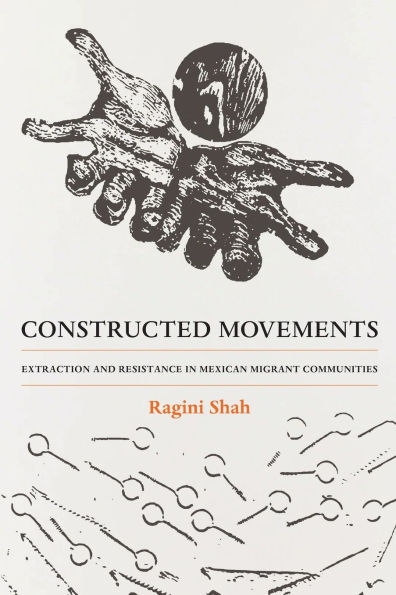
Constructed Movements: Extraction and Resistance Mexican Migrant Communities in Chattanooga, TN
Current price: $34.95
Barnes and Noble
Constructed Movements: Extraction and Resistance Mexican Migrant Communities in Chattanooga, TN
Current price: $34.95
Loading Inventory...
Size: Paperback
A free ebook version of this title is available through Luminos, University of California Press's Open Access publishing program. Visit
www.luminosoa.org
to learn more.
At once theoretically sophisticated and poignantly written,
Constructed Movements
centers stories from communities in Mexico profoundly affected by emigration to the United States to show how migration extracts resources along racial lines. Ragini Shah chronicles how three interrelated dynamics—the maldistribution of public resources, the exploitation of migrant labor, and the US immigration enforcement regime—entrench the necessity of migration as a strategy for survival in Mexico. She also highlights the alternative visions elaborated by migrant community organizations that seek to end the conditions that force migration. Recognizing that reform without recompense will never right an unjust migratory system, Shah concludes with a forceful call for the US and Mexican governments to make abolitionist investments and reparative compensation to directly counteract this legacy of extraction.
www.luminosoa.org
to learn more.
At once theoretically sophisticated and poignantly written,
Constructed Movements
centers stories from communities in Mexico profoundly affected by emigration to the United States to show how migration extracts resources along racial lines. Ragini Shah chronicles how three interrelated dynamics—the maldistribution of public resources, the exploitation of migrant labor, and the US immigration enforcement regime—entrench the necessity of migration as a strategy for survival in Mexico. She also highlights the alternative visions elaborated by migrant community organizations that seek to end the conditions that force migration. Recognizing that reform without recompense will never right an unjust migratory system, Shah concludes with a forceful call for the US and Mexican governments to make abolitionist investments and reparative compensation to directly counteract this legacy of extraction.
A free ebook version of this title is available through Luminos, University of California Press's Open Access publishing program. Visit
www.luminosoa.org
to learn more.
At once theoretically sophisticated and poignantly written,
Constructed Movements
centers stories from communities in Mexico profoundly affected by emigration to the United States to show how migration extracts resources along racial lines. Ragini Shah chronicles how three interrelated dynamics—the maldistribution of public resources, the exploitation of migrant labor, and the US immigration enforcement regime—entrench the necessity of migration as a strategy for survival in Mexico. She also highlights the alternative visions elaborated by migrant community organizations that seek to end the conditions that force migration. Recognizing that reform without recompense will never right an unjust migratory system, Shah concludes with a forceful call for the US and Mexican governments to make abolitionist investments and reparative compensation to directly counteract this legacy of extraction.
www.luminosoa.org
to learn more.
At once theoretically sophisticated and poignantly written,
Constructed Movements
centers stories from communities in Mexico profoundly affected by emigration to the United States to show how migration extracts resources along racial lines. Ragini Shah chronicles how three interrelated dynamics—the maldistribution of public resources, the exploitation of migrant labor, and the US immigration enforcement regime—entrench the necessity of migration as a strategy for survival in Mexico. She also highlights the alternative visions elaborated by migrant community organizations that seek to end the conditions that force migration. Recognizing that reform without recompense will never right an unjust migratory system, Shah concludes with a forceful call for the US and Mexican governments to make abolitionist investments and reparative compensation to directly counteract this legacy of extraction.
You May Also Like











More About Barnes and Noble at Hamilton Place
Barnes & Noble is the world’s largest retail bookseller and a leading retailer of content, digital media and educational products. Our Nook Digital business offers a lineup of NOOK® tablets and e-Readers and an expansive collection of digital reading content through the NOOK Store®. Barnes & Noble’s mission is to operate the best omni-channel specialty retail business in America, helping both our customers and booksellers reach their aspirations, while being a credit to the communities we serve.
2100 Hamilton Pl Blvd, Chattanooga, TN 37421, United States
Find Barnes and Noble at Hamilton Place in Chattanooga, TN
Visit Barnes and Noble at Hamilton Place in Chattanooga, TN
