
Home
Competing Visions for International Order: Challenges a Shared Direction an Age of Global Contestation
Barnes and Noble
Loading Inventory...
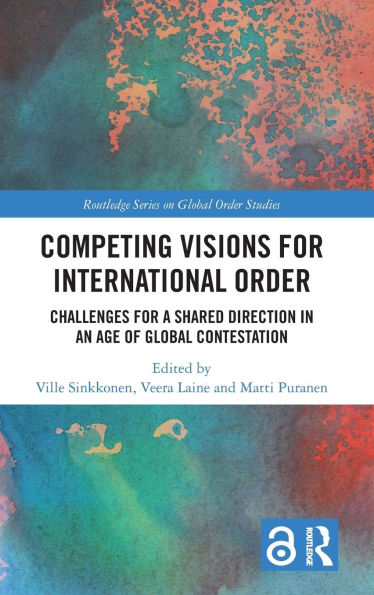
Competing Visions for International Order: Challenges a Shared Direction an Age of Global Contestation in Chattanooga, TN
Current price: $190.00
Barnes and Noble
Competing Visions for International Order: Challenges a Shared Direction an Age of Global Contestation in Chattanooga, TN
Current price: $190.00
Loading Inventory...
Size: Hardcover
This book explores the international ordering visions of key global and regional powers in the international system from 2014 onwards.
Using a fourfold analytical framework based on the distributional, normative, institutional, and temporal dimensions of the visions propagated by the relevant political elites in the states/actors in question, the book addresses the ultimate question in international relations for the coming decades: To what extent can the visions pushed forward by the leading powers of the world be reconciled to arrive at a shared direction for international order writ large? The book’s analysis also offers normative prescriptions on how to avoid a tragic race to the bottom – a fragmented world of competing orders where states are unable to address shared global crises and challenges such as pandemics, cross-border crime, climate tragedies, and armed conflict. With this, it concludes by recognising the importance of agency as well as political imagination in navigating the crisis-ridden ordering moment of the international system.
This book will be of key interest to scholars and students in global order studies and governance, geopolitics, regional studies, foreign policy analysis as well as more broadly to international relations and security, political history, human geography, and policymakers.
Chapter 3 and Chapter 9 of this book is freely available as a downloadable Open Access PDF at http://www.taylorfrancis.com under a Creative Commons Attribution (CC-BY) 4.0 International license.
Using a fourfold analytical framework based on the distributional, normative, institutional, and temporal dimensions of the visions propagated by the relevant political elites in the states/actors in question, the book addresses the ultimate question in international relations for the coming decades: To what extent can the visions pushed forward by the leading powers of the world be reconciled to arrive at a shared direction for international order writ large? The book’s analysis also offers normative prescriptions on how to avoid a tragic race to the bottom – a fragmented world of competing orders where states are unable to address shared global crises and challenges such as pandemics, cross-border crime, climate tragedies, and armed conflict. With this, it concludes by recognising the importance of agency as well as political imagination in navigating the crisis-ridden ordering moment of the international system.
This book will be of key interest to scholars and students in global order studies and governance, geopolitics, regional studies, foreign policy analysis as well as more broadly to international relations and security, political history, human geography, and policymakers.
Chapter 3 and Chapter 9 of this book is freely available as a downloadable Open Access PDF at http://www.taylorfrancis.com under a Creative Commons Attribution (CC-BY) 4.0 International license.
This book explores the international ordering visions of key global and regional powers in the international system from 2014 onwards.
Using a fourfold analytical framework based on the distributional, normative, institutional, and temporal dimensions of the visions propagated by the relevant political elites in the states/actors in question, the book addresses the ultimate question in international relations for the coming decades: To what extent can the visions pushed forward by the leading powers of the world be reconciled to arrive at a shared direction for international order writ large? The book’s analysis also offers normative prescriptions on how to avoid a tragic race to the bottom – a fragmented world of competing orders where states are unable to address shared global crises and challenges such as pandemics, cross-border crime, climate tragedies, and armed conflict. With this, it concludes by recognising the importance of agency as well as political imagination in navigating the crisis-ridden ordering moment of the international system.
This book will be of key interest to scholars and students in global order studies and governance, geopolitics, regional studies, foreign policy analysis as well as more broadly to international relations and security, political history, human geography, and policymakers.
Chapter 3 and Chapter 9 of this book is freely available as a downloadable Open Access PDF at http://www.taylorfrancis.com under a Creative Commons Attribution (CC-BY) 4.0 International license.
Using a fourfold analytical framework based on the distributional, normative, institutional, and temporal dimensions of the visions propagated by the relevant political elites in the states/actors in question, the book addresses the ultimate question in international relations for the coming decades: To what extent can the visions pushed forward by the leading powers of the world be reconciled to arrive at a shared direction for international order writ large? The book’s analysis also offers normative prescriptions on how to avoid a tragic race to the bottom – a fragmented world of competing orders where states are unable to address shared global crises and challenges such as pandemics, cross-border crime, climate tragedies, and armed conflict. With this, it concludes by recognising the importance of agency as well as political imagination in navigating the crisis-ridden ordering moment of the international system.
This book will be of key interest to scholars and students in global order studies and governance, geopolitics, regional studies, foreign policy analysis as well as more broadly to international relations and security, political history, human geography, and policymakers.
Chapter 3 and Chapter 9 of this book is freely available as a downloadable Open Access PDF at http://www.taylorfrancis.com under a Creative Commons Attribution (CC-BY) 4.0 International license.
You May Also Like












More About Barnes and Noble at Hamilton Place
Barnes & Noble is the world’s largest retail bookseller and a leading retailer of content, digital media and educational products. Our Nook Digital business offers a lineup of NOOK® tablets and e-Readers and an expansive collection of digital reading content through the NOOK Store®. Barnes & Noble’s mission is to operate the best omni-channel specialty retail business in America, helping both our customers and booksellers reach their aspirations, while being a credit to the communities we serve.
2100 Hamilton Pl Blvd, Chattanooga, TN 37421, United States
Find Barnes and Noble at Hamilton Place in Chattanooga, TN
Visit Barnes and Noble at Hamilton Place in Chattanooga, TN
