
Home
Company of Kinsmen: Enterprise and Community in South Asian History 1700-1940
Barnes and Noble
Loading Inventory...
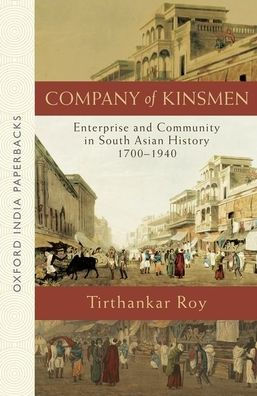
Company of Kinsmen: Enterprise and Community in South Asian History 1700-1940 in Chattanooga, TN
Current price: $19.95
Barnes and Noble
Company of Kinsmen: Enterprise and Community in South Asian History 1700-1940 in Chattanooga, TN
Current price: $19.95
Loading Inventory...
Size: OS
This book chronicles how the concept of organizing people to serve economic ends emerged in early modern and colonial India. It examines rules of cooperation, why people decided to join forces, how disputes were settled, and how cooperative communities became increasingly unstable in more modern times. It focuses on five dimensions: actor, agent, time, purpose, and region. The leading actors are peasants, labourers, artisans, merchants/bankers, and the states. The rules of cooperation that formed inside communities of merchants and others were respected by the states. However, these rules would eventually become unstable due to the integration of India within a global-industrial economy and the introduction of a new rule of law in the old guise of "custom". As a result, the endogamous guild, a kind of collective that used marriage rules to secure cooperative ties, became weaker, to be supplanted by other forms of organization. Collectives controlled property, managed resources, supplied training, and conducted negotiations. The regional angle is important because regions differed on the composition of enterprise, and globalization and colonialism unfolded unevenly across space. The book presents an economic history of institutional change in South Asia.
This book chronicles how the concept of organizing people to serve economic ends emerged in early modern and colonial India. It examines rules of cooperation, why people decided to join forces, how disputes were settled, and how cooperative communities became increasingly unstable in more modern times. It focuses on five dimensions: actor, agent, time, purpose, and region. The leading actors are peasants, labourers, artisans, merchants/bankers, and the states. The rules of cooperation that formed inside communities of merchants and others were respected by the states. However, these rules would eventually become unstable due to the integration of India within a global-industrial economy and the introduction of a new rule of law in the old guise of "custom". As a result, the endogamous guild, a kind of collective that used marriage rules to secure cooperative ties, became weaker, to be supplanted by other forms of organization. Collectives controlled property, managed resources, supplied training, and conducted negotiations. The regional angle is important because regions differed on the composition of enterprise, and globalization and colonialism unfolded unevenly across space. The book presents an economic history of institutional change in South Asia.
You May Also Like













More About Barnes and Noble at Hamilton Place
Barnes & Noble is the world’s largest retail bookseller and a leading retailer of content, digital media and educational products. Our Nook Digital business offers a lineup of NOOK® tablets and e-Readers and an expansive collection of digital reading content through the NOOK Store®. Barnes & Noble’s mission is to operate the best omni-channel specialty retail business in America, helping both our customers and booksellers reach their aspirations, while being a credit to the communities we serve.
2100 Hamilton Pl Blvd, Chattanooga, TN 37421, United States
Find Barnes and Noble at Hamilton Place in Chattanooga, TN
Visit Barnes and Noble at Hamilton Place in Chattanooga, TN
