
Home
Clean Air Issues in the 113th Congress: An Overview
Barnes and Noble
Loading Inventory...
Clean Air Issues in the 113th Congress: An Overview in Chattanooga, TN
Current price: $19.95
Barnes and Noble
Clean Air Issues in the 113th Congress: An Overview in Chattanooga, TN
Current price: $19.95
Loading Inventory...
Size: OS
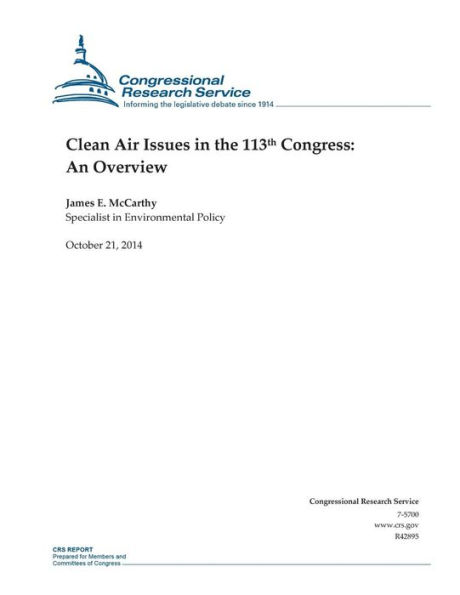
Oversight of Environmental Protection Agency (EPA) regulatory actions was the main focus of interest as the 113th Congress considered air quality issues. Of particular interest were EPA's proposed regulations on the emissions of greenhouse gases (GHGs) from power plants. Reducing GHG emissions to address climate change is a major goal of President Obama, but Congress has been less enthusiastic about it. In the absence of congressional action, the President has directed EPA to promulgate GHG standards using existing authority under the Clean Air Act. This authority has been upheld on at least three occasions by the Supreme Court, but it remains controversial in Congress. EPA's most recent GHG actions have involved fossil-fueled (coal, oil, and natural gas) power plants, which EPA refers to as electric generating units (EGUs). On June 18, 2014, the agency proposed GHG emission standards for existing EGUs. These plants are the source of one-third of the nation's GHG emissions, so it is difficult to envision a regulatory scheme that reduces the nation's GHG emissions without addressing their contribution. At the same time, affordable and reliable electric power is central to the nation's economy and to the health and well-being of the population. Thus, the effects of the proposed rule on the electric power system are of considerable interest. Even before proposal of the existing power plant standards, the House had passed legislation (H.R. 3826) that would effectively have prohibited EPA from promulgating or implementing power plant GHG emission standards. On September 18, 2014, the House passed the same language a second time, in H.R. 2. The Senate did not consider either bill. Although it has not finalized the power plant GHG regulations as of this writing, EPA has implemented permit and Best Available Control Technology requirements for new stationary sources of GHGs under a separate Clean Air Act provision, the Prevention of Significant Deterioration (PSD) program. Minimum thresholds have exempted smaller pollution sources from this program, and few facilities have needed to obtain permits. Nevertheless, EPA's authority to implement these requirements was challenged in court. In a June 23, 2014, decision, the Supreme Court largely upheld EPA's authority. Besides addressing climate change, EPA has taken action on a number of other air pollution regulations, often in response to court actions remanding previous rules. Remanded rules included the Clean Air Interstate Rule (CAIR) and Clean Air Mercury Rule-rules designed to control the long-range transport of sulfur dioxide, nitrogen oxides, and mercury from power plants through cap-and-trade programs. Other remanded rules included hazardous air pollutant standards for boilers and cement kilns. The agency has also developed revisions of several existing air standards-in general, the Clean Air Act mandates that existing standards be reviewed periodically and revised if appropriate. On March 3, 2014, EPA revised regulations that limit the sulfur content of gasoline, in conjunction with tighter ("Tier3") standards for motor vehicle emissions. The agency has also proposed revised standards for wood and pellet stoves and proposed standards for other types of wood heaters for the first time.
Oversight of Environmental Protection Agency (EPA) regulatory actions was the main focus of interest as the 113th Congress considered air quality issues. Of particular interest were EPA's proposed regulations on the emissions of greenhouse gases (GHGs) from power plants. Reducing GHG emissions to address climate change is a major goal of President Obama, but Congress has been less enthusiastic about it. In the absence of congressional action, the President has directed EPA to promulgate GHG standards using existing authority under the Clean Air Act. This authority has been upheld on at least three occasions by the Supreme Court, but it remains controversial in Congress. EPA's most recent GHG actions have involved fossil-fueled (coal, oil, and natural gas) power plants, which EPA refers to as electric generating units (EGUs). On June 18, 2014, the agency proposed GHG emission standards for existing EGUs. These plants are the source of one-third of the nation's GHG emissions, so it is difficult to envision a regulatory scheme that reduces the nation's GHG emissions without addressing their contribution. At the same time, affordable and reliable electric power is central to the nation's economy and to the health and well-being of the population. Thus, the effects of the proposed rule on the electric power system are of considerable interest. Even before proposal of the existing power plant standards, the House had passed legislation (H.R. 3826) that would effectively have prohibited EPA from promulgating or implementing power plant GHG emission standards. On September 18, 2014, the House passed the same language a second time, in H.R. 2. The Senate did not consider either bill. Although it has not finalized the power plant GHG regulations as of this writing, EPA has implemented permit and Best Available Control Technology requirements for new stationary sources of GHGs under a separate Clean Air Act provision, the Prevention of Significant Deterioration (PSD) program. Minimum thresholds have exempted smaller pollution sources from this program, and few facilities have needed to obtain permits. Nevertheless, EPA's authority to implement these requirements was challenged in court. In a June 23, 2014, decision, the Supreme Court largely upheld EPA's authority. Besides addressing climate change, EPA has taken action on a number of other air pollution regulations, often in response to court actions remanding previous rules. Remanded rules included the Clean Air Interstate Rule (CAIR) and Clean Air Mercury Rule-rules designed to control the long-range transport of sulfur dioxide, nitrogen oxides, and mercury from power plants through cap-and-trade programs. Other remanded rules included hazardous air pollutant standards for boilers and cement kilns. The agency has also developed revisions of several existing air standards-in general, the Clean Air Act mandates that existing standards be reviewed periodically and revised if appropriate. On March 3, 2014, EPA revised regulations that limit the sulfur content of gasoline, in conjunction with tighter ("Tier3") standards for motor vehicle emissions. The agency has also proposed revised standards for wood and pellet stoves and proposed standards for other types of wood heaters for the first time.
You May Also Like











More About Barnes and Noble at Hamilton Place
Barnes & Noble is the world’s largest retail bookseller and a leading retailer of content, digital media and educational products. Our Nook Digital business offers a lineup of NOOK® tablets and e-Readers and an expansive collection of digital reading content through the NOOK Store®. Barnes & Noble’s mission is to operate the best omni-channel specialty retail business in America, helping both our customers and booksellers reach their aspirations, while being a credit to the communities we serve.
2100 Hamilton Pl Blvd, Chattanooga, TN 37421, United States
Find Barnes and Noble at Hamilton Place in Chattanooga, TN
Visit Barnes and Noble at Hamilton Place in Chattanooga, TN
