
Home
City Fictions of the New India: Literature, Infrastructure, Citizenship
Barnes and Noble
Loading Inventory...
City Fictions of the New India: Literature, Infrastructure, Citizenship in Chattanooga, TN
Current price: $115.00
Barnes and Noble
City Fictions of the New India: Literature, Infrastructure, Citizenship in Chattanooga, TN
Current price: $115.00
Loading Inventory...
Size: Hardcover
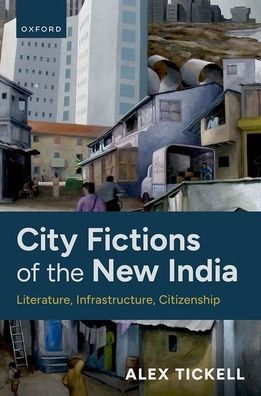
How does Indian fiction imagine urban transformation? India's cities were once maligned as places of economic stasis and deprivation but in the era of the so-called New India (2000-present) centres like Delhi and Mumbai have been recast as 'engines of economic growth' and reshaped by prestige infrastructure. Yet the provision of core infrastructures for all remains a major challenge for urban governance.
City Fictions
is the first study of its kind to read anglophone Indian writing infrastructurally: by taking account of the centrality of water utilities, waste-processing, residential architecture, and road, rail, and telephonic networks in contemporary representations of urban citizenship.
In a detailed, historicized account of India's changing cities
analyses selected literary works in relation to key governmental and political discourses: from early nationalist ideas of command-economy infrastructure and mid-century town planning to futuristic visions of the Heritage Cities, Smart Cities and new urban satellite developments. It also plots changing ideas about civic identity, shaped by the rise of a consumerist middle class and the consolidation of a popular Hindu majoritarian politics.
In the process,
develops an interdisciplinary literary-critical approach that draws on eco-criticism, urbanism, and new materialism. Covering key fictions by Arundhati Roy, Aravind Adiga, Vikram Chandra, Raj Kamal Jha, and Githa Hariharan, as well as literary journalism by Katherine Boo and Saumya Roy, graphic fiction by Sarnath Banerjee, and television drama by Richie Mehta, this book shows how fiction discloses vital issues of collective rights, equality, and resourcing that are immanent in the infrastructure of India's cities.
City Fictions
is the first study of its kind to read anglophone Indian writing infrastructurally: by taking account of the centrality of water utilities, waste-processing, residential architecture, and road, rail, and telephonic networks in contemporary representations of urban citizenship.
In a detailed, historicized account of India's changing cities
analyses selected literary works in relation to key governmental and political discourses: from early nationalist ideas of command-economy infrastructure and mid-century town planning to futuristic visions of the Heritage Cities, Smart Cities and new urban satellite developments. It also plots changing ideas about civic identity, shaped by the rise of a consumerist middle class and the consolidation of a popular Hindu majoritarian politics.
In the process,
develops an interdisciplinary literary-critical approach that draws on eco-criticism, urbanism, and new materialism. Covering key fictions by Arundhati Roy, Aravind Adiga, Vikram Chandra, Raj Kamal Jha, and Githa Hariharan, as well as literary journalism by Katherine Boo and Saumya Roy, graphic fiction by Sarnath Banerjee, and television drama by Richie Mehta, this book shows how fiction discloses vital issues of collective rights, equality, and resourcing that are immanent in the infrastructure of India's cities.
How does Indian fiction imagine urban transformation? India's cities were once maligned as places of economic stasis and deprivation but in the era of the so-called New India (2000-present) centres like Delhi and Mumbai have been recast as 'engines of economic growth' and reshaped by prestige infrastructure. Yet the provision of core infrastructures for all remains a major challenge for urban governance.
City Fictions
is the first study of its kind to read anglophone Indian writing infrastructurally: by taking account of the centrality of water utilities, waste-processing, residential architecture, and road, rail, and telephonic networks in contemporary representations of urban citizenship.
In a detailed, historicized account of India's changing cities
analyses selected literary works in relation to key governmental and political discourses: from early nationalist ideas of command-economy infrastructure and mid-century town planning to futuristic visions of the Heritage Cities, Smart Cities and new urban satellite developments. It also plots changing ideas about civic identity, shaped by the rise of a consumerist middle class and the consolidation of a popular Hindu majoritarian politics.
In the process,
develops an interdisciplinary literary-critical approach that draws on eco-criticism, urbanism, and new materialism. Covering key fictions by Arundhati Roy, Aravind Adiga, Vikram Chandra, Raj Kamal Jha, and Githa Hariharan, as well as literary journalism by Katherine Boo and Saumya Roy, graphic fiction by Sarnath Banerjee, and television drama by Richie Mehta, this book shows how fiction discloses vital issues of collective rights, equality, and resourcing that are immanent in the infrastructure of India's cities.
City Fictions
is the first study of its kind to read anglophone Indian writing infrastructurally: by taking account of the centrality of water utilities, waste-processing, residential architecture, and road, rail, and telephonic networks in contemporary representations of urban citizenship.
In a detailed, historicized account of India's changing cities
analyses selected literary works in relation to key governmental and political discourses: from early nationalist ideas of command-economy infrastructure and mid-century town planning to futuristic visions of the Heritage Cities, Smart Cities and new urban satellite developments. It also plots changing ideas about civic identity, shaped by the rise of a consumerist middle class and the consolidation of a popular Hindu majoritarian politics.
In the process,
develops an interdisciplinary literary-critical approach that draws on eco-criticism, urbanism, and new materialism. Covering key fictions by Arundhati Roy, Aravind Adiga, Vikram Chandra, Raj Kamal Jha, and Githa Hariharan, as well as literary journalism by Katherine Boo and Saumya Roy, graphic fiction by Sarnath Banerjee, and television drama by Richie Mehta, this book shows how fiction discloses vital issues of collective rights, equality, and resourcing that are immanent in the infrastructure of India's cities.
You May Also Like









More About Barnes and Noble at Hamilton Place
Barnes & Noble is the world’s largest retail bookseller and a leading retailer of content, digital media and educational products. Our Nook Digital business offers a lineup of NOOK® tablets and e-Readers and an expansive collection of digital reading content through the NOOK Store®. Barnes & Noble’s mission is to operate the best omni-channel specialty retail business in America, helping both our customers and booksellers reach their aspirations, while being a credit to the communities we serve.
2100 Hamilton Pl Blvd, Chattanooga, TN 37421, United States
Find Barnes and Noble at Hamilton Place in Chattanooga, TN
Visit Barnes and Noble at Hamilton Place in Chattanooga, TN