
Home
«Christus Sacerdos» in the Preaching of St. Augustine: Christ and Christian Identity
Barnes and Noble
Loading Inventory...
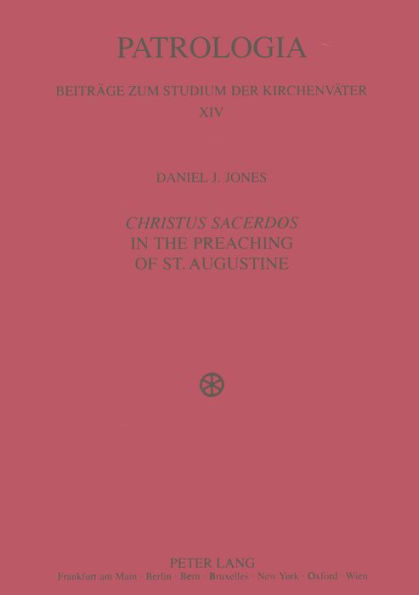
«Christus Sacerdos» in the Preaching of St. Augustine: Christ and Christian Identity in Chattanooga, TN
Current price: $160.60
Barnes and Noble
«Christus Sacerdos» in the Preaching of St. Augustine: Christ and Christian Identity in Chattanooga, TN
Current price: $160.60
Loading Inventory...
Size: OS
This study examines how St. Augustine uses the motif
Christus Sacerdos
to synthesize the entire mystery of Christ, to define Christian identity, and to oppose counteridentities and doctrines, especially those symbolized by pagan priesthoods. The bishop of Hippo continually joins these three elements – Christology, Christian identity, and polemic – so that the doctrine of Christ is always related to its implications for life «on the ground». Augustine shows how the doctrine of Christ entails an identity and an ideal for Christians, defining who they are and what they are to become. He reinforces his teaching about Christ and the Christian with polemic against opposing doctrines, demonstrating the truth of the Christian religion in opposition to pagan cult, and portraying Christian identity in contrast to pagan counteridentity. The study is notable for its attention to how Augustine’s Christology functions in his broader thought, especially his pastoral care.
Christus Sacerdos
to synthesize the entire mystery of Christ, to define Christian identity, and to oppose counteridentities and doctrines, especially those symbolized by pagan priesthoods. The bishop of Hippo continually joins these three elements – Christology, Christian identity, and polemic – so that the doctrine of Christ is always related to its implications for life «on the ground». Augustine shows how the doctrine of Christ entails an identity and an ideal for Christians, defining who they are and what they are to become. He reinforces his teaching about Christ and the Christian with polemic against opposing doctrines, demonstrating the truth of the Christian religion in opposition to pagan cult, and portraying Christian identity in contrast to pagan counteridentity. The study is notable for its attention to how Augustine’s Christology functions in his broader thought, especially his pastoral care.
This study examines how St. Augustine uses the motif
Christus Sacerdos
to synthesize the entire mystery of Christ, to define Christian identity, and to oppose counteridentities and doctrines, especially those symbolized by pagan priesthoods. The bishop of Hippo continually joins these three elements – Christology, Christian identity, and polemic – so that the doctrine of Christ is always related to its implications for life «on the ground». Augustine shows how the doctrine of Christ entails an identity and an ideal for Christians, defining who they are and what they are to become. He reinforces his teaching about Christ and the Christian with polemic against opposing doctrines, demonstrating the truth of the Christian religion in opposition to pagan cult, and portraying Christian identity in contrast to pagan counteridentity. The study is notable for its attention to how Augustine’s Christology functions in his broader thought, especially his pastoral care.
Christus Sacerdos
to synthesize the entire mystery of Christ, to define Christian identity, and to oppose counteridentities and doctrines, especially those symbolized by pagan priesthoods. The bishop of Hippo continually joins these three elements – Christology, Christian identity, and polemic – so that the doctrine of Christ is always related to its implications for life «on the ground». Augustine shows how the doctrine of Christ entails an identity and an ideal for Christians, defining who they are and what they are to become. He reinforces his teaching about Christ and the Christian with polemic against opposing doctrines, demonstrating the truth of the Christian religion in opposition to pagan cult, and portraying Christian identity in contrast to pagan counteridentity. The study is notable for its attention to how Augustine’s Christology functions in his broader thought, especially his pastoral care.
You May Also Like












More About Barnes and Noble at Hamilton Place
Barnes & Noble is the world’s largest retail bookseller and a leading retailer of content, digital media and educational products. Our Nook Digital business offers a lineup of NOOK® tablets and e-Readers and an expansive collection of digital reading content through the NOOK Store®. Barnes & Noble’s mission is to operate the best omni-channel specialty retail business in America, helping both our customers and booksellers reach their aspirations, while being a credit to the communities we serve.
2100 Hamilton Pl Blvd, Chattanooga, TN 37421, United States
Find Barnes and Noble at Hamilton Place in Chattanooga, TN
Visit Barnes and Noble at Hamilton Place in Chattanooga, TN
