
Home
Chlorophyll Fluorescence: Understanding Crop Performance - Basics and Applications
Barnes and Noble
Loading Inventory...
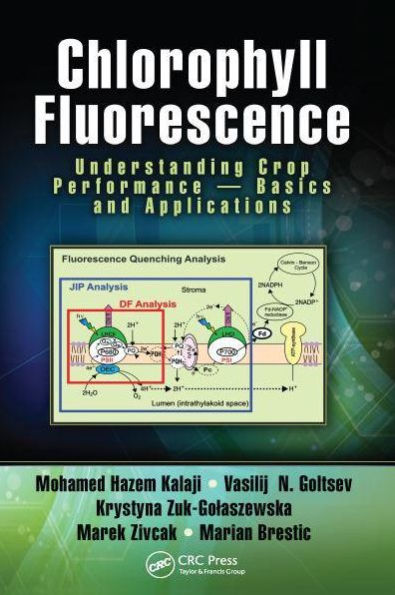
Chlorophyll Fluorescence: Understanding Crop Performance - Basics and Applications in Chattanooga, TN
Current price: $240.00
Barnes and Noble
Chlorophyll Fluorescence: Understanding Crop Performance - Basics and Applications in Chattanooga, TN
Current price: $240.00
Loading Inventory...
Size: Hardcover
Chlorophyll
a
fluorescence is a tool for evaluating plant responses to stress conditions. Fluorescence can be used in plant phenotyping and breeding programs to monitor biotic and abiotic stresses including mineral deficiencies, soil salinity, and pathogenic diseases.
Chlorophyll Fluorescence: Understanding Crop Performance — Basics and Applications
reviews a diversity of instruments available for recording and analyzing different types of light signals from plants and addresses the use of chlorophyll
fluorescence in research on plants and other photosynthesizing organisms, such as algae and cyanobacteria.
This book characterizes the phenomenon of chlorophyll
fluorescence, describes the methods for its measurement, and demonstrates — using selected examples — the applicability of these methods to research the response of the photosynthetic apparatus and plant tolerance to unfavorable environmental conditions. In addition, chapters cover a general background on photosynthesis, analysis of delayed fluorescence, and the pulse amplitude modulated (PAM) technique. The book is addressed to a wide range of professionals in photosynthesis research and scientists from other areas of plant sciences.
a
fluorescence is a tool for evaluating plant responses to stress conditions. Fluorescence can be used in plant phenotyping and breeding programs to monitor biotic and abiotic stresses including mineral deficiencies, soil salinity, and pathogenic diseases.
Chlorophyll Fluorescence: Understanding Crop Performance — Basics and Applications
reviews a diversity of instruments available for recording and analyzing different types of light signals from plants and addresses the use of chlorophyll
fluorescence in research on plants and other photosynthesizing organisms, such as algae and cyanobacteria.
This book characterizes the phenomenon of chlorophyll
fluorescence, describes the methods for its measurement, and demonstrates — using selected examples — the applicability of these methods to research the response of the photosynthetic apparatus and plant tolerance to unfavorable environmental conditions. In addition, chapters cover a general background on photosynthesis, analysis of delayed fluorescence, and the pulse amplitude modulated (PAM) technique. The book is addressed to a wide range of professionals in photosynthesis research and scientists from other areas of plant sciences.
Chlorophyll
a
fluorescence is a tool for evaluating plant responses to stress conditions. Fluorescence can be used in plant phenotyping and breeding programs to monitor biotic and abiotic stresses including mineral deficiencies, soil salinity, and pathogenic diseases.
Chlorophyll Fluorescence: Understanding Crop Performance — Basics and Applications
reviews a diversity of instruments available for recording and analyzing different types of light signals from plants and addresses the use of chlorophyll
fluorescence in research on plants and other photosynthesizing organisms, such as algae and cyanobacteria.
This book characterizes the phenomenon of chlorophyll
fluorescence, describes the methods for its measurement, and demonstrates — using selected examples — the applicability of these methods to research the response of the photosynthetic apparatus and plant tolerance to unfavorable environmental conditions. In addition, chapters cover a general background on photosynthesis, analysis of delayed fluorescence, and the pulse amplitude modulated (PAM) technique. The book is addressed to a wide range of professionals in photosynthesis research and scientists from other areas of plant sciences.
a
fluorescence is a tool for evaluating plant responses to stress conditions. Fluorescence can be used in plant phenotyping and breeding programs to monitor biotic and abiotic stresses including mineral deficiencies, soil salinity, and pathogenic diseases.
Chlorophyll Fluorescence: Understanding Crop Performance — Basics and Applications
reviews a diversity of instruments available for recording and analyzing different types of light signals from plants and addresses the use of chlorophyll
fluorescence in research on plants and other photosynthesizing organisms, such as algae and cyanobacteria.
This book characterizes the phenomenon of chlorophyll
fluorescence, describes the methods for its measurement, and demonstrates — using selected examples — the applicability of these methods to research the response of the photosynthetic apparatus and plant tolerance to unfavorable environmental conditions. In addition, chapters cover a general background on photosynthesis, analysis of delayed fluorescence, and the pulse amplitude modulated (PAM) technique. The book is addressed to a wide range of professionals in photosynthesis research and scientists from other areas of plant sciences.
You May Also Like















More About Barnes and Noble at Hamilton Place
Barnes & Noble is the world’s largest retail bookseller and a leading retailer of content, digital media and educational products. Our Nook Digital business offers a lineup of NOOK® tablets and e-Readers and an expansive collection of digital reading content through the NOOK Store®. Barnes & Noble’s mission is to operate the best omni-channel specialty retail business in America, helping both our customers and booksellers reach their aspirations, while being a credit to the communities we serve.
2100 Hamilton Pl Blvd, Chattanooga, TN 37421, United States
Find Barnes and Noble at Hamilton Place in Chattanooga, TN
Visit Barnes and Noble at Hamilton Place in Chattanooga, TN
