
Home
Chinese Politics (Part 1)- The Evolution of Chinese Political Thought: From Confucius to the Present, A Millennium in Transition, The Journey of China's Political Philosophy, The Evolution of Governance in Chinese History: From Confucius to the Present, A
Barnes and Noble
Loading Inventory...
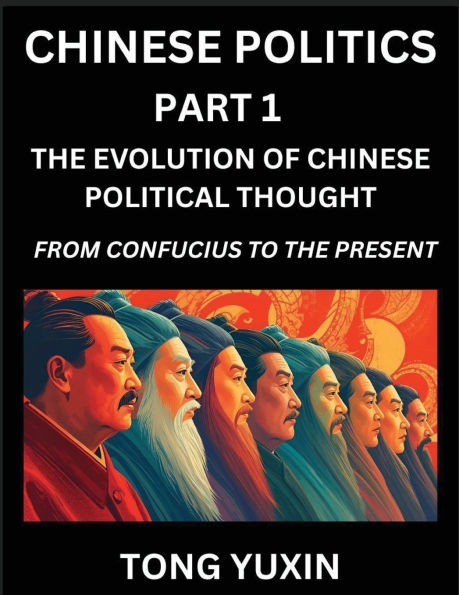
Chinese Politics (Part 1)- The Evolution of Chinese Political Thought: From Confucius to the Present, A Millennium in Transition, The Journey of China's Political Philosophy, The Evolution of Governance in Chinese History: From Confucius to the Present, A in Chattanooga, TN
Current price: $39.99
Barnes and Noble
Chinese Politics (Part 1)- The Evolution of Chinese Political Thought: From Confucius to the Present, A Millennium in Transition, The Journey of China's Political Philosophy, The Evolution of Governance in Chinese History: From Confucius to the Present, A in Chattanooga, TN
Current price: $39.99
Loading Inventory...
Size: OS
The story of Chinese political thought is not a linear march but a living dialogue-one that has adapted, clashed, and reinvented itself across millennia. It begins with
Confucius (Kǒngfūzǐ 孔子)
, whose 6th-century BCE teachings on virtue and ritual laid the groundwork for a moral vision of governance. Yet even in his era, rivals like
Mencius (Mèngzǐ 孟子)
and
Xunzi (Xúnzǐ 荀子)
sparred over human nature, debating whether humanity's innate goodness could sustain order or if strict laws were necessary. These early fractures set the stage for centuries of intellectual ferment.By the time of the Qin dynasty, the
Legalists (Fǎjiā 法家)
had turned philosophy into policy, advocating centralized power and harsh penalties to unify a fractious empire. Their legacy lingered, even as Han-era thinkers sought balance, weaving Confucian ethics into statecraft while grappling with Buddhism's rise during the Tang. The Neo-Confucian revival under
Zhu Xi (Zhū Xī 朱熹)
later redefined "harmony (héxié 和谐)" as not just social but cosmic, a vision that shaped East Asia for centuries.Then came the upheavals of the modern age. The 19th century's crises-imperial decline, foreign incursions-shattered old certainties. Revolutionaries like Sun Yat-sen reimagined
people's sovereignty (rénmín zhǔquán 人民主权)
, while Mao Zedong's Communist
revolution (gémìng 革命)
rejected tradition entirely, seeking to erase class divides through socialist transformation. Yet Deng Xiaoping's
reform and opening-up (gǎigé kāifàng 改革开放)
in the 1980s marked a pragmatic pivot, embracing markets while tightening political control-a tension that persists today.Under Xi Jinping, China's leaders invoke both the
Mandate of Heaven (tiānmìng 天命)
and the
Chinese Dream (Zhōngguó mèng 中国梦)
, blending historical symbolism with modern ambition. The state promotes
rule of law (fǎzhì 法治)
as a pillar of governance, even as it centralizes authority. Meanwhile, debates rage over technology's role in surveillance, the environment's place in development, and global influence's limits.This book does not merely recount eras or ideologies. It asks how ideas like "benevolent rule (rénzhèng 仁政)" or "socialist modernization (shèhuìzhǔyì xiàndàihuà 社会主义现代化)" have been reinterpreted to suit shifting realities. By tracing the threads of thought from oracle bones to AI governance, it reveals a civilization's struggle to reconcile authority with legitimacy-a struggle as urgent today as in Confucius's time.Here, history is not a distant mirror but a living language. The past informs every policy shift, every cultural revival, every assertion of power. To understand China's present is to decode its intellectual lineage: a legacy of adaptation, contradiction, and the relentless pursuit of order.
Confucius (Kǒngfūzǐ 孔子)
, whose 6th-century BCE teachings on virtue and ritual laid the groundwork for a moral vision of governance. Yet even in his era, rivals like
Mencius (Mèngzǐ 孟子)
and
Xunzi (Xúnzǐ 荀子)
sparred over human nature, debating whether humanity's innate goodness could sustain order or if strict laws were necessary. These early fractures set the stage for centuries of intellectual ferment.By the time of the Qin dynasty, the
Legalists (Fǎjiā 法家)
had turned philosophy into policy, advocating centralized power and harsh penalties to unify a fractious empire. Their legacy lingered, even as Han-era thinkers sought balance, weaving Confucian ethics into statecraft while grappling with Buddhism's rise during the Tang. The Neo-Confucian revival under
Zhu Xi (Zhū Xī 朱熹)
later redefined "harmony (héxié 和谐)" as not just social but cosmic, a vision that shaped East Asia for centuries.Then came the upheavals of the modern age. The 19th century's crises-imperial decline, foreign incursions-shattered old certainties. Revolutionaries like Sun Yat-sen reimagined
people's sovereignty (rénmín zhǔquán 人民主权)
, while Mao Zedong's Communist
revolution (gémìng 革命)
rejected tradition entirely, seeking to erase class divides through socialist transformation. Yet Deng Xiaoping's
reform and opening-up (gǎigé kāifàng 改革开放)
in the 1980s marked a pragmatic pivot, embracing markets while tightening political control-a tension that persists today.Under Xi Jinping, China's leaders invoke both the
Mandate of Heaven (tiānmìng 天命)
and the
Chinese Dream (Zhōngguó mèng 中国梦)
, blending historical symbolism with modern ambition. The state promotes
rule of law (fǎzhì 法治)
as a pillar of governance, even as it centralizes authority. Meanwhile, debates rage over technology's role in surveillance, the environment's place in development, and global influence's limits.This book does not merely recount eras or ideologies. It asks how ideas like "benevolent rule (rénzhèng 仁政)" or "socialist modernization (shèhuìzhǔyì xiàndàihuà 社会主义现代化)" have been reinterpreted to suit shifting realities. By tracing the threads of thought from oracle bones to AI governance, it reveals a civilization's struggle to reconcile authority with legitimacy-a struggle as urgent today as in Confucius's time.Here, history is not a distant mirror but a living language. The past informs every policy shift, every cultural revival, every assertion of power. To understand China's present is to decode its intellectual lineage: a legacy of adaptation, contradiction, and the relentless pursuit of order.
The story of Chinese political thought is not a linear march but a living dialogue-one that has adapted, clashed, and reinvented itself across millennia. It begins with
Confucius (Kǒngfūzǐ 孔子)
, whose 6th-century BCE teachings on virtue and ritual laid the groundwork for a moral vision of governance. Yet even in his era, rivals like
Mencius (Mèngzǐ 孟子)
and
Xunzi (Xúnzǐ 荀子)
sparred over human nature, debating whether humanity's innate goodness could sustain order or if strict laws were necessary. These early fractures set the stage for centuries of intellectual ferment.By the time of the Qin dynasty, the
Legalists (Fǎjiā 法家)
had turned philosophy into policy, advocating centralized power and harsh penalties to unify a fractious empire. Their legacy lingered, even as Han-era thinkers sought balance, weaving Confucian ethics into statecraft while grappling with Buddhism's rise during the Tang. The Neo-Confucian revival under
Zhu Xi (Zhū Xī 朱熹)
later redefined "harmony (héxié 和谐)" as not just social but cosmic, a vision that shaped East Asia for centuries.Then came the upheavals of the modern age. The 19th century's crises-imperial decline, foreign incursions-shattered old certainties. Revolutionaries like Sun Yat-sen reimagined
people's sovereignty (rénmín zhǔquán 人民主权)
, while Mao Zedong's Communist
revolution (gémìng 革命)
rejected tradition entirely, seeking to erase class divides through socialist transformation. Yet Deng Xiaoping's
reform and opening-up (gǎigé kāifàng 改革开放)
in the 1980s marked a pragmatic pivot, embracing markets while tightening political control-a tension that persists today.Under Xi Jinping, China's leaders invoke both the
Mandate of Heaven (tiānmìng 天命)
and the
Chinese Dream (Zhōngguó mèng 中国梦)
, blending historical symbolism with modern ambition. The state promotes
rule of law (fǎzhì 法治)
as a pillar of governance, even as it centralizes authority. Meanwhile, debates rage over technology's role in surveillance, the environment's place in development, and global influence's limits.This book does not merely recount eras or ideologies. It asks how ideas like "benevolent rule (rénzhèng 仁政)" or "socialist modernization (shèhuìzhǔyì xiàndàihuà 社会主义现代化)" have been reinterpreted to suit shifting realities. By tracing the threads of thought from oracle bones to AI governance, it reveals a civilization's struggle to reconcile authority with legitimacy-a struggle as urgent today as in Confucius's time.Here, history is not a distant mirror but a living language. The past informs every policy shift, every cultural revival, every assertion of power. To understand China's present is to decode its intellectual lineage: a legacy of adaptation, contradiction, and the relentless pursuit of order.
Confucius (Kǒngfūzǐ 孔子)
, whose 6th-century BCE teachings on virtue and ritual laid the groundwork for a moral vision of governance. Yet even in his era, rivals like
Mencius (Mèngzǐ 孟子)
and
Xunzi (Xúnzǐ 荀子)
sparred over human nature, debating whether humanity's innate goodness could sustain order or if strict laws were necessary. These early fractures set the stage for centuries of intellectual ferment.By the time of the Qin dynasty, the
Legalists (Fǎjiā 法家)
had turned philosophy into policy, advocating centralized power and harsh penalties to unify a fractious empire. Their legacy lingered, even as Han-era thinkers sought balance, weaving Confucian ethics into statecraft while grappling with Buddhism's rise during the Tang. The Neo-Confucian revival under
Zhu Xi (Zhū Xī 朱熹)
later redefined "harmony (héxié 和谐)" as not just social but cosmic, a vision that shaped East Asia for centuries.Then came the upheavals of the modern age. The 19th century's crises-imperial decline, foreign incursions-shattered old certainties. Revolutionaries like Sun Yat-sen reimagined
people's sovereignty (rénmín zhǔquán 人民主权)
, while Mao Zedong's Communist
revolution (gémìng 革命)
rejected tradition entirely, seeking to erase class divides through socialist transformation. Yet Deng Xiaoping's
reform and opening-up (gǎigé kāifàng 改革开放)
in the 1980s marked a pragmatic pivot, embracing markets while tightening political control-a tension that persists today.Under Xi Jinping, China's leaders invoke both the
Mandate of Heaven (tiānmìng 天命)
and the
Chinese Dream (Zhōngguó mèng 中国梦)
, blending historical symbolism with modern ambition. The state promotes
rule of law (fǎzhì 法治)
as a pillar of governance, even as it centralizes authority. Meanwhile, debates rage over technology's role in surveillance, the environment's place in development, and global influence's limits.This book does not merely recount eras or ideologies. It asks how ideas like "benevolent rule (rénzhèng 仁政)" or "socialist modernization (shèhuìzhǔyì xiàndàihuà 社会主义现代化)" have been reinterpreted to suit shifting realities. By tracing the threads of thought from oracle bones to AI governance, it reveals a civilization's struggle to reconcile authority with legitimacy-a struggle as urgent today as in Confucius's time.Here, history is not a distant mirror but a living language. The past informs every policy shift, every cultural revival, every assertion of power. To understand China's present is to decode its intellectual lineage: a legacy of adaptation, contradiction, and the relentless pursuit of order.
You May Also Like













More About Barnes and Noble at Hamilton Place
Barnes & Noble is the world’s largest retail bookseller and a leading retailer of content, digital media and educational products. Our Nook Digital business offers a lineup of NOOK® tablets and e-Readers and an expansive collection of digital reading content through the NOOK Store®. Barnes & Noble’s mission is to operate the best omni-channel specialty retail business in America, helping both our customers and booksellers reach their aspirations, while being a credit to the communities we serve.
2100 Hamilton Pl Blvd, Chattanooga, TN 37421, United States
Find Barnes and Noble at Hamilton Place in Chattanooga, TN
Visit Barnes and Noble at Hamilton Place in Chattanooga, TN
