
Home
Childbirth Across Cultures: Ideas and Practices of Pregnancy, the Postpartum
Barnes and Noble
Loading Inventory...
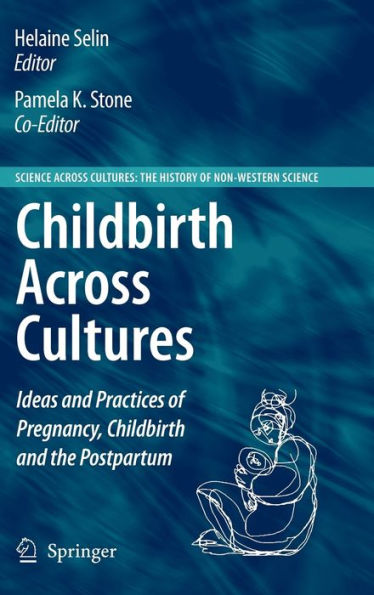
Childbirth Across Cultures: Ideas and Practices of Pregnancy, the Postpartum in Chattanooga, TN
Current price: $249.99
Barnes and Noble
Childbirth Across Cultures: Ideas and Practices of Pregnancy, the Postpartum in Chattanooga, TN
Current price: $249.99
Loading Inventory...
Size: Hardcover
This book will explore the childbirth process through globally diverse perspectives in order to offer a broader context with which to think about birth. We will address multiple rituals and management models surrounding the labor and birth process from communities across the globe.
Labor and birth are biocultural events that are managed in countless ways. We are particularly interested in the notion of power. Who controls the pregnancy and the birth? Is it the hospital, the doctor, or the in-laws, and in which cultures does the mother have the control? These decisions, regarding place of birth, position, who receives the baby and even how the mother may or may not behave during the actual delivery, are all part of the different ways that birth is conducted.
One chapter of the book will be devoted to midwives and other birth attendants. There will also be chapters on the Evolution of Birth, on Women’s Birth Narratives, and on Child Spacing and Breastfeeding.
This book will bring together global research conducted by professional anthropologists, midwives and doctors who work closely with the individuals from the cultures they are writing about, offering a unique perspective direct from the cultural group.
Labor and birth are biocultural events that are managed in countless ways. We are particularly interested in the notion of power. Who controls the pregnancy and the birth? Is it the hospital, the doctor, or the in-laws, and in which cultures does the mother have the control? These decisions, regarding place of birth, position, who receives the baby and even how the mother may or may not behave during the actual delivery, are all part of the different ways that birth is conducted.
One chapter of the book will be devoted to midwives and other birth attendants. There will also be chapters on the Evolution of Birth, on Women’s Birth Narratives, and on Child Spacing and Breastfeeding.
This book will bring together global research conducted by professional anthropologists, midwives and doctors who work closely with the individuals from the cultures they are writing about, offering a unique perspective direct from the cultural group.
This book will explore the childbirth process through globally diverse perspectives in order to offer a broader context with which to think about birth. We will address multiple rituals and management models surrounding the labor and birth process from communities across the globe.
Labor and birth are biocultural events that are managed in countless ways. We are particularly interested in the notion of power. Who controls the pregnancy and the birth? Is it the hospital, the doctor, or the in-laws, and in which cultures does the mother have the control? These decisions, regarding place of birth, position, who receives the baby and even how the mother may or may not behave during the actual delivery, are all part of the different ways that birth is conducted.
One chapter of the book will be devoted to midwives and other birth attendants. There will also be chapters on the Evolution of Birth, on Women’s Birth Narratives, and on Child Spacing and Breastfeeding.
This book will bring together global research conducted by professional anthropologists, midwives and doctors who work closely with the individuals from the cultures they are writing about, offering a unique perspective direct from the cultural group.
Labor and birth are biocultural events that are managed in countless ways. We are particularly interested in the notion of power. Who controls the pregnancy and the birth? Is it the hospital, the doctor, or the in-laws, and in which cultures does the mother have the control? These decisions, regarding place of birth, position, who receives the baby and even how the mother may or may not behave during the actual delivery, are all part of the different ways that birth is conducted.
One chapter of the book will be devoted to midwives and other birth attendants. There will also be chapters on the Evolution of Birth, on Women’s Birth Narratives, and on Child Spacing and Breastfeeding.
This book will bring together global research conducted by professional anthropologists, midwives and doctors who work closely with the individuals from the cultures they are writing about, offering a unique perspective direct from the cultural group.
You May Also Like











More About Barnes and Noble at Hamilton Place
Barnes & Noble is the world’s largest retail bookseller and a leading retailer of content, digital media and educational products. Our Nook Digital business offers a lineup of NOOK® tablets and e-Readers and an expansive collection of digital reading content through the NOOK Store®. Barnes & Noble’s mission is to operate the best omni-channel specialty retail business in America, helping both our customers and booksellers reach their aspirations, while being a credit to the communities we serve.
2100 Hamilton Pl Blvd, Chattanooga, TN 37421, United States
Find Barnes and Noble at Hamilton Place in Chattanooga, TN
Visit Barnes and Noble at Hamilton Place in Chattanooga, TN
