
Home
Chaucer's "House of Fame" and Its Boccaccian Intertexts: Image, Vision, and the Vernacular
Barnes and Noble
Loading Inventory...
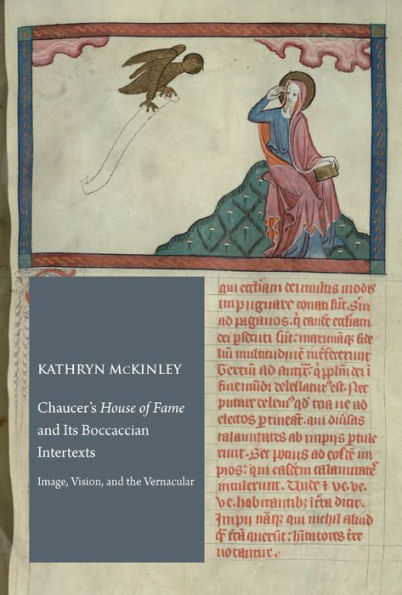
Chaucer's "House of Fame" and Its Boccaccian Intertexts: Image, Vision, and the Vernacular in Chattanooga, TN
Current price: $85.00
Barnes and Noble
Chaucer's "House of Fame" and Its Boccaccian Intertexts: Image, Vision, and the Vernacular in Chattanooga, TN
Current price: $85.00
Loading Inventory...
Size: OS
Geoffrey Chaucer's House of Fame has rightly been read as an ironic response to Dante's Commedia. Chaucer's narrator carries out his dream-journey in realms far from Dante's spiritual geographies: the mural-filled Temple of Venus, the lavishly adorned Palace of the Goddess Fame, and the turbulent, noisy House of Rumour. Chaucer also playfully responds to Dantean motifs with Book Two's eagle-turned-magister, who lectures his passenger, Geffrey, on the properties of sound and language en route to the Palace of Fame. In the end Chaucer's dream vision, with its exploration of the problematics of knowing and the limitations of language, seems to challenge many of the foundational truths of Dante's Commedia. Yet there is a larger story to tell. This study considers how Chaucer's poem engages Boccaccio's writings as much as Dante's. Chaucer's trips to Italy profoundly changed his understanding of poetry, the vernacular, and literary history. The House of Fame, written upon his return, bears the imprint of Dantean imagery and reflects Dante's own passionate commitment to the use of the vernacular. But Chaucer, who translated and adapted Boccaccio's Teseida and Il Filostrato, also deeply engaged the terza rima allegory, the Amorosa visione (c. 1342-3), with its extensive visual poetics of ekphrasis. Itself written as a secularizing love poem, in deeply problematic dialogue with Dante's Commedia, the Amorosa visione forms a central place in Boccaccio's, and later Chaucer's, agonistic relationship with the legacy of Dante.
Chaucer's "House of Fame" and Its Boccaccian Intertexts
addresses in new ways this broader triangular relationship between Dante, Boccaccio, and Chaucer. Boccaccio's Amorosa visione gave Chaucer a viable model for a response to Dante's theocentric poetics. It valorized earthly love, the vernacular, and the legends of the ancient past even as it over and over again raised the question of indeterminacy.
Chaucer's "House of Fame" and Its Boccaccian Intertexts
addresses in new ways this broader triangular relationship between Dante, Boccaccio, and Chaucer. Boccaccio's Amorosa visione gave Chaucer a viable model for a response to Dante's theocentric poetics. It valorized earthly love, the vernacular, and the legends of the ancient past even as it over and over again raised the question of indeterminacy.
Geoffrey Chaucer's House of Fame has rightly been read as an ironic response to Dante's Commedia. Chaucer's narrator carries out his dream-journey in realms far from Dante's spiritual geographies: the mural-filled Temple of Venus, the lavishly adorned Palace of the Goddess Fame, and the turbulent, noisy House of Rumour. Chaucer also playfully responds to Dantean motifs with Book Two's eagle-turned-magister, who lectures his passenger, Geffrey, on the properties of sound and language en route to the Palace of Fame. In the end Chaucer's dream vision, with its exploration of the problematics of knowing and the limitations of language, seems to challenge many of the foundational truths of Dante's Commedia. Yet there is a larger story to tell. This study considers how Chaucer's poem engages Boccaccio's writings as much as Dante's. Chaucer's trips to Italy profoundly changed his understanding of poetry, the vernacular, and literary history. The House of Fame, written upon his return, bears the imprint of Dantean imagery and reflects Dante's own passionate commitment to the use of the vernacular. But Chaucer, who translated and adapted Boccaccio's Teseida and Il Filostrato, also deeply engaged the terza rima allegory, the Amorosa visione (c. 1342-3), with its extensive visual poetics of ekphrasis. Itself written as a secularizing love poem, in deeply problematic dialogue with Dante's Commedia, the Amorosa visione forms a central place in Boccaccio's, and later Chaucer's, agonistic relationship with the legacy of Dante.
Chaucer's "House of Fame" and Its Boccaccian Intertexts
addresses in new ways this broader triangular relationship between Dante, Boccaccio, and Chaucer. Boccaccio's Amorosa visione gave Chaucer a viable model for a response to Dante's theocentric poetics. It valorized earthly love, the vernacular, and the legends of the ancient past even as it over and over again raised the question of indeterminacy.
Chaucer's "House of Fame" and Its Boccaccian Intertexts
addresses in new ways this broader triangular relationship between Dante, Boccaccio, and Chaucer. Boccaccio's Amorosa visione gave Chaucer a viable model for a response to Dante's theocentric poetics. It valorized earthly love, the vernacular, and the legends of the ancient past even as it over and over again raised the question of indeterminacy.
You May Also Like


















More About Barnes and Noble at Hamilton Place
Barnes & Noble is the world’s largest retail bookseller and a leading retailer of content, digital media and educational products. Our Nook Digital business offers a lineup of NOOK® tablets and e-Readers and an expansive collection of digital reading content through the NOOK Store®. Barnes & Noble’s mission is to operate the best omni-channel specialty retail business in America, helping both our customers and booksellers reach their aspirations, while being a credit to the communities we serve.
2100 Hamilton Pl Blvd, Chattanooga, TN 37421, United States
Find Barnes and Noble at Hamilton Place in Chattanooga, TN
Visit Barnes and Noble at Hamilton Place in Chattanooga, TN
