
Home
Charlton Through Time
Barnes and Noble
Loading Inventory...
Charlton Through Time in Chattanooga, TN
Current price: $22.99
Barnes and Noble
Charlton Through Time in Chattanooga, TN
Current price: $22.99
Loading Inventory...
Size: OS
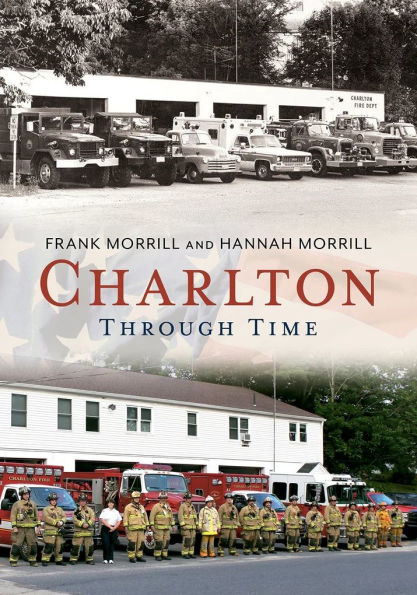
Charlton grew from dairy farming roots to a thriving community near major cities with excellent schools.
By the midnineteenth century 80 percent of Charlton land was used for agricultural purposes. The railroad arrived in 1838 giving the farmers new markets.
The dairy industry, from which Charlton received it moniker "cow town", expanded up to the First World War, then began a long decline, and has now vanished. As the twentieth century drew closer, small shops along the many waterways, began to be absorbed by larger mills which are now gone.
Charlton's excellent school system and its geographic location with its proximity to Worcester, Springfield, Hartford and Boston resulted in a dramatic population increase in the latter part of the 20th century. In 1920 the population was 1,995, by 1970 it had slowly increased to 4,654, then it was "discovered" and today it is over 13,000.
Today, taking a leisurely walk through the woodlands of Charlton will result in viewing stonewalls in every direction, evidence of once open fields cleared of stones by hard working farmers of a bygone time.
By the midnineteenth century 80 percent of Charlton land was used for agricultural purposes. The railroad arrived in 1838 giving the farmers new markets.
The dairy industry, from which Charlton received it moniker "cow town", expanded up to the First World War, then began a long decline, and has now vanished. As the twentieth century drew closer, small shops along the many waterways, began to be absorbed by larger mills which are now gone.
Charlton's excellent school system and its geographic location with its proximity to Worcester, Springfield, Hartford and Boston resulted in a dramatic population increase in the latter part of the 20th century. In 1920 the population was 1,995, by 1970 it had slowly increased to 4,654, then it was "discovered" and today it is over 13,000.
Today, taking a leisurely walk through the woodlands of Charlton will result in viewing stonewalls in every direction, evidence of once open fields cleared of stones by hard working farmers of a bygone time.
Charlton grew from dairy farming roots to a thriving community near major cities with excellent schools.
By the midnineteenth century 80 percent of Charlton land was used for agricultural purposes. The railroad arrived in 1838 giving the farmers new markets.
The dairy industry, from which Charlton received it moniker "cow town", expanded up to the First World War, then began a long decline, and has now vanished. As the twentieth century drew closer, small shops along the many waterways, began to be absorbed by larger mills which are now gone.
Charlton's excellent school system and its geographic location with its proximity to Worcester, Springfield, Hartford and Boston resulted in a dramatic population increase in the latter part of the 20th century. In 1920 the population was 1,995, by 1970 it had slowly increased to 4,654, then it was "discovered" and today it is over 13,000.
Today, taking a leisurely walk through the woodlands of Charlton will result in viewing stonewalls in every direction, evidence of once open fields cleared of stones by hard working farmers of a bygone time.
By the midnineteenth century 80 percent of Charlton land was used for agricultural purposes. The railroad arrived in 1838 giving the farmers new markets.
The dairy industry, from which Charlton received it moniker "cow town", expanded up to the First World War, then began a long decline, and has now vanished. As the twentieth century drew closer, small shops along the many waterways, began to be absorbed by larger mills which are now gone.
Charlton's excellent school system and its geographic location with its proximity to Worcester, Springfield, Hartford and Boston resulted in a dramatic population increase in the latter part of the 20th century. In 1920 the population was 1,995, by 1970 it had slowly increased to 4,654, then it was "discovered" and today it is over 13,000.
Today, taking a leisurely walk through the woodlands of Charlton will result in viewing stonewalls in every direction, evidence of once open fields cleared of stones by hard working farmers of a bygone time.
You May Also Like











More About Barnes and Noble at Hamilton Place
Barnes & Noble is the world’s largest retail bookseller and a leading retailer of content, digital media and educational products. Our Nook Digital business offers a lineup of NOOK® tablets and e-Readers and an expansive collection of digital reading content through the NOOK Store®. Barnes & Noble’s mission is to operate the best omni-channel specialty retail business in America, helping both our customers and booksellers reach their aspirations, while being a credit to the communities we serve.
2100 Hamilton Pl Blvd, Chattanooga, TN 37421, United States
Find Barnes and Noble at Hamilton Place in Chattanooga, TN
Visit Barnes and Noble at Hamilton Place in Chattanooga, TN
