
Home
Chain Reaction: Why Iran Wants Nukes and Why We Can't Let It Happen
Barnes and Noble
Loading Inventory...
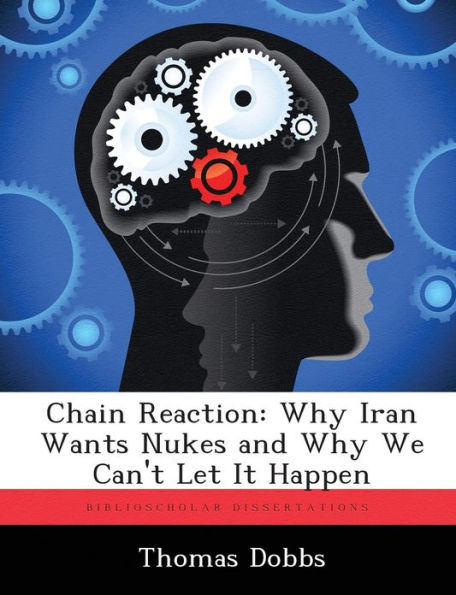
Chain Reaction: Why Iran Wants Nukes and Why We Can't Let It Happen in Chattanooga, TN
Current price: $57.95
Barnes and Noble
Chain Reaction: Why Iran Wants Nukes and Why We Can't Let It Happen in Chattanooga, TN
Current price: $57.95
Loading Inventory...
Size: OS
This paper will examine the controversy surrounding Iran's nuclear program. In order to determine whether the program poses a significant threat to U.S. vital interests, this paper will review Iran's motivations for nuclear development and assess whether Iran's leaders are rational decisionmakers. The paper will address competing perspectives on how the possession of nuclear weapons affects state behavior and review U.S.-Soviet relations from the Cold War era for potential nuclear deterrence lessons that might apply to an Iranian regime with nuclear weapons. This will inform the subsequent examination of the implications of a nuclear-armed Iran. Finally, the paper will identify elements within Iran's ruling regime that would make appropriate targets for U.S. coercion efforts and will recommend specific coercion mechanisms tailored to key regime elements' specific vulnerabilities. The recommended approach to coercing Iran, if applied properly, will affect regime leaders' cost-benefit calculations in a manner that convinces regime decisionmakers to change their malign behavior in the Mid East and beyond.
This paper will examine the controversy surrounding Iran's nuclear program. In order to determine whether the program poses a significant threat to U.S. vital interests, this paper will review Iran's motivations for nuclear development and assess whether Iran's leaders are rational decisionmakers. The paper will address competing perspectives on how the possession of nuclear weapons affects state behavior and review U.S.-Soviet relations from the Cold War era for potential nuclear deterrence lessons that might apply to an Iranian regime with nuclear weapons. This will inform the subsequent examination of the implications of a nuclear-armed Iran. Finally, the paper will identify elements within Iran's ruling regime that would make appropriate targets for U.S. coercion efforts and will recommend specific coercion mechanisms tailored to key regime elements' specific vulnerabilities. The recommended approach to coercing Iran, if applied properly, will affect regime leaders' cost-benefit calculations in a manner that convinces regime decisionmakers to change their malign behavior in the Mid East and beyond.
You May Also Like











More About Barnes and Noble at Hamilton Place
Barnes & Noble is the world’s largest retail bookseller and a leading retailer of content, digital media and educational products. Our Nook Digital business offers a lineup of NOOK® tablets and e-Readers and an expansive collection of digital reading content through the NOOK Store®. Barnes & Noble’s mission is to operate the best omni-channel specialty retail business in America, helping both our customers and booksellers reach their aspirations, while being a credit to the communities we serve.
2100 Hamilton Pl Blvd, Chattanooga, TN 37421, United States
Find Barnes and Noble at Hamilton Place in Chattanooga, TN
Visit Barnes and Noble at Hamilton Place in Chattanooga, TN