
Home
CEOs and White-Collar Crime: A Convenience Perspective
Barnes and Noble
Loading Inventory...
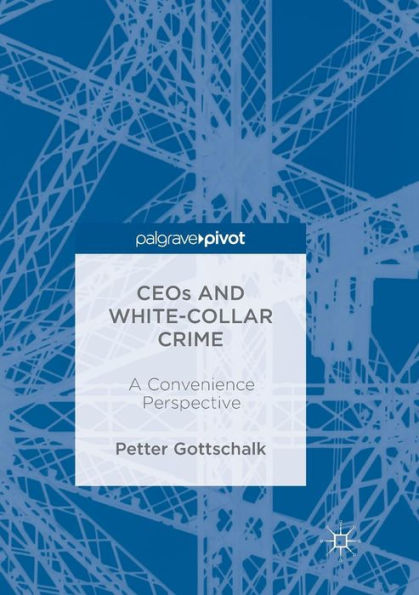
CEOs and White-Collar Crime: A Convenience Perspective in Chattanooga, TN
Current price: $59.99
Barnes and Noble
CEOs and White-Collar Crime: A Convenience Perspective in Chattanooga, TN
Current price: $59.99
Loading Inventory...
Size: Hardcover
This book aims to bridge the gap between general CEO research, which is traditionally focused on positive aspects of leadership, and lesser understood research into CEO misconduct and crime. Gottschalk introduces convenience theory as an integrated explanation for CEO involvement in white-collar crime.
The chief executive officer is a unique position within an organization in terms of power and influence, role and behavior, compensation and benefits, and conflict and competition. The convenience perspective suggests that motivation (personal and organizational goals), opportunity (offense and concealment in an organizational context), as well as behavior (lack of control and neutralization of guilt) make financial crime a convenient option to avoid threats and to exploit opportunities. A thorough and methodical study, this book will be of special interest to scholars of corporate social responsibility and criminological theory.
The chief executive officer is a unique position within an organization in terms of power and influence, role and behavior, compensation and benefits, and conflict and competition. The convenience perspective suggests that motivation (personal and organizational goals), opportunity (offense and concealment in an organizational context), as well as behavior (lack of control and neutralization of guilt) make financial crime a convenient option to avoid threats and to exploit opportunities. A thorough and methodical study, this book will be of special interest to scholars of corporate social responsibility and criminological theory.
This book aims to bridge the gap between general CEO research, which is traditionally focused on positive aspects of leadership, and lesser understood research into CEO misconduct and crime. Gottschalk introduces convenience theory as an integrated explanation for CEO involvement in white-collar crime.
The chief executive officer is a unique position within an organization in terms of power and influence, role and behavior, compensation and benefits, and conflict and competition. The convenience perspective suggests that motivation (personal and organizational goals), opportunity (offense and concealment in an organizational context), as well as behavior (lack of control and neutralization of guilt) make financial crime a convenient option to avoid threats and to exploit opportunities. A thorough and methodical study, this book will be of special interest to scholars of corporate social responsibility and criminological theory.
The chief executive officer is a unique position within an organization in terms of power and influence, role and behavior, compensation and benefits, and conflict and competition. The convenience perspective suggests that motivation (personal and organizational goals), opportunity (offense and concealment in an organizational context), as well as behavior (lack of control and neutralization of guilt) make financial crime a convenient option to avoid threats and to exploit opportunities. A thorough and methodical study, this book will be of special interest to scholars of corporate social responsibility and criminological theory.
You May Also Like











More About Barnes and Noble at Hamilton Place
Barnes & Noble is the world’s largest retail bookseller and a leading retailer of content, digital media and educational products. Our Nook Digital business offers a lineup of NOOK® tablets and e-Readers and an expansive collection of digital reading content through the NOOK Store®. Barnes & Noble’s mission is to operate the best omni-channel specialty retail business in America, helping both our customers and booksellers reach their aspirations, while being a credit to the communities we serve.
2100 Hamilton Pl Blvd, Chattanooga, TN 37421, United States
Find Barnes and Noble at Hamilton Place in Chattanooga, TN
Visit Barnes and Noble at Hamilton Place in Chattanooga, TN
