
Home
Catholics and Politics: The Dynamic Tension Between Faith Power
Barnes and Noble
Loading Inventory...
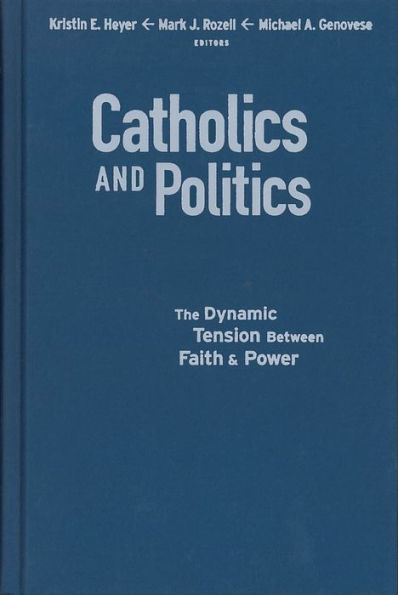
Catholics and Politics: The Dynamic Tension Between Faith Power in Chattanooga, TN
Current price: $179.95
Barnes and Noble
Catholics and Politics: The Dynamic Tension Between Faith Power in Chattanooga, TN
Current price: $179.95
Loading Inventory...
Size: Hardcover
Catholic political identity and engagement defy categorization. The complexities of political realities and the human nature of such institutions as church and government often produce a more fractured reality than the pure unity depicted in doctrine. Yet, in 2003 under the leadership of thenprefect Joseph Cardinal Ratzinger (now Pope Benedict XVI), the Congregation for the Doctrine of the Faith issued a "Doctrinal Note on Some Questions Regarding the Participation of Catholics in Political Life." The note explicitly asserts, "The Christian faith is an integral unity, and thus it is incoherent to isolate some particular element to the detriment of the whole of Catholic doctrine. A political commitment to a single isolated aspect of the Church's social doctrine does not exhaust one's responsibility toward the common good." Catholics and Politics takes up the political and theological significance of this "integral unity," the universal scope of Catholic concern that can make for strange political bedfellows, confound predictable voting patterns, and leave the church poised to critique narrowly partisan agendas across the spectrum.
Catholics and Politics depicts the ambivalent character of Catholics' mainstream "arrival" in the U.S. over the past forty years, integrating social scientific, historical and moral accounts of persistent tensions between faith and power. Divided into four parts—Catholic Leaders in U.S. Politics; The Catholic Public; Catholics and the Federal Government; and International Policy and the Vatican—it describes the implications of Catholic universalism for voting patterns, international policymaking, and partisan alliances. The book reveals complex intersections of Catholicism and politics and the new opportunities for influence and risks of cooptation of political power produced by these shifts. Contributors include political scientists, ethicists, and theologians. The book will be of interest to scholars in political science, religious studies, and Christian ethics and all lay Catholics interested in gaining a deeper understanding of the tensions that can exist between church doctrine and partisan politics.
Catholics and Politics depicts the ambivalent character of Catholics' mainstream "arrival" in the U.S. over the past forty years, integrating social scientific, historical and moral accounts of persistent tensions between faith and power. Divided into four parts—Catholic Leaders in U.S. Politics; The Catholic Public; Catholics and the Federal Government; and International Policy and the Vatican—it describes the implications of Catholic universalism for voting patterns, international policymaking, and partisan alliances. The book reveals complex intersections of Catholicism and politics and the new opportunities for influence and risks of cooptation of political power produced by these shifts. Contributors include political scientists, ethicists, and theologians. The book will be of interest to scholars in political science, religious studies, and Christian ethics and all lay Catholics interested in gaining a deeper understanding of the tensions that can exist between church doctrine and partisan politics.
Catholic political identity and engagement defy categorization. The complexities of political realities and the human nature of such institutions as church and government often produce a more fractured reality than the pure unity depicted in doctrine. Yet, in 2003 under the leadership of thenprefect Joseph Cardinal Ratzinger (now Pope Benedict XVI), the Congregation for the Doctrine of the Faith issued a "Doctrinal Note on Some Questions Regarding the Participation of Catholics in Political Life." The note explicitly asserts, "The Christian faith is an integral unity, and thus it is incoherent to isolate some particular element to the detriment of the whole of Catholic doctrine. A political commitment to a single isolated aspect of the Church's social doctrine does not exhaust one's responsibility toward the common good." Catholics and Politics takes up the political and theological significance of this "integral unity," the universal scope of Catholic concern that can make for strange political bedfellows, confound predictable voting patterns, and leave the church poised to critique narrowly partisan agendas across the spectrum.
Catholics and Politics depicts the ambivalent character of Catholics' mainstream "arrival" in the U.S. over the past forty years, integrating social scientific, historical and moral accounts of persistent tensions between faith and power. Divided into four parts—Catholic Leaders in U.S. Politics; The Catholic Public; Catholics and the Federal Government; and International Policy and the Vatican—it describes the implications of Catholic universalism for voting patterns, international policymaking, and partisan alliances. The book reveals complex intersections of Catholicism and politics and the new opportunities for influence and risks of cooptation of political power produced by these shifts. Contributors include political scientists, ethicists, and theologians. The book will be of interest to scholars in political science, religious studies, and Christian ethics and all lay Catholics interested in gaining a deeper understanding of the tensions that can exist between church doctrine and partisan politics.
Catholics and Politics depicts the ambivalent character of Catholics' mainstream "arrival" in the U.S. over the past forty years, integrating social scientific, historical and moral accounts of persistent tensions between faith and power. Divided into four parts—Catholic Leaders in U.S. Politics; The Catholic Public; Catholics and the Federal Government; and International Policy and the Vatican—it describes the implications of Catholic universalism for voting patterns, international policymaking, and partisan alliances. The book reveals complex intersections of Catholicism and politics and the new opportunities for influence and risks of cooptation of political power produced by these shifts. Contributors include political scientists, ethicists, and theologians. The book will be of interest to scholars in political science, religious studies, and Christian ethics and all lay Catholics interested in gaining a deeper understanding of the tensions that can exist between church doctrine and partisan politics.
You May Also Like








More About Barnes and Noble at Hamilton Place
Barnes & Noble is the world’s largest retail bookseller and a leading retailer of content, digital media and educational products. Our Nook Digital business offers a lineup of NOOK® tablets and e-Readers and an expansive collection of digital reading content through the NOOK Store®. Barnes & Noble’s mission is to operate the best omni-channel specialty retail business in America, helping both our customers and booksellers reach their aspirations, while being a credit to the communities we serve.
2100 Hamilton Pl Blvd, Chattanooga, TN 37421, United States
Find Barnes and Noble at Hamilton Place in Chattanooga, TN
Visit Barnes and Noble at Hamilton Place in Chattanooga, TN
