
Home
Cashless Economy in India- Present Scenario, Potential, Prospect and Challenges: Post Demonetisation Impact
Barnes and Noble
Loading Inventory...
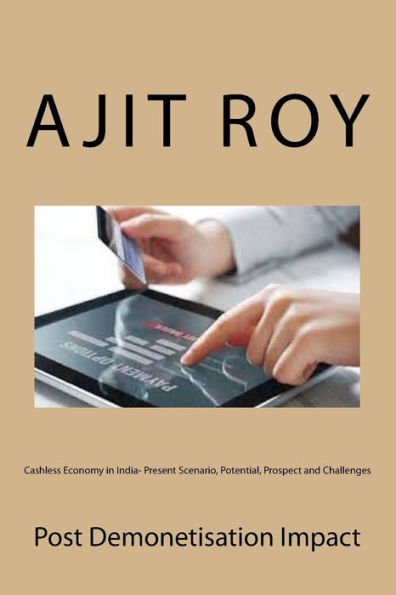
Cashless Economy in India- Present Scenario, Potential, Prospect and Challenges: Post Demonetisation Impact in Chattanooga, TN
Current price: $19.99
Barnes and Noble
Cashless Economy in India- Present Scenario, Potential, Prospect and Challenges: Post Demonetisation Impact in Chattanooga, TN
Current price: $19.99
Loading Inventory...
Size: OS
To combat black money, corruption, counterfeit currency and terror financing, government took decision on November 8, 2016 to ban Rs 500 & 1000 notes followed by putting a cap on withdrawals from banks and ATMs, Prime Minister Narendra Modi floated the idea of a cashless society. A cultural-economic revolution in the making. But this surprise demonetization also pushed millions of new users onto the country's digital economic grid by virtual fiat. Cash might be more expensive for the government, because of tax evasion, corruption and the need to keep recirculation old, spoilt, currency, and enabling transfers, but digital is very expensive for citizens. Most Indians lack the means to use cashless alternatives, irrespective of their desire to do so. India hopes to create a cleaner, more transparent economy via digitalization that will lead to an improved climate for foreign investment, boost economic growth. India is on the verge of massive digital revolution. Towards Digital Economy government initiated launch of 'two new schemes to promote BHIM app, including cash back scheme for merchants; Aadhaar Pay to be launched for people who don't have mobile phones. This will not only help millions of Indians overcome the hassles of dealing in cash to emerge as a truly cashless economy. Demonetization initiative and subsequent drive towards developing a cashless economy and subsequent likely impact as well as in depth analysis, insights and key highlights from experts are all presented in the compiled book entitled 'Cashless Economy in India-Present Scenario, Potential, Prospect and Challenges Ahead' For convenience of readers the book is divided into the following chapters. Chapter-1: Basics of Cashless Economy; Chapter 2: Mobile Wallets and Apps in India; Chapter 3: Government Initiative in Digital Movement; Chapter 4: Cashless Economy-Challenges and Prospects Chapter 5: Pros and Cons of Cashless Economy and Chapter 6: Next Generation Digital Payments Models in India: Present Scenario. It is expected that the book will be informative and useful for interested readers on this subject
To combat black money, corruption, counterfeit currency and terror financing, government took decision on November 8, 2016 to ban Rs 500 & 1000 notes followed by putting a cap on withdrawals from banks and ATMs, Prime Minister Narendra Modi floated the idea of a cashless society. A cultural-economic revolution in the making. But this surprise demonetization also pushed millions of new users onto the country's digital economic grid by virtual fiat. Cash might be more expensive for the government, because of tax evasion, corruption and the need to keep recirculation old, spoilt, currency, and enabling transfers, but digital is very expensive for citizens. Most Indians lack the means to use cashless alternatives, irrespective of their desire to do so. India hopes to create a cleaner, more transparent economy via digitalization that will lead to an improved climate for foreign investment, boost economic growth. India is on the verge of massive digital revolution. Towards Digital Economy government initiated launch of 'two new schemes to promote BHIM app, including cash back scheme for merchants; Aadhaar Pay to be launched for people who don't have mobile phones. This will not only help millions of Indians overcome the hassles of dealing in cash to emerge as a truly cashless economy. Demonetization initiative and subsequent drive towards developing a cashless economy and subsequent likely impact as well as in depth analysis, insights and key highlights from experts are all presented in the compiled book entitled 'Cashless Economy in India-Present Scenario, Potential, Prospect and Challenges Ahead' For convenience of readers the book is divided into the following chapters. Chapter-1: Basics of Cashless Economy; Chapter 2: Mobile Wallets and Apps in India; Chapter 3: Government Initiative in Digital Movement; Chapter 4: Cashless Economy-Challenges and Prospects Chapter 5: Pros and Cons of Cashless Economy and Chapter 6: Next Generation Digital Payments Models in India: Present Scenario. It is expected that the book will be informative and useful for interested readers on this subject
You May Also Like












More About Barnes and Noble at Hamilton Place
Barnes & Noble is the world’s largest retail bookseller and a leading retailer of content, digital media and educational products. Our Nook Digital business offers a lineup of NOOK® tablets and e-Readers and an expansive collection of digital reading content through the NOOK Store®. Barnes & Noble’s mission is to operate the best omni-channel specialty retail business in America, helping both our customers and booksellers reach their aspirations, while being a credit to the communities we serve.
2100 Hamilton Pl Blvd, Chattanooga, TN 37421, United States
Find Barnes and Noble at Hamilton Place in Chattanooga, TN
Visit Barnes and Noble at Hamilton Place in Chattanooga, TN
